

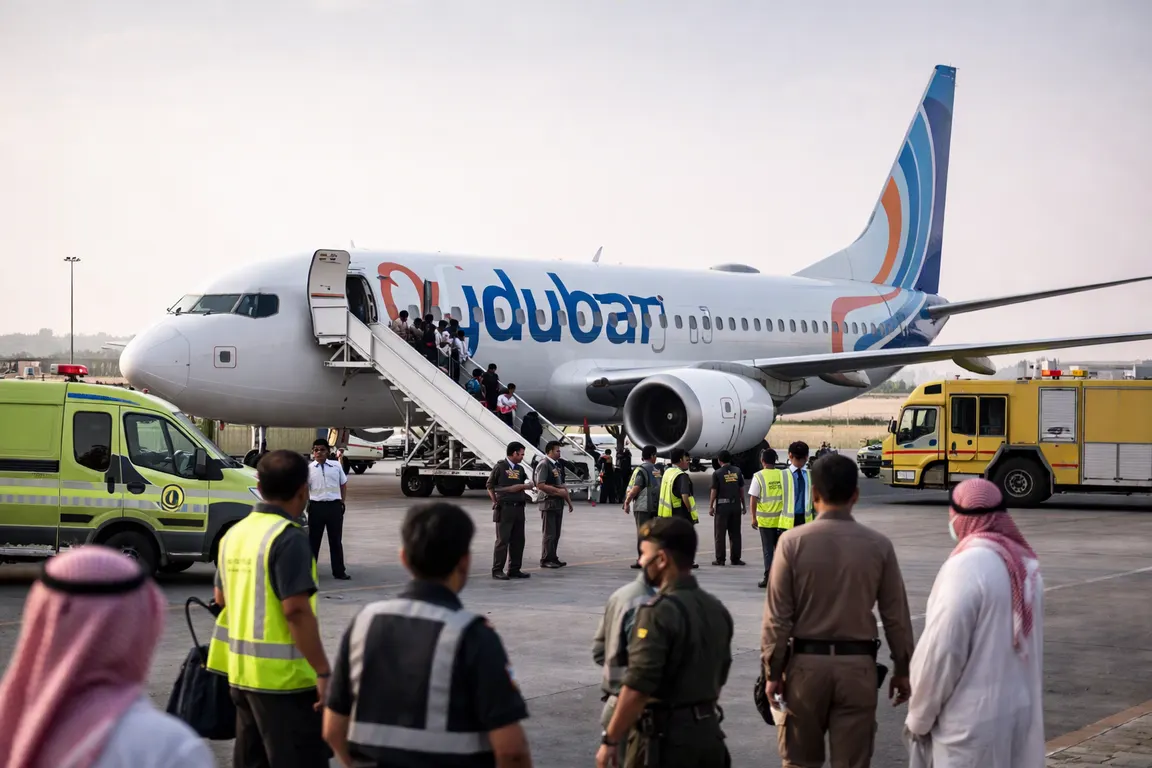
A Flydubai Boeing 737 bound for Tel Aviv made an emergency landing in Saudi Arabia after a cockpit altercation between the captain and first officer. The flight left Dubai International Airport with about 180 passengers, climbed to cruising altitude, and then an onboard emergency alert was activated. Aviation‑tracking data showed the aircraft drop sharply, then climb again, a pattern described by the Wall Street Journal as an “extreme descent and rise.”
Israeli military officials, seeing the sudden dive, initially treated the event as a possible hijacking and scrambled fighter jets over the Gulf. The scramble was later downgraded to a low‑threat level, underscoring the heightened sensitivity surrounding the newly opened UAE‑Israel air corridor.
Saudi air‑traffic controllers received the emergency signal and directed the plane to land at Tabuk, a dual civilian‑military base in the kingdom’s northwest. The aircraft touched down safely; all passengers and crew were de‑planed without injury. Flydubai confirmed that everyone on board was safe and said it was cooperating with authorities to determine the cause.
Passengers were re‑booked on alternate services to Tel Aviv or other destinations. The diversion disrupted travel plans and added unexpected costs for the roughly 180 travelers, raising short‑term concerns about confidence in the route.
The incident highlights a gap in emergency‑alert procedures. A cockpit dispute triggered an alert that was quickly interpreted as a security threat, prompting a military response. Regulators may need to review crew‑resource‑management training, reporting mechanisms and real‑time monitoring of cockpit behavior to prevent similar escalations.
Coordination between Israeli and Saudi authorities also came under scrutiny. Israel’s rapid scramble followed standard protocol for any perceived hijacking, while Saudi controllers’ ability to accommodate an unscheduled landing at a military base demonstrated a level of regional cooperation that could serve as a model for future cross‑border emergencies. No joint protocol has been publicly disclosed, leaving observers uncertain about how such incidents will be managed going forward.
Flydubai said a full investigation is under way, involving the airline’s safety department, the United Arab Emirates’ civil aviation authority and Saudi aviation officials. The probe will determine whether procedural changes are required, such as enhanced monitoring of cockpit communications or revised criteria for triggering emergency diversions.
Until the investigation’s findings are released, the episode serves as a reminder that operational safety risks can intersect with regional security protocols, especially on routes that symbolize diplomatic breakthroughs.