

Flydubai cockpit attack forces emergency landing in Saudi
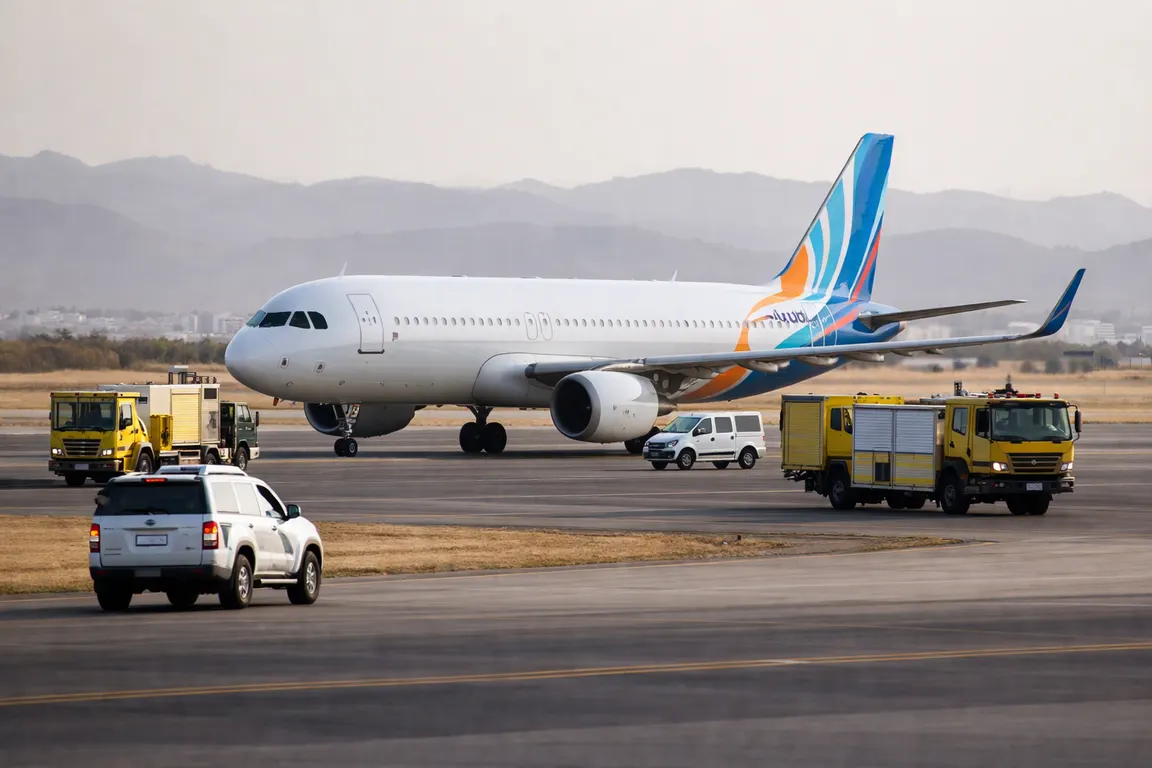
A flydubai cockpit attack forced an Airbus A320 bound for Tel Aviv to make an emergency landing in Saudi Arabia on Thursday. The first officer drew a knife and stabbed the captain shortly after the aircraft reached cruising altitude, causing the plane to lose about 13,000 feet in roughly half a minute.
The sudden violence disrupted the pilots’ control of the aircraft, but the crew managed to stabilize it and descend to a safe altitude. Passengers, most of them Israeli nationals, were alerted to the disturbance. One passenger, working with a flight attendant, helped open the cockpit door and assisted in restraining the attacker. Both pilots sustained injuries but remained alive.
The aircraft continued on a southerly heading and touched down safely at a Saudi military airfield, where the attacker was taken into custody. Saudi authorities confirmed the arrest but have not released details about the motive. Israeli Prime Minister Benjamin Netanyahu described the episode as a “jihadi terrorist attack,” a characterization that has not been independently verified by Saudi officials.
Parallel investigations are under way by Saudi, Israeli and aviation regulators. Authorities are reviewing cockpit access rules, including protocols that allow a second crew member to enter the flight deck during flight. While no immediate policy changes have been announced, the incident is expected to accelerate discussions within the International Civil Aviation Organization and regional bodies about strengthening physical barriers and procedural safeguards.
Passengers reported physical discomfort from the rapid altitude loss and described the cabin as chaotic while crew and travelers worked together to subdue the attacker. Medical teams on the ground treated a few passengers for minor injuries and provided psychological support.
Flydubai, a low‑cost carrier operating extensively across the Middle East, has not reported any prior incidents of internal violence. The airline issued a statement expressing relief that the flight landed safely and pledging full cooperation with the investigations. The breach of cockpit security may affect passenger confidence in regional airlines and could prompt carriers to revisit training on handling violent threats.
Key unanswered questions remain: the precise motive behind the first officer’s actions, the legal process Saudi authorities will follow, and whether regulators will impose new cockpit security measures. The outcome of these inquiries will shape how airlines balance operational efficiency with robust safeguards against internal threats, potentially leading to stricter access controls to prevent similar incidents in the future.