

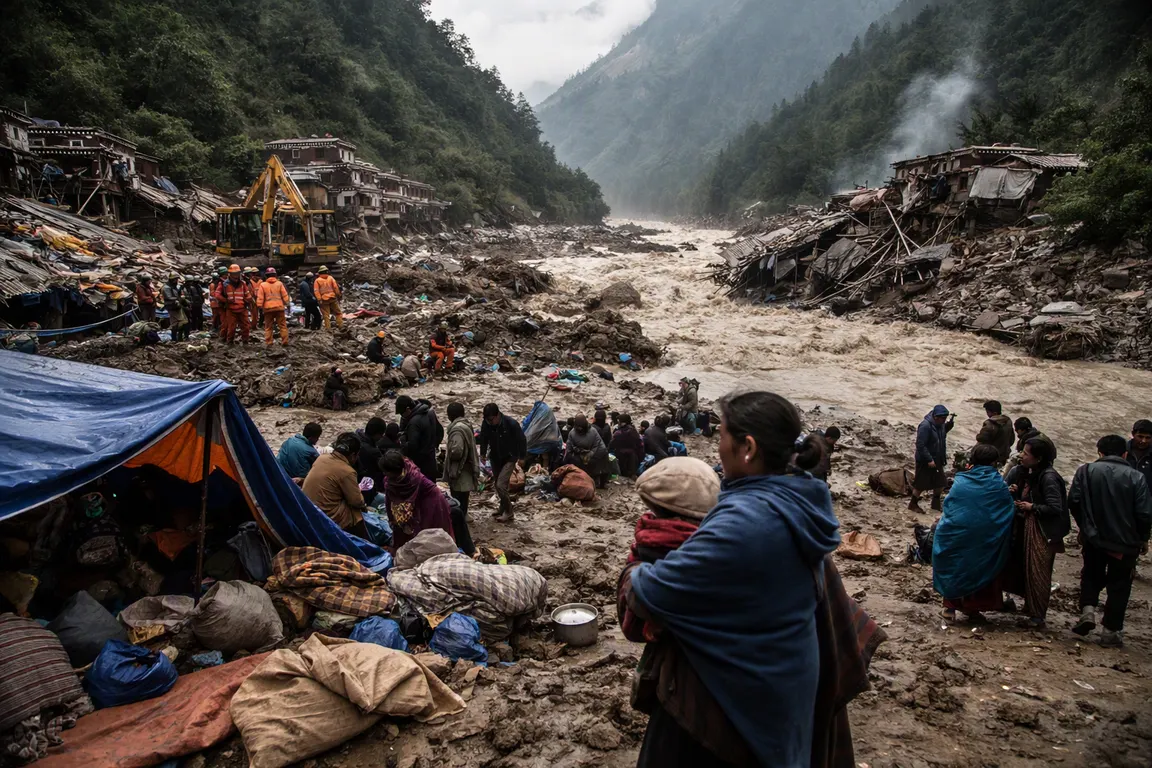
A flash flood on the Nepal‑Tibet border swept villages and pilgrimage routes, killing at least 470 people and injuring dozens. The surge destroyed roads, bridges and schools, forcing survivors into makeshift shelters while rescue teams struggled to reach remote hamlets.
The flood began when a lake in the Langtang‑Kailash watershed breached its moraine, sending a wall of water down steep valleys toward the frontier. Government agencies issued SMS alerts earlier in the day, but a resident near Phoksundo said he ignored the warning, highlighting gaps between alert issuance and public response. By nightfall villages such as Gaurik and Lho were inundated, bridges collapsed and the main Kathmandu‑Tibet road became impassable.
The National Disaster Risk Reduction and Management Authority confirmed more than 470 deaths and a missing‑persons count approaching 2,000. UNICEF estimates 17,000 children now need urgent assistance after 18 schools were destroyed and another 20 damaged. Relief centres, including the Maithali Barrack in Nuwakot, began distributing solar panels, clothing and hygiene kits on Friday, while bodies are being stored under tarps pending identification.
Rescue operations have mobilised roughly 14,800 security personnel, supported by drones that scan inaccessible terrain. International Red Cross teams are working with Nepalese officials to locate missing foreign nationals, including hikers from Virginia and pilgrims from India, Malaysia and other countries. At least 77 pilgrims were gathered at the Nepal‑China border office when the waters surged, and families abroad are still awaiting confirmation of their loved ones’ status.
The region’s rugged topography and limited infrastructure are hampering the humanitarian response. Blocked trade routes delay the flow of food, medicine and construction materials needed for rebuilding. Aid supplies must be air‑lifted to isolated valleys, a process dependent on weather and helicopter availability.
Beyond the immediate loss of life, the flood threatens the upcoming pilgrimage season to Mount Kailash, a major source of tourism revenue for both Nepal and Tibet. Travel agencies have warned of possible advisories, and local businesses that depend on pilgrim traffic face uncertain futures.
The disaster has sparked calls for a review of early‑warning protocols, including stronger community outreach and clearer evacuation routes. Nepal’s disaster‑management authority has pledged to improve coordination with Chinese counterparts, though details of any joint operational plan remain pending.
As families continue to search for missing relatives, the next critical step will be a coordinated assessment of shelter, health and nutrition needs, particularly for the 17,000 children identified by UNICEF. International NGOs and UN agencies are expected to convene a joint briefing later this week to align resources and address the gaps exposed by the flash flood.