

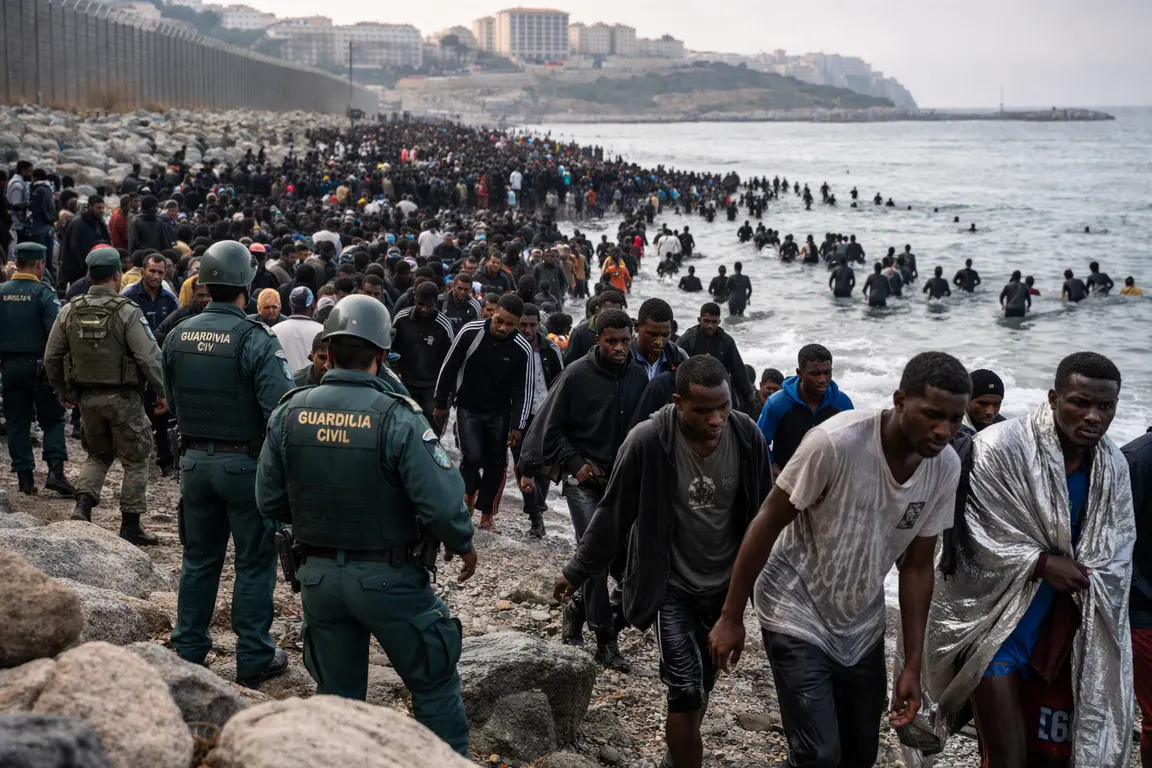
A sudden influx of over 70,000 migrants into the Spanish enclave of Ceuta from neighboring Morocco has raised concerns about public safety, infrastructure, and policy. The migrants swam or waded into Ceuta in a matter of hours, sparking a debate about the EU's approach to immigration, particularly in the context of the EU migrant surge.
The exact circumstances of the border opening are still unclear, but a court ruling the previous week protected migrants swimming to Ceuta, and a social media campaign called on thousands to migrate. The events in Ceuta have exposed deep divisions within the EU on immigration policy, with some member states criticizing Spain's humanitarian stance and others calling for a more unified response.
Twenty-two EU countries signed a letter to European Commission president Ursula von der Leyen denouncing Spain's legalization of over one million illegal migrants. The migrant surge has affected the local community in Ceuta, as well as the broader EU community, with implications for public safety, infrastructure, and the economy.
As the EU struggles to respond to the migrant surge, the debate over immigration policy will likely continue, with significant implications for the continent. The EU must now consider how to balance its humanitarian obligations with the need to maintain public safety and order, and how to develop a unified approach to immigration that addresses the concerns of all member states.
The migrant surge in Ceuta has highlighted the need for a coordinated EU response to immigration, one that takes into account the concerns of all member states while also upholding humanitarian obligations. With the EU's economy, community, and security at stake, finding a unified approach to immigration policy will be crucial in addressing the challenges posed by the migrant surge.