

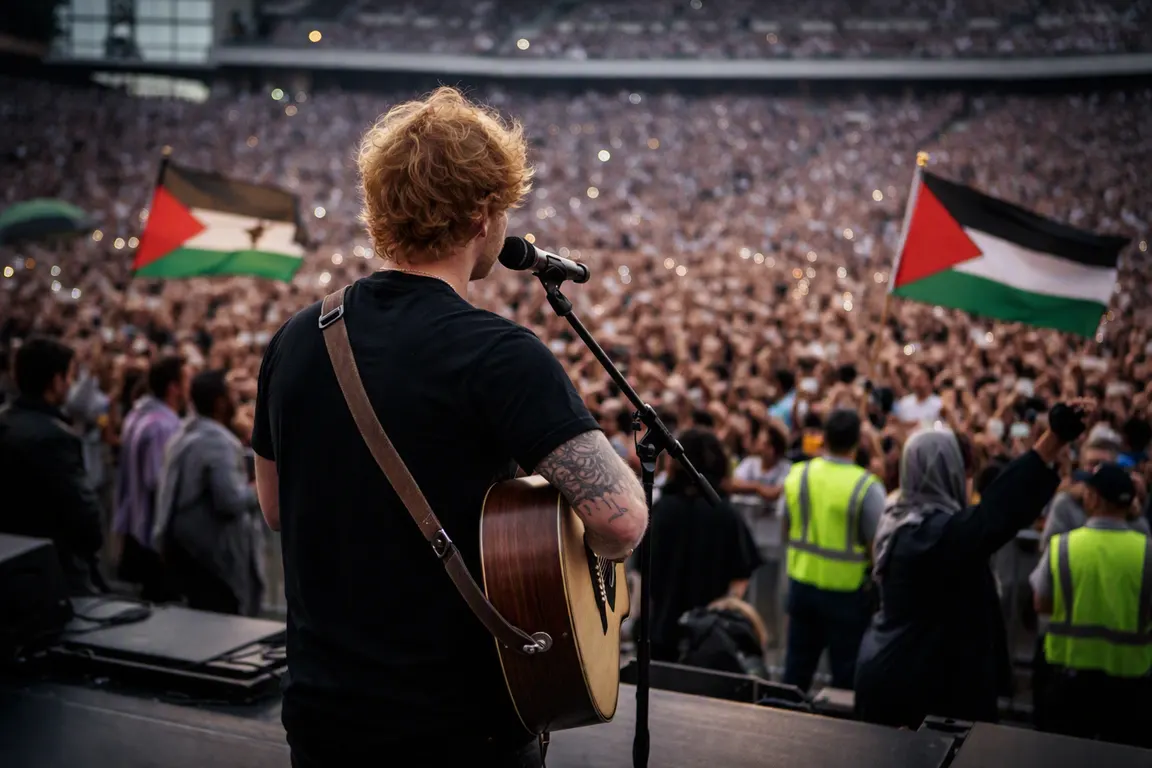
Ed Sheeran opened the first U.S. stop of his Loop Tour at Lincoln Financial Field on Saturday, pausing before his set to acknowledge the suffering in Gaza. He called the war “unjustifiable” and said he was “so, so sorry” for the lives lost, offering a brief humanitarian appeal without naming any side. The Ed Sheeran Gaza protest set the tone for the evening.
The remarks followed the tour’s decision to remove rapper Macklemore after he delivered a “Free Palestine” speech at a previous date. Tour officials said the comment was “inappropriate political commentary.” Macklemore’s removal sparked criticism, prompted several opening acts to quit in solidarity, and drew a group of protesters to the Philadelphia stadium’s perimeter.
Activists gathered outside the venue with signs condemning the decision and calling for a broader boycott of the tour. Police reported the crowd remained peaceful, but the demonstration required extra security personnel and coordination with city officials. Local businesses noted a surge in activity from concertgoers, though some expressed concern about potential disruptions.
Sheeran’s brief statement highlighted a growing trend of high‑profile concerts becoming platforms for geopolitical discourse. By addressing the Gaza conflict at a major pop event, the artist turned an evening of entertainment into a flashpoint for public debate. The moment raises practical questions for promoters, venue operators and local authorities tasked with balancing security, free expression and the commercial imperatives of a large‑scale tour.
Macklemore’s speech, delivered at an earlier Loop Tour stop, called for an end to the Israeli‑Palestinian war and urged listeners to “stay woke.” Within days, the tour’s management announced his removal, citing “inappropriate political commentary.” The move prompted the tour’s opening acts—mostly emerging indie groups—to withdraw, citing solidarity with the rapper and concerns over artistic freedom. Organizers were forced to rework set times and re‑allocate resources, adding logistical strain to an already complex schedule.
Industry observers note that concerts attract thousands of fans and generate extensive media coverage, giving performers a potent megaphone. Yet the practice also invites scrutiny: venues must assess security risks, sponsors weigh brand implications, and fans may be divided over the blending of music and politics.
For concertgoers in Philadelphia, the experience combined a live performance with an unexpected reminder of a distant conflict. The city collected ticket revenue and ancillary spending, but also incurred additional security costs. The tour’s remaining dates may face similar pressures as activists plan further demonstrations and other artists consider whether to speak out.
The episode leaves several unanswered questions: Will more musicians address the Gaza war from the stage? How will promoters balance artistic expression with operational safety? And what impact will the controversy have on the Loop Tour’s financial and logistical outlook? Stakeholders will watch closely as entertainment and geopolitics intersect on the road ahead.