

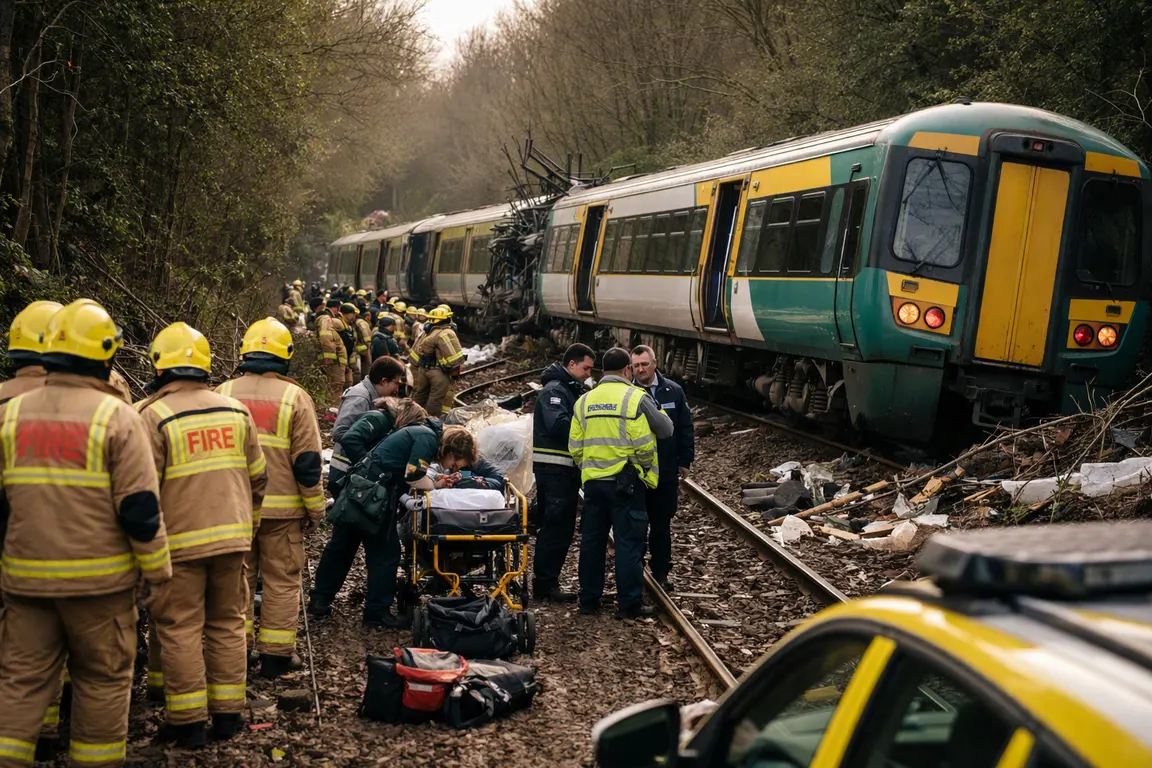
A passenger train derailed near Lewes in East Sussex on Thursday, injuring at least 11 people, with two suffering serious injuries. The incident occurred between Haywards Heath and Lewes, with emergency services responding shortly after 4:00 pm. The South East Coast ambulance service took two people to major trauma centers, while paramedics and the fire service also responded to the scene.
The train was operated by Southern Rail, and the cause of the derailment is currently unknown. As investigators begin to examine the cause of the derailment, concerns are growing over the safety of the rail network and the potential consequences for passengers. The derailment has affected passengers on the train, as well as the wider community, with major disruption to services reported.
Emergency services responded quickly to the incident, with multiple agencies involved in the response efforts. The exact number of injuries and their severity are still being confirmed, with some sources reporting varying accounts. However, it is confirmed that no fatalities were reported. The disruption to services will likely affect commuters and the local economy, with passengers facing delays and cancellations.
The incident highlights the need for a thorough examination of the rail network's safety and infrastructure, to prevent such incidents from occurring in the future. The investigation into the derailment is ongoing, with questions remaining about what caused the train to derail and what measures are being taken to ensure the safety of the rail network. The incident has raised concerns over public safety and infrastructure, prompting an emergency response from authorities.
As the investigation continues, officials will be working to determine the cause of the East Sussex train derailment and to identify any potential safety issues that may have contributed to the incident. The rail network's safety and infrastructure will be under scrutiny, with a focus on preventing similar incidents in the future. The incident serves as a reminder of the importance of maintaining a safe and reliable rail network, and the need for ongoing investment in infrastructure and safety measures.