

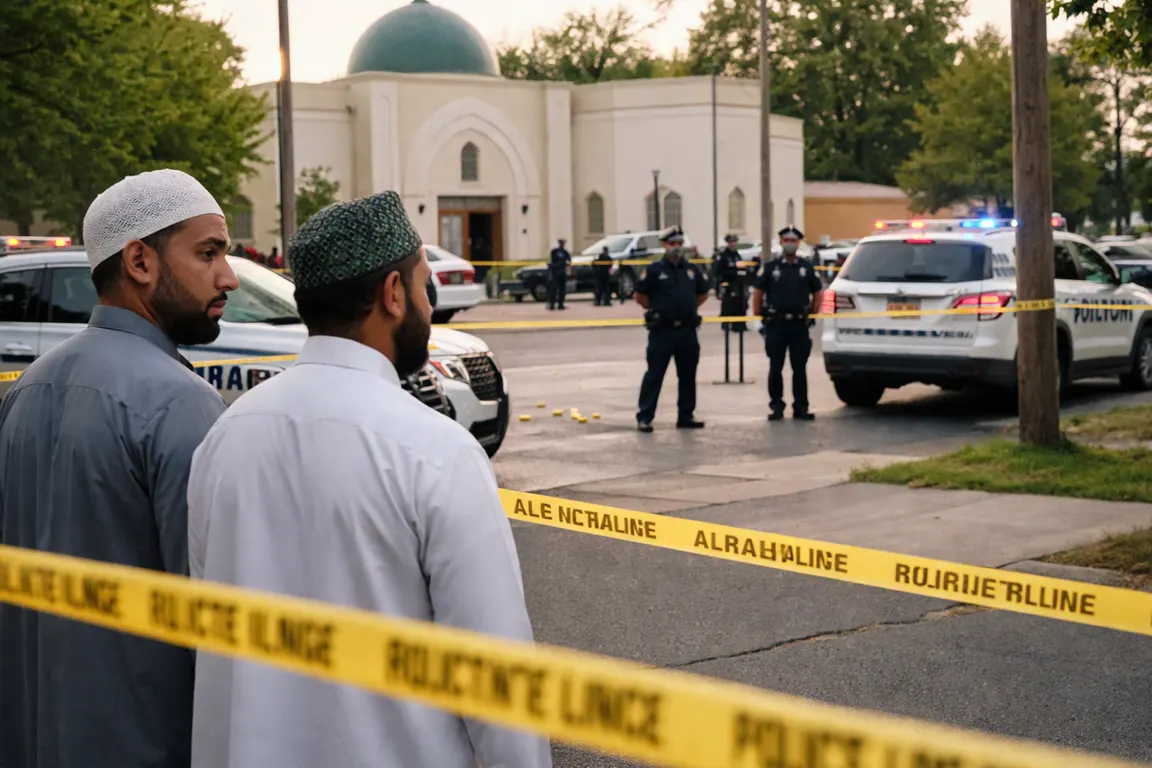
A Columbus mosque shooting rang out Monday afternoon near the Alrahma Mosque in Columbus, Ohio, killing one person and wounding another. Police arrived quickly, cordoned off the area and launched a multi‑agency investigation. Officials stressed that the mosque itself was not the target, but the incident has heightened anxiety in the city’s Muslim community and raised broader public‑safety concerns.
The shooting occurred a short distance from the mosque’s main entrance at an unspecified time on Monday. First responders treated two victims on scene; one was pronounced dead at a hospital while the other remains in critical condition. Police have not released the victims’ identities, their relationship to each other, or whether they were worshippers.
Columbus Police Chief John Cox said officers deployed a tactical team, emergency medical crews and crime‑scene investigators within minutes. “We are treating this as an active‑shooter situation and are working to determine motive and any potential links to the mosque,” Cox told reporters. He added that, based on early evidence, there is no indication the shooter intended to target the place of worship.
The claim that the mosque was not the intended target rests on the fact that gunfire was heard outside the building’s perimeter and no damage was done to the structure. Police have not released surveillance footage or witness statements that would confirm the shooter’s line of sight or intent. With no clear motive or suspect, the investigation remains in its early stages and no arrests have been announced.
Imam Mohammed Al‑Hassan, who leads Alrahma Mosque, said congregants felt “shaken” by the violence so close to their sanctuary. He urged city officials to increase security around places of worship, noting that the proximity of the shooting has eroded a sense of safety many Muslims in Columbus have long taken for granted.
The incident comes as Ohio law‑enforcement agencies are already stretched by a series of unrelated shootings across the state. Deploying a large contingent of officers to the mosque area has drawn resources away from other investigations and routine patrols, prompting concerns among city officials about the broader impact on public‑safety operations.
While the shooting does not appear to be a hate crime, its location near a religious site has amplified its resonance. Residents of nearby neighborhoods, many of whom are not Muslim, reported feeling “on edge” after hearing the gunshots. Local businesses temporarily closed, and schools in the vicinity altered dismissal procedures as a precaution.
The investigation is being led by the Columbus Division of Police’s major crimes unit, with assistance from the Ohio State Highway Patrol. Detectives have canvassed the area for witnesses, collected ballistic evidence and are reviewing any available video surveillance. No further details about the shooter’s identity, possible affiliations or the weapon used have been disclosed.
As the community mourns the loss of life and grapples with lingering fear, officials say the priority remains a thorough investigation and reassurance that places of worship are not being singled out. Police expect to provide an update within 48 hours with more information on the suspect and any emerging leads.