

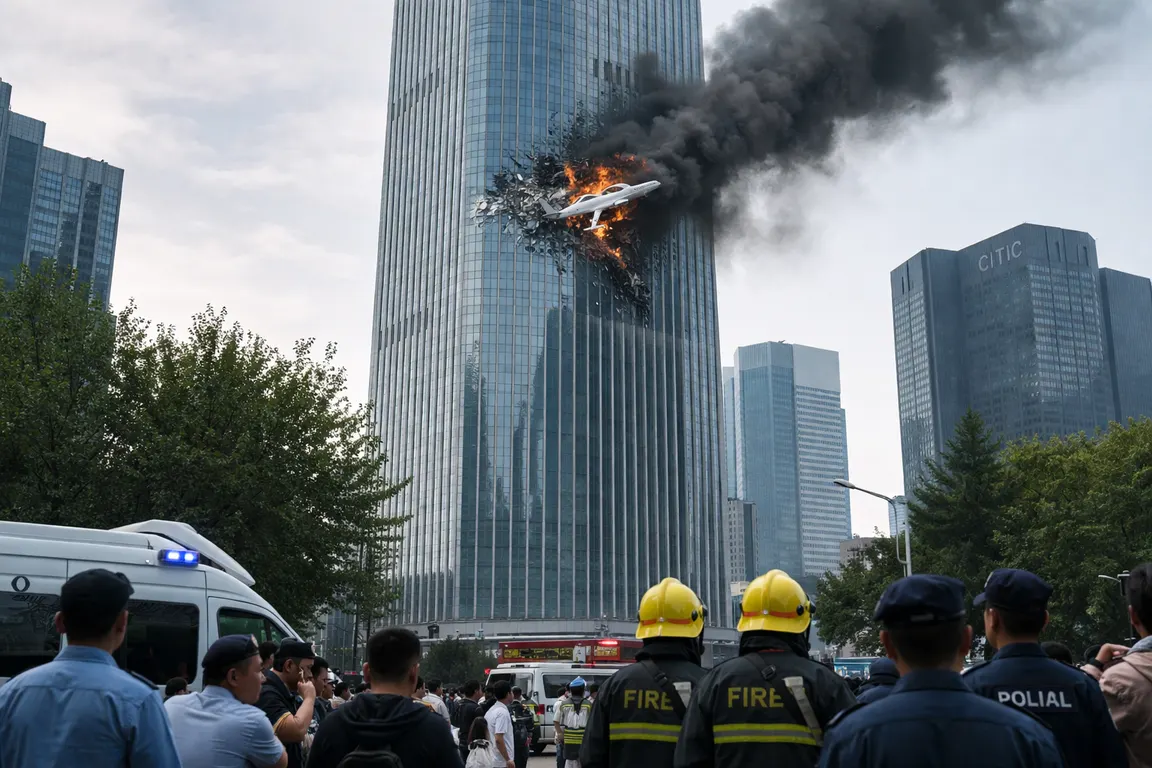
A small plane's breach of Beijing's tightly controlled airspace and crash into the city's CITIC Tower has raised questions about the effectiveness of China's security measures. The incident occurred on June 26, 2026, when a Sunward SA60L Aurora light aircraft crashed into the 1,700-foot-tall CITIC Tower in Beijing's Central Business District.
The aircraft, flown by a lone pilot, departed from Shifosi Airport in eastern Beijing and was expected to return for an approach to Runway 18 before turning westbound toward the Guomao Central Business District. However, it failed to turn back as expected and crashed into the CITIC Tower. The pilot is presumed dead, and the incident occurred in a tightly controlled airspace, where flights by this class of aircraft are normally restricted.
The crash caused damage to the building, and debris fell to the ground, affecting residents and businesses in the area. The potential for similar incidents in the future could have significant implications for the city's economy and reputation. Beijing had prohibited the flying of drones in the Chinese capital weeks before the incident, highlighting the city's efforts to maintain airspace security.
As investigators work to determine the cause of the crash, questions remain about how the plane breached Beijing's tightly controlled airspace and what measures will be taken to prevent similar incidents in the future. While some speculate that the incident may be more than just an aviation mishap, there is currently no concrete evidence to support this claim.
The incident has raised concerns about the security and confidence in Beijing's airspace defenses, and the city's authorities will need to provide clear answers to these questions to restore public trust. The investigation into the crash is ongoing, and officials have not yet released any information about the cause of the incident or the measures that will be taken to prevent similar breaches in the future.