

China proposes Middle East security framework in Egypt visit
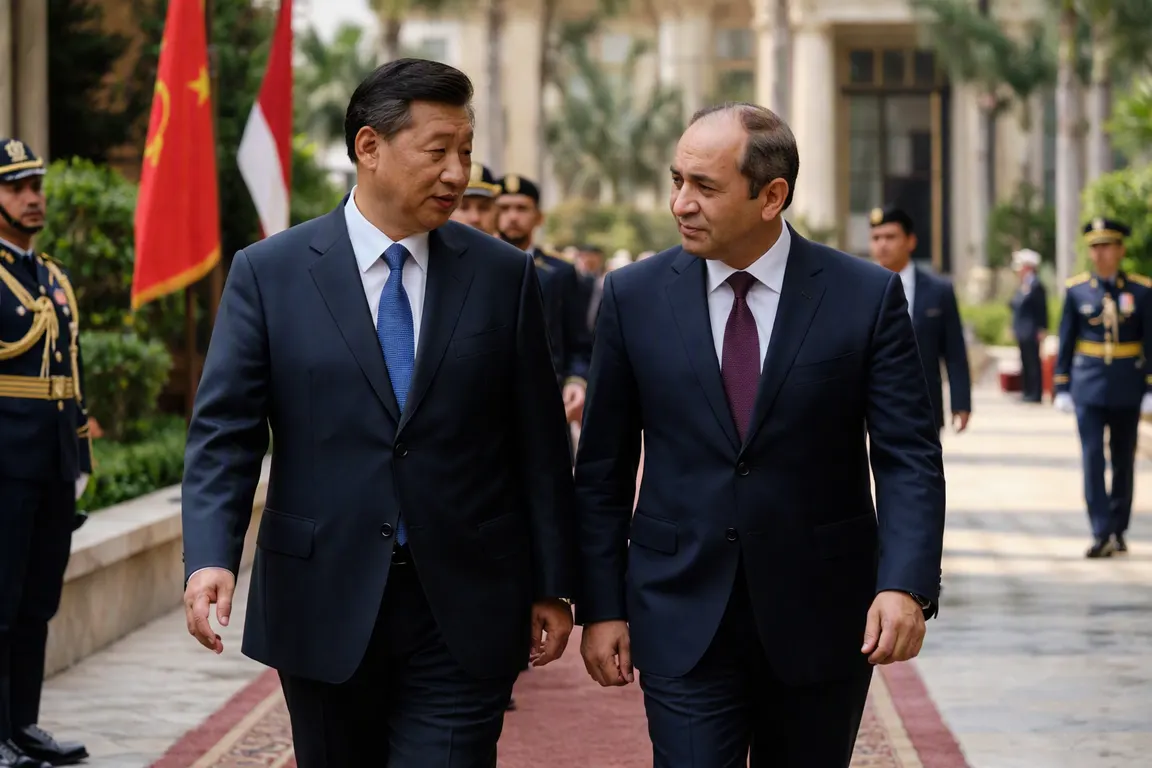
Chinese President Xi Jinping used his state visit to Egypt – the first by a Chinese leader since 2016 – to urge regional powers to consider a new China Middle East security framework as fighting between Israel and Iran intensifies.
Xi met President Abdel Fattah al‑Sisi in Cairo and, after a series of talks on China‑Egypt cooperation in infrastructure, investment and technology, publicly suggested a collective security model that could help stabilize the region and protect trade routes that pass through the Suez Canal.
The proposal comes as the United States and Israel confront a widening conflict with Iran, raising the possibility that Beijing could position itself as a diplomatic intermediary. Analysts say a Chinese‑backed security arrangement could alter deterrence calculations, affect shipping insurance rates and influence global energy markets that depend on Gulf stability.
No concrete agreement or detailed policy was announced. The content of the suggested framework was not disclosed, and regional actors have not yet responded. The visit therefore remains a diplomatic signal rather than a binding commitment.
Beijing’s broader interest in the Middle East is evident in its expanding trade, energy imports and strategic port projects. By invoking a collective security model, China signals a willingness to step into a role traditionally dominated by the United States. If countries such as Saudi Arabia, the United Arab Emirates or Iran were to back a Chinese‑led initiative, Washington’s leverage in the region could diminish.
For Egypt, the immediate impact is largely diplomatic. Strengthening ties with Beijing may bring additional investment in projects like the Suez Canal Economic Zone, but it also requires careful balancing of competing alliances. The Suez Canal remains a critical artery for global shipping; any perception of heightened security risk could raise insurance premiums and affect carrier routing decisions.
Energy markets are also sensitive to the development. Gulf stability underpins oil and gas prices, and a credible security framework could dampen price volatility. Conversely, the lack of detail keeps investors cautious, especially those exposed to Middle‑East infrastructure and energy firms.
The visit concluded without a formal declaration of a security plan, underscoring the tentative nature of the idea. Observers note that the absence of explicit commitments suggests Beijing is still testing the waters. Follow‑up talks with other Middle Eastern states are likely the next step, and they will determine whether the proposal moves beyond rhetoric to concrete negotiations.
As ships continue to line up under an unusually tense sky in the Suez Canal, the world will watch to see if China’s overture becomes a viable security architecture or remains a diplomatic footnote.