

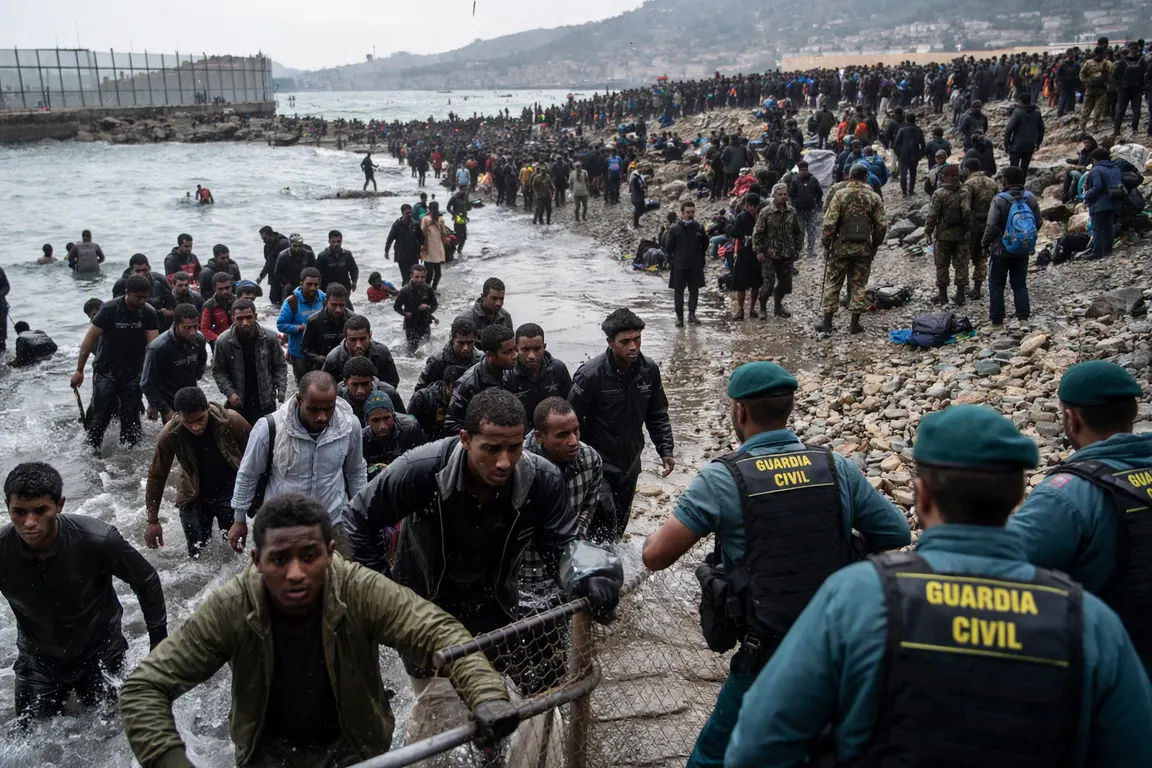
A sudden influx of 60,000 migrants from Morocco into Spain's Ceuta enclave has raised concerns about public safety, infrastructure, and policy. The Spanish government has described the breach as an 'attack on Spain's territorial integrity.' The migrant influx occurred over a 24-hour period, with dozens of migrants dying during the journey.
The enclave of Ceuta is a Spanish territory on the north coast of Africa. The Ceuta migrant influx has sparked concerns about the potential risks to public safety, infrastructure, and community resources. Spanish Prime Minister Pedro Sanchez has stated that the government is treating the situation as a high-priority context due to the potential risks.
The Spanish government is responding to the crisis, but details on the current situation and response efforts in Ceuta are limited. The exact motivations behind the mass crossings are unclear, with some sources speculating about potential policy or operational changes. The affected groups include migrants, Spanish citizens, and local communities in Ceuta.
The potential risks and consequences for public safety and infrastructure in Ceuta are a major concern. The Spanish government's response to the crisis will be crucial in addressing the situation. As the situation unfolds, the potential long-term implications for Spain and Europe will become clearer. The Spanish government will need to assess the situation and develop a plan to address the crisis, including providing support to the affected communities and addressing the underlying causes of the migrant influx.
The situation in Ceuta is being closely monitored, with the Spanish government working to provide assistance to those affected and to restore order to the region. The international community is also watching the situation, with potential implications for migration policies and border security in the region. As more information becomes available, the Spanish government's response to the crisis will be critical in determining the outcome of the situation.