

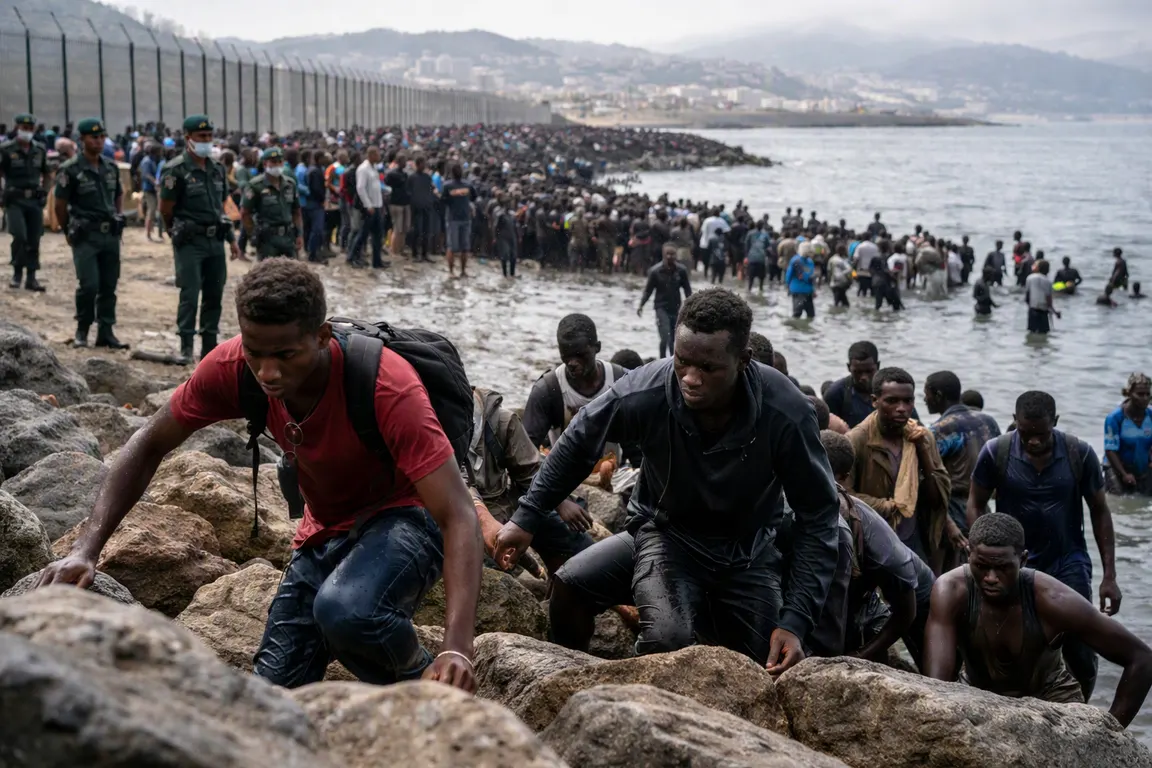
A recent surge of over 50,000 migrants in Ceuta has overwhelmed the city of 84,000, sparking concerns over public safety, infrastructure, and policy. The influx has put a strain on public services, infrastructure, and community resources in Ceuta, with 83 people dying in the crossing.
Spanish intelligence services believe Morocco may have allowed the mass crossing to happen, although the exact circumstances surrounding the mass crossing are unclear. The leader of Ceuta, Juan Jesús Vivas, has accused Morocco of helping to fuel the crisis. The EU has sent back 48,300 of the migrants to Morocco, but the situation remains tense.
The migrant crisis in Ceuta has triggered a political debate, with some EU leaders calling for a review of migration policy. The situation on the ground in Ceuta remains dire, with hundreds of migrants setting up camp on the beach. Aid organizations are providing assistance to those affected, as part of a humanitarian response to the crisis.
The EU's response to the crisis will have implications for migration policy, with some leaders calling for a more coordinated approach. As the situation continues to develop, questions remain about the role of Morocco and the EU's response to the situation. The recent surge in migrant crossings has raised concerns about the need for a unified EU policy on migration.
The crisis in Ceuta has highlighted the need for a comprehensive approach to migration, including measures to address the root causes of migration and to ensure the safety and dignity of migrants. The EU's response to the crisis will be closely watched, as it seeks to balance the need to protect its borders with the need to uphold human rights and provide humanitarian assistance to those in need.