

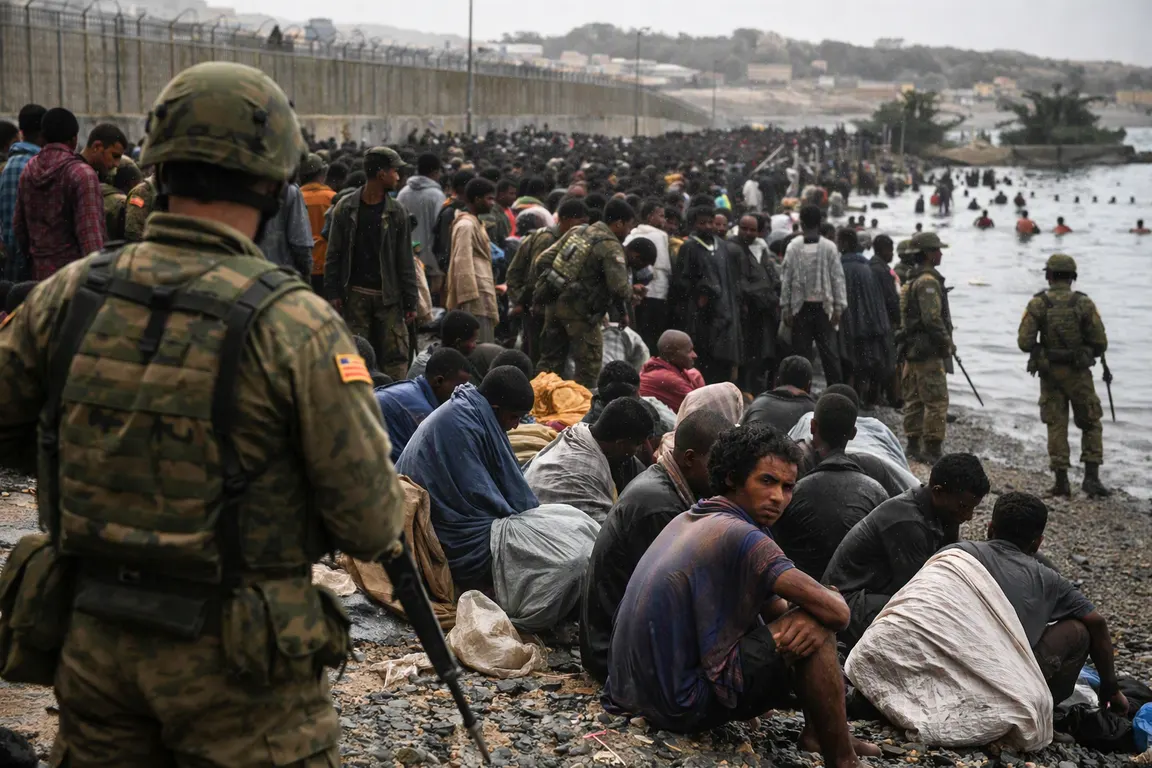
A sudden influx of migrants from Morocco into the Spanish exclave of Ceuta has prompted a military response from Spain, raising concerns about public safety, infrastructure, and policy. An estimated 50,000 migrants made the crossing, with at least 34 people reported killed trying to enter the enclave. Half of the migrants who entered Ceuta have since turned back.
The Ceuta Border Crisis has sparked outrage and concern across Europe, with many questioning the handling of the situation. The motivations behind the mass migration are not fully explained, with sources attributing it to a sudden influx and others implying it may be a coordinated event. The total number of migrants who entered Ceuta and their current status is not entirely clear.
Spain's deployment of the military to Ceuta is a response to the migrant surge, which affects not only the local community but also has broader implications for European migration policies and public safety. The events unfolded rapidly, with the migrant surge occurring over a short period. As the situation continues, questions remain about what triggered the mass migration and how Spain and Europe will respond to this crisis.
The humanitarian concerns are significant, with a need to ensure public safety and manage the situation effectively. The European migration crisis has been a longstanding issue, and this recent surge has brought it back into focus. The response from Spain and Europe will be crucial in determining the outcome of this crisis and its potential long-term implications.
The situation in Ceuta is complex, with many factors at play. The Spanish government's decision to deploy the military has been criticized by some, while others see it as a necessary measure to maintain order. As the situation continues to unfold, it is clear that a comprehensive and coordinated response will be needed to address the crisis and its aftermath.