

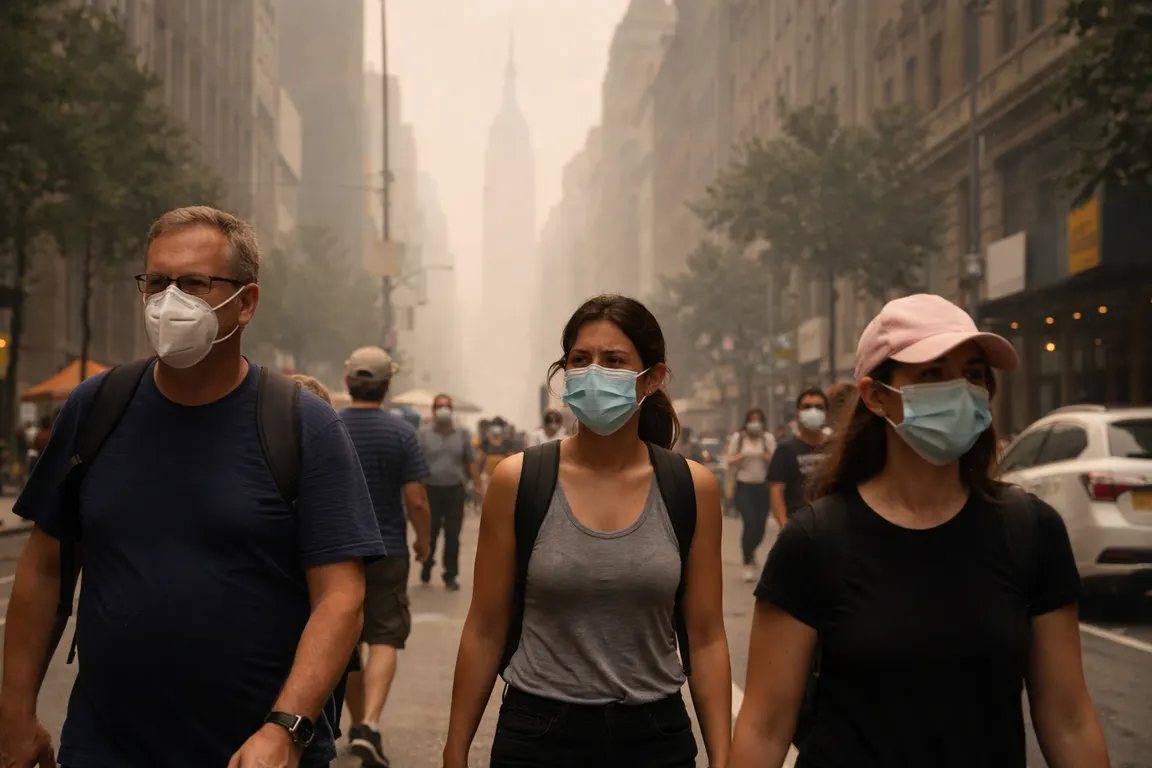
A thick haze of smoke from Canadian wildfires hangs over the US Midwest and East Coast, prompting concerns about public health. The smoke has reduced visibility and prompted air quality warnings in several states, with Michigan and Minnesota being among the worst affected.
The National Weather Service has issued hazardous air quality alerts for parts of the US. Over 850 active fires were recorded in Canada on Thursday, and the smoke has caused disruptions to daily life, with New York City cancelling outdoor activities and distributing face masks to residents. Philadelphia officials have urged people to avoid strenuous activity and stay indoors or wear N95 or KN95 masks.
The situation poses a risk to public health, particularly for vulnerable populations such as the elderly and those with pre-existing medical conditions. A study found that long-term exposure to tiny particles from wildfire smoke contributes to an average of 24,100 deaths a year in the lower 48 states. The Royal Canadian Air Force has evacuated 11 Minnesota teenagers and four staff members from wildfires in an Ontario provincial park.
As the smoke continues to affect millions of people in the US, officials are taking measures to mitigate the impact, but there is uncertainty about the duration of the smoke and its impact on public health. Individuals can protect themselves by staying indoors, wearing masks, and avoiding strenuous activity. The situation raises questions about the long-term effects of wildfire smoke on public health and the need for coordinated efforts to mitigate its impact.
The smoke from Canadian wildfires has prompted a response from local and national authorities, with a focus on protecting public health and safety. The National Weather Service and local officials will continue to monitor the situation and provide updates on air quality and necessary precautions. In the meantime, individuals can take steps to protect themselves and their communities from the impacts of the smoke.