

Budhi Gandaki Flash Flood Forces Evacuations, Destroys Homes
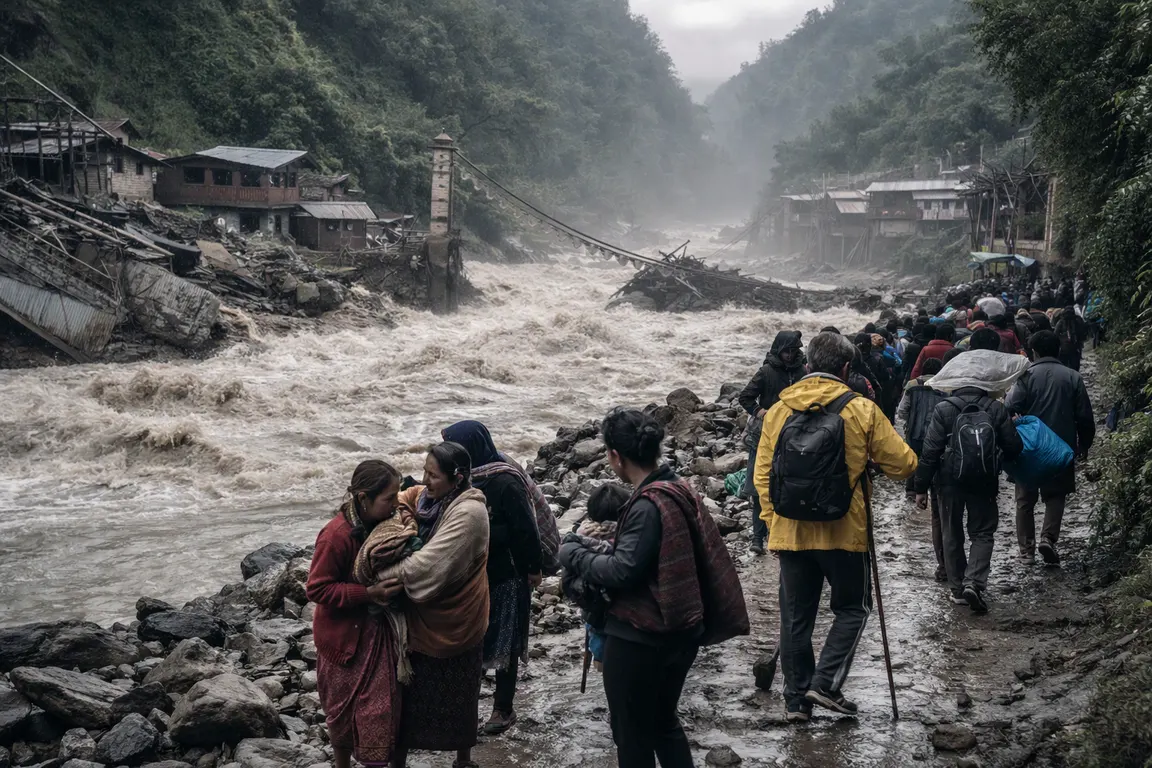
The National Disaster Risk Reduction and Management Authority (NDRRMA) ordered the evacuation of villages in Nepal’s Budhi Gandaki valley Sunday after a sudden flash flood swept away about a dozen houses and two suspension bridges.
Heavy rain turned the Budhi Gandaki River into a raging torrent, breaching its banks and sending water and debris down steep canyon walls. Video posted on social media shows homes and sheds being carried downstream within minutes, underscoring how quickly the flood rose.
NDRRMA officials said no casualties have been reported so far, but the situation remains fluid. Displaced families are being moved to higher ground and temporary shelters in nearby towns, where they are receiving food, water and basic medical care.
The loss of the two suspension bridges severs a key link on the Kathmandu‑to‑the‑north highway, halting the flow of goods and delaying aid to isolated communities. Local traders report that market access is suspended, forcing residents to walk longer routes or wait for temporary crossings to be erected. Health posts in the area are operating at reduced capacity, raising concerns about emergency‑service access.
Authorities suspect a combination of intense rainfall and a landslide that released a surge of water and debris into the river. Precise data on the number of villages affected and the total displaced population are still being gathered, reflecting the difficulty of monitoring remote mountain terrain during extreme weather.
The Budhi Gandaki flash flood adds pressure to a national recovery effort already estimated at $4.77 billion after the August monsoon floods that displaced roughly 33,000 people and destroyed about 7,500 homes. Prime Minister Pushpa Kamal Dahal’s office recently ended search‑and‑rescue operations for the August disaster and shifted focus to reconstruction.
In the short term, NDRRMA is coordinating temporary shelters, distributing emergency supplies and deploying engineers to assess the remaining bridges’ structural integrity. The agency has urged residents to stay out of the river’s floodplain until thorough safety inspections are completed.
Long‑term, the flash flood highlights the vulnerability of mountain villages to sudden hydrological events. Experts and policymakers are calling for stronger early‑warning systems, reinforced bridge designs and stricter land‑use planning in flood‑prone valleys. As monsoon rains intensify with climate change, integrating flood‑risk management into Nepal’s development agenda is becoming increasingly urgent.
The next steps include a detailed damage assessment, construction of temporary crossings to restore transport links, and continued relief distribution to displaced families. How quickly the government can mobilize resources and implement new mitigation measures will shape Nepal’s ability to cope with back‑to‑back disasters.