

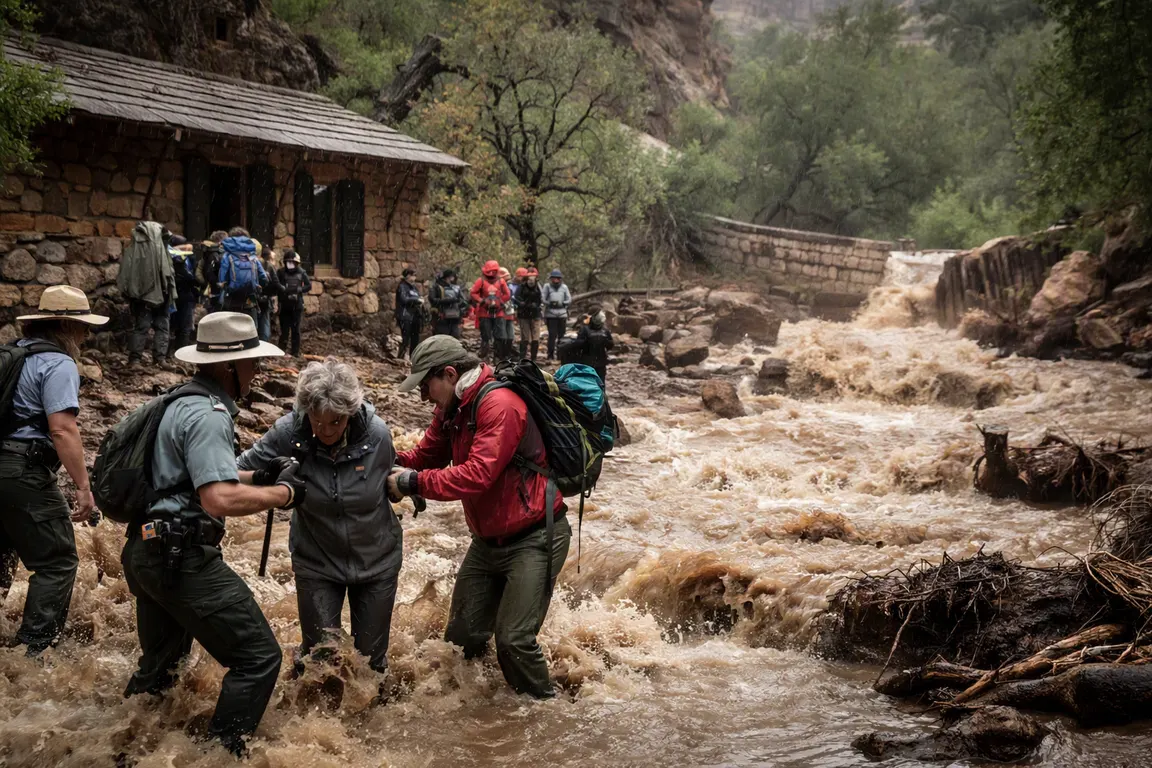
A sudden rainstorm Saturday triggered a Bright Angel Creek flash flood, the north‑side tributary that feeds the Colorado River at the base of the Grand Canyon. The surge inundated the historic Phantom Ranch, swept away footbridges and forced the National Park Service to evacuate more than 60 hikers by helicopter.
One 46‑year‑old man was found dead near Crystal Rapids on Sunday. NBC reports cite at least two fatalities, while the Manila Times confirms one; about 15 people remain missing.
The flood also destroyed the park’s only potable‑water pipeline, a key component of a $208 million water‑system upgrade launched in 2023 and slated for completion in 2025. With the line offline, overnight lodging at Phantom Ranch and other facilities in Grand Canyon Village – home to roughly 1,600 residents and staff – has been suspended, and water‑rationing measures are in effect.
Rainfall totals of several inches fell in a short period, overwhelming the narrow canyon channel. Water rose to an estimated five feet inside the ranch’s cabins, submerging historic structures that have served hikers since the early 20th century. Park rangers and rescue crews used both NPS helicopters and contracted aircraft to airlift hikers from the rim and trailheads. More than 60 people were rescued over the weekend; footbridges and trail segments were swept away, rendering several popular routes impassable.
The damaged pipeline was part of a multi‑year effort to replace aging steel and concrete lines with corrosion‑resistant materials, ensuring reliable drinking water for visitors, staff and village residents. Its loss forces the park to rely on limited water storage tanks and bottled supplies, raising concerns about capacity if additional storms arrive. The National Weather Service forecasts further thunderstorms through Monday, prompting the NPS to issue water‑conservation advisories and halt all overnight stays until repairs can be assessed.
Engineers must first evaluate the extent of damage to the buried line, which officials describe as a “complete shutdown.” The assessment could push the projected 2025 completion date back months and increase costs as labor and material prices rise. The park’s budget already allocates a portion of its annual operating funds to the water‑system modernization; any overruns may require reallocation from other maintenance or visitor‑service projects.
Local businesses that depend on park tourism are already feeling the impact. With overnight accommodations closed, hotels, restaurants and souvenir shops in the village anticipate a dip in revenue that could extend beyond the immediate evacuation period. Park officials have not released an estimate of the economic loss, but note that Phantom Ranch accounts for a significant share of the canyon’s lodging income each year.
Search teams continue combing the canyon’s lower reaches and coordinating with the U.S. Coast Guard on the Colorado River. The NPS has urged anyone with information to contact its incident command center and is deploying additional resources to locate survivors or remains.
The flash flood underscores how a single piece of infrastructure can become a linchpin for an entire national park’s operations. As the park works to restore water service and resume overnight stays, officials must balance urgent safety concerns with the longer‑term goal of completing the water‑system upgrade. The next steps include a detailed engineering assessment, securing emergency water supplies for residents, and revising the project schedule. How quickly the park can restore safe drinking water and reopen its iconic lodging will shape visitor experience and community resilience in the weeks ahead.