

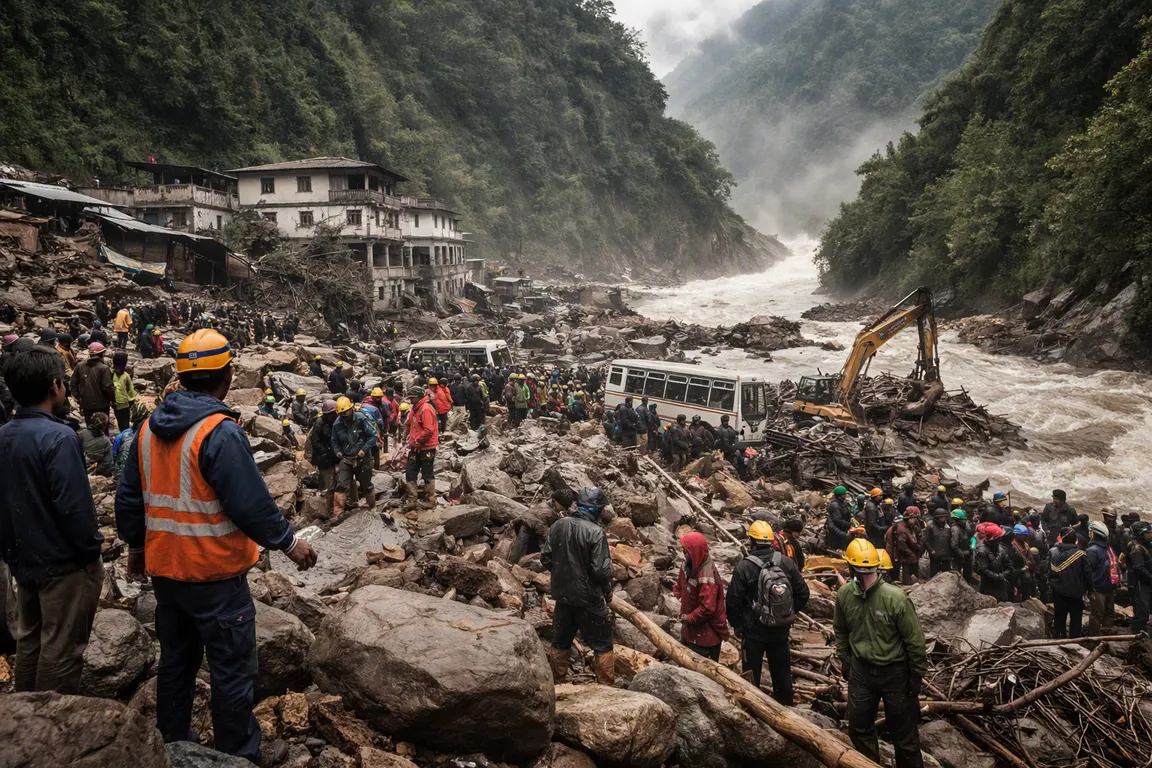
A magnitude‑4.4 earthquake on the Tibetan side of the Himalayas triggered the Bhotekoshi flash flood, surging into the Bhotekoshi River and sweeping through Nepal’s Rasuwa district and the Gyirong border checkpoint on the morning of Aug. 26, 2026. The surge arrived at about 0900 local time, tearing away homes, bridges, a small hydro‑electric plant and the only formal crossing point between the two nations.
The disaster has sparked a humanitarian emergency and a diplomatic test for Nepal, China and the region’s tourism industry. Officials confirm at least 31 deaths, with some reports suggesting the toll could be higher, and roughly 1,000 people are missing, including 384 tourists – 291 foreign nationals and 93 Nepalis.
The quake struck early on the Tibetan plateau, shaking the glacier‑fed slopes of Gyirong County. The tremor dislodged a massive ice mass that cascaded onto the Bhotekoshi River, turning the waterway into a torrent of ice, mud and debris. Within minutes the river overflowed its banks, rushing down the steep canyon into Nepal’s Rasuwa district. Villages along the riverbank were inundated, and the Gyirong checkpoint, the primary conduit for cross‑border trade, was completely engulfed.
Rescue efforts are underway. Nepali army units, Chinese border police and teams from foreign embassies, including the U.S. Embassy, have been deployed. The U.S. Embassy issued a statement of condolence and pledged logistical support. Local authorities have declared a state of emergency in Rasuwa, mobilizing medical teams and setting up temporary camps for displaced residents.
Infrastructure loss is extensive. Entire villages were washed away, and the only road linking Kathmandu with the Chinese border town of Gyirong was severed. Two small hydro‑electric plants that supplied power to nearby communities were swept from their foundations, leaving thousands without electricity. The destruction of the checkpoint halts the daily flow of goods between the two countries, threatening supply chains for construction materials, perishable foods and other essentials.
The tourism sector faces an acute shock. The region, popular for trekking and cultural tours, expected a surge of visitors in September. Hotel owners and local guides report cancellations and lost revenue, while stranded tourists remain in makeshift shelters awaiting rescue.
Diplomatically, the flood has forced Nepal and China to cooperate on rescue operations and damage assessment. Chinese state media described the incident as causing “major casualties,” and officials in Lhasa have pledged additional rescue personnel and equipment. Both governments say they will review cross‑border disaster protocols, acknowledging that existing infrastructure is ill‑suited to sudden glacial outbursts.
In the short term, the priority is locating the missing and restoring basic services. Nepali authorities plan to air‑lift supplies to isolated hamlets and to rebuild the damaged road segment within weeks. Longer‑term questions remain about reinforcing the border crossing and installing early‑warning systems on glacier‑fed rivers that feed the Himalaya’s trade routes.