

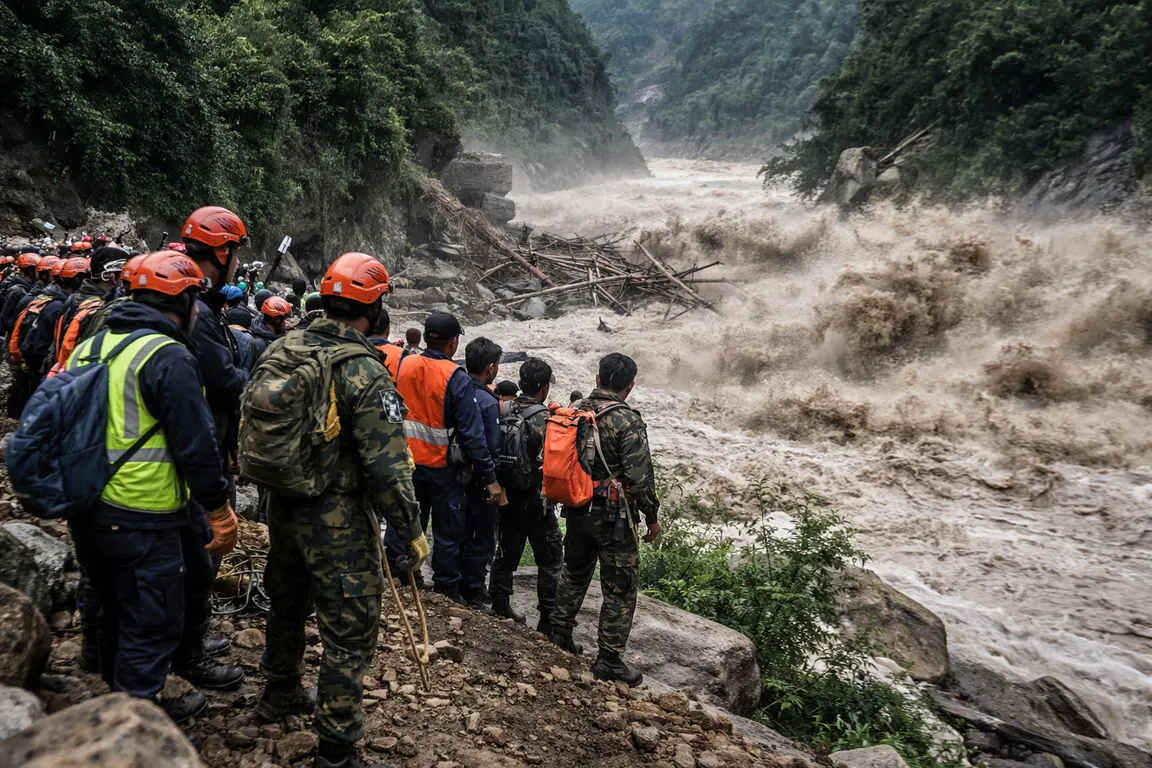
Rescue teams pulled back for about an hour on Friday after the Bhotekoshi debris dam lake burst into the Bhotekoshi River basin, pausing efforts to reach survivors of the flash flood that has killed roughly 470 people and left more than 1,500 missing.
The interruption came at a critical moment. With the death toll hovering between 470 and 474 and thousands of families stranded on higher ground in the remote Rasuwa district, any additional flooding could turn the disaster into a prolonged humanitarian crisis. The event also highlighted the lack of a coordinated response mechanism along the Nepal‑China border, where downstream communities in both countries could face secondary flooding if the lake breaches again.
The flash flood struck the Bhotekoshi basin on Wednesday, sending torrents down steep valleys, cutting off villages and trapping dozens inside a hydropower tunnel in Rasuwa. Nepal’s army later rescued a number of survivors from the tunnel, where over 100 people were initially thought trapped, according to the BBC. Upstream, a debris dam had held back a growing lake until Friday, when the water level overtopped the barrier. The Guardian reported that rescue operations were halted for roughly 90 minutes while teams assessed the new flood risk.
The scale of the disaster is evident in the numbers. The Wall Street Journal cited more than 1,500 missing persons; the death count varies, with The Guardian and Al Jazeera reporting 474 deaths and other outlets noting “over 470.” The variance underscores the difficulty of accounting for victims in mountainous terrain where communications are disrupted.
Beyond the human toll, the flood threatens critical infrastructure. Damage to agricultural fields, road networks and the hydropower tunnel could impair the local economy and the national power supply. Nepal relies heavily on hydropower, and any prolonged outage in Rasuwa may ripple through the grid. Chinese authorities are monitoring the situation, but no joint statement on coordinated relief has been released, leaving a policy gap that could delay assistance to downstream Chinese villages.
Aid agencies have begun distributing emergency supplies to displaced residents, yet the pause in rescue work hampers the delivery of food, medicine and shelter. Officials have not disclosed the specific assessments that led to the suspension, only that the rising lake level posed an immediate danger to rescuers.
As the water recedes, Nepal’s government has yet to announce when rescue sites will reopen. Officials say a thorough safety evaluation is required, but timelines remain unclear. The next steps will likely involve joint technical assessments of the lake’s stability, reinforcement of the debris dam, and a coordinated cross‑border communication plan to manage any downstream impact.
Until those measures are in place, the valley remains on edge, and the full extent of the disaster’s human and economic cost remains uncertain.