

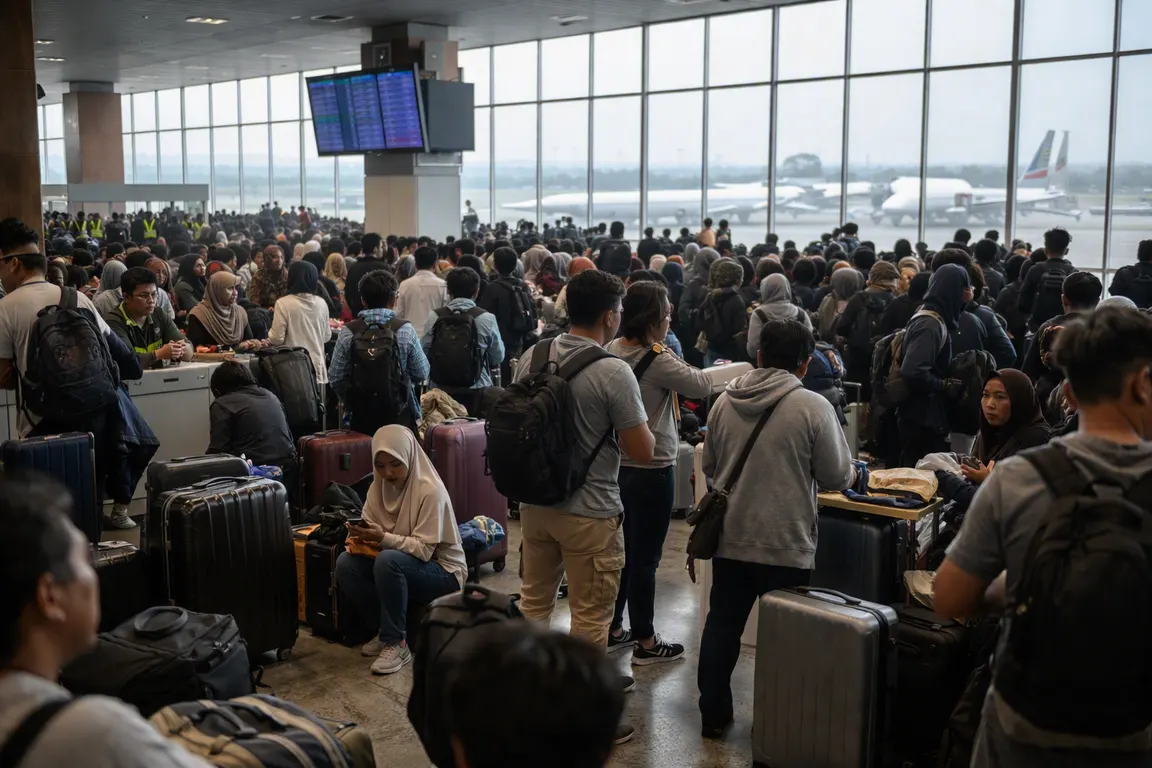
An eruption of Anak Krakatau early Sunday morning sent ash to an estimated 20,000‑50,000 feet, prompting the Anak Krakatau ash airport alert that forced Soekarno‑Hatta International Airport to suspend all take‑offs and landings for four hours. The shutdown cancelled 209 flights and left about 22,800 passengers stranded, while the BBC reported that more than 150,000 travelers across Indonesia faced travel disruptions.
The incident highlights the vulnerability of Indonesia’s air‑transport network to volcanic ash. Jakarta handles more than half of the nation’s international traffic, so any interruption quickly ripples through tourism, trade and the broader economy.
Anak Krakatau had been on a heightened alert since Friday. At 3:53 a.m. local time Sunday, the volcano erupted for roughly 30 seconds, producing lava flares and two ash clouds—one reaching 6,100 meters and another 15,200 meters. By 5:30 a.m. the ash plume covered Jakarta, Banten, West Java and parts of the Indian Ocean, leading airport authorities to halt operations until 9:30 a.m.
International routes to Singapore, Hong Kong, Sydney, Amsterdam, Seoul, Doha and Kuala Lumpur were among those cancelled, and domestic services to Lampung, Bali and Surabaya were either scrubbed or diverted. Approximately 170 aircraft remained parked on the apron overnight, creating a bottleneck as airlines worked to reschedule flights and process refunds.
No injuries were reported, and officials advised residents to stay at least three kilometres from the crater to avoid ash fall and potential pyroclastic activity.
Airlines now face a cascade of operational challenges. Fleet rotations must be adjusted, crew schedules rewritten and baggage handling re‑routed. Passengers have encountered long queues at ticket counters and online portals, many seeking refunds for missed connections or non‑refundable tickets. While the precise financial hit is still being calculated, the loss of seats on 209 flights alone suggests a multi‑million‑dollar impact, not counting downstream effects on hotels, retailers and cargo operators.
The broader economic stakes extend beyond the airline industry. Jakarta’s role as a regional hub means that disruptions affect business travel, tourism and freight. Hotels have reported a dip in weekend bookings, and exporters fear delayed cargo could strain already thin supply‑chain margins.
Meteorological agencies expect the ash cloud to dissipate within days, but officials have not set a definitive timeline for full service restoration. Monitoring will continue as the volcanic alert level remains elevated.
The episode underscores the need for robust contingency plans to mitigate the economic fallout of volcanic events. Indonesia’s aviation authorities have pledged to keep airlines and passengers informed, but the lack of a clear recovery schedule leaves travelers and businesses in limbo.
As the ash settles, the key question is how quickly confidence can be restored in the nation’s air‑transport infrastructure and what steps will be taken to harden the system against future eruptions.