

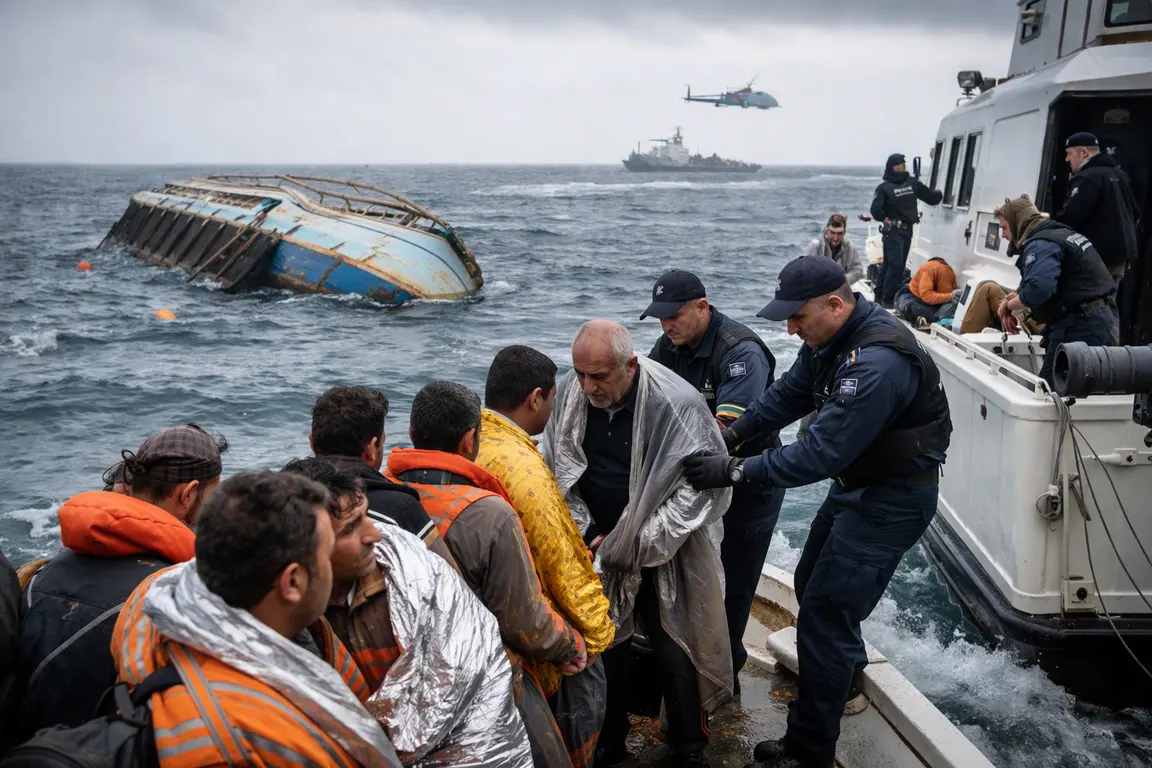
A migrant boat capsized off Greece’s Gavdos island on Sept. 13, killing at least one person, leaving 25 missing and rescuing 51. The incident highlights how aging vessels capsizing in severe weather can turn routine crossings into lethal events, prompting renewed calls for stricter oversight and better emergency response.
In Greece, the boat went down near the southern tip of Crete. The coast guard rescued 51 migrants and confirmed one death while the search for the missing continues. Officials have not disclosed whether the vessel was overloaded or lacking safety equipment, leaving the primary cause uncertain. The incident comes as migrant crossings across the Mediterranean surge, straining rescue resources and exposing regulatory blind spots.
A day earlier, a ferry operating in stormy conditions overturned in Indonesia’s Java Sea, killing six and leaving 129 people unaccounted for. Survivor accounts described the vessel tilting suddenly before passengers were thrown into the water. More than 600 rescuers — navy personnel, coast guard units and civilian volunteers — have been deployed. Authorities have pledged a review of maritime safety protocols, but no concrete policy changes have been announced.
Experts note that many migrant and regional passenger vessels are decades old, maintained on minimal budgets, and routinely exceed their design capacity. When combined with increasingly volatile weather, these deficiencies raise the likelihood of capsizing or sinking. In both cases, coordinated search‑and‑rescue efforts were launched, but the scale of the operations highlights gaps in preparedness and the strain on limited maritime resources.
The human toll extends beyond the immediate casualties. Families of migrants on the Greek boat face loss, trauma and uncertain legal status. Indonesian victims include daily commuters, traders and students, whose absence reverberates through local economies. Disruptions to ferry routes can raise transport costs and insurance premiums, creating a cycle that may push owners to cut corners on maintenance.
Calls for reform are gaining momentum. In Greece, lawmakers and NGOs are urging tighter inspections of vessels used by smugglers and improved early‑warning systems for dangerous sea conditions. In Indonesia, the pending safety review is expected to address vessel certification, crew training and mandatory weather‑related sailing restrictions. Regional bodies such as the European Union’s maritime safety agency and the Association of Southeast Asian Nations have been urged to facilitate information sharing and joint training exercises.
As searches for missing passengers continue, unanswered questions remain about accountability and prevention. Who owned and operated the Indonesian ferry, and why were weather warnings not heeded? What standards govern the construction and loading of migrant boats departing from Greek waters? Both governments have pledged investigations, but concrete measures have yet to materialize. The coming weeks will reveal whether these tragedies spur the regulatory overhaul advocates demand or whether unsafe voyages will persist unchecked.