

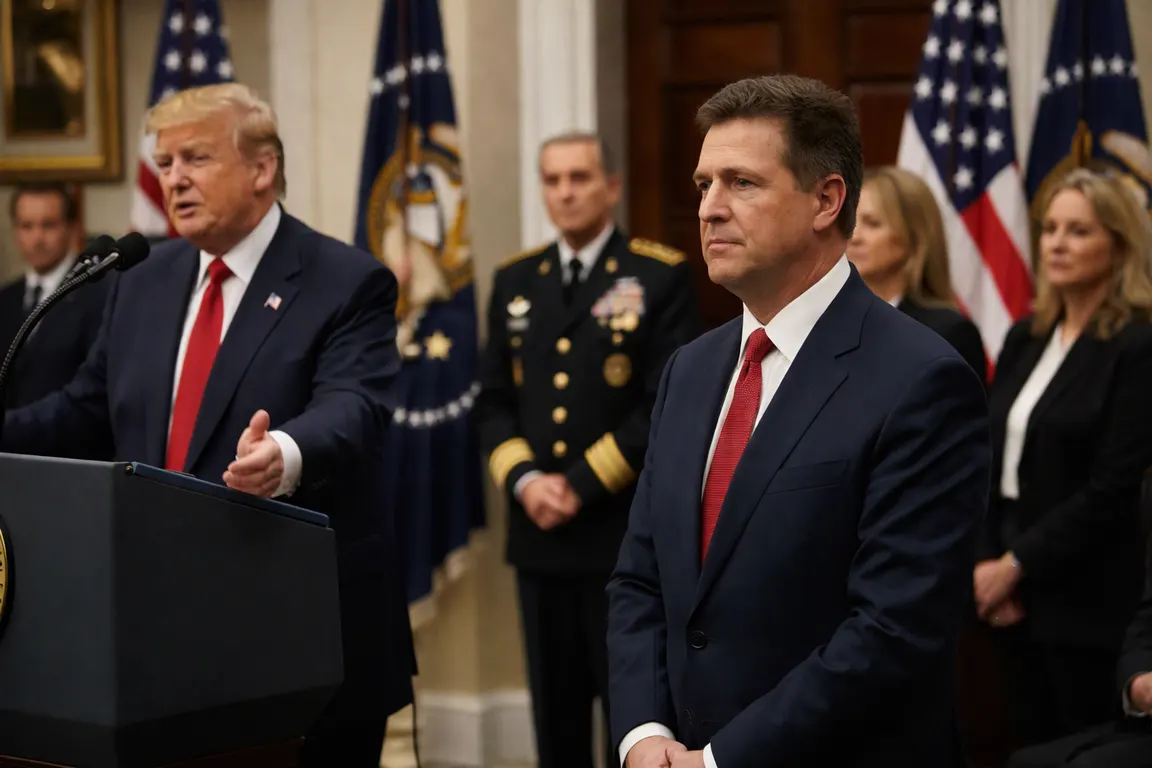
President Donald Trump announced on Sept. 29, 2026 that the White House will establish an inter‑agency body called the Super Intelligence Force (SIF) to assess artificial‑intelligence risks and opportunities. The task force will be led by Director of National Intelligence Jay Clayton, who will retain his DNI duties while serving as the administration’s AI coordinator. SIF has a statutory‑style deadline of 120 days to deliver a report with recommended government actions.
The SIF is the first formal U.S. structure dedicated to coordinating AI policy across intelligence, technology and economic portfolios. By placing leadership under a single task force, the administration signals that AI is a national‑security priority. The upcoming report could shape regulatory approaches, funding allocations and international coordination on AI safety, with direct implications for tech firms, investors and the public.
The task force’s leadership includes three vice‑chairs: Federal Trade Commission Chairman Andrew Ferguson, Office of Personnel Management Director Scott Kupor and Pentagon Chief Technology Officer Emil Michael. Additional members are Vice President JD Vance, Defense Secretary Pete Hegseth and Treasury Secretary Scott Bessent. Former Secretary of State Condoleezza Rice and former White House AI‑crypto adviser David Sacks will serve as external advisers on diplomatic and technical issues. The SIF reports directly to President Trump and Chief of Staff Susie Wiles.
The charter emphasizes “preventing overregulation and regulatory capture that would stifle innovation and competition,” reflecting the administration’s broader stance on technology policy. The language has not been independently verified beyond reporting by ZeroHedge; the BBC and NBC confirmed the task force’s existence and Clayton’s appointment but did not publish the full roster or charter details.
Industry observers say the SIF could move voluntary AI‑safety pledges toward enforceable policy. Companies such as OpenAI, Anthropic, Google, Meta and Nvidia may face new compliance expectations or incentive programs within the 120‑day window. Venture‑capital funds tracking AI startups are likely to watch the report for clues about future funding priorities or regulatory constraints, which could affect valuations.
Federal agencies will need to allocate staff and resources to support the SIF’s work. Representation at the vice‑chair level from the FTC, OPM and the Department of Defense suggests that consumer‑protection, workforce and defense considerations will be integrated into the assessment. Clayton’s dual role raises questions about potential conflicts of interest, as the DNI office traditionally focuses on foreign intelligence while the AI coordinator position will involve domestic policy coordination.
Critics note that the charter’s anti‑overregulation language could limit the force’s ability to impose safety safeguards. If the SIF prioritizes avoiding regulatory capture, it may underplay risks such as model misuse, bias or geopolitical competition. The lack of independent verification of the detailed mandate adds uncertainty about how much authority the task force will ultimately wield.
The next milestone is the 120‑day deadline, by which SIF must submit its findings to the President. The report is expected to outline specific recommendations for legislation, funding streams and inter‑agency cooperation. Whether those recommendations will translate into binding policy remains unclear, and lawmakers are likely to scrutinize the balance between innovation incentives and safety safeguards as the draft emerges.