

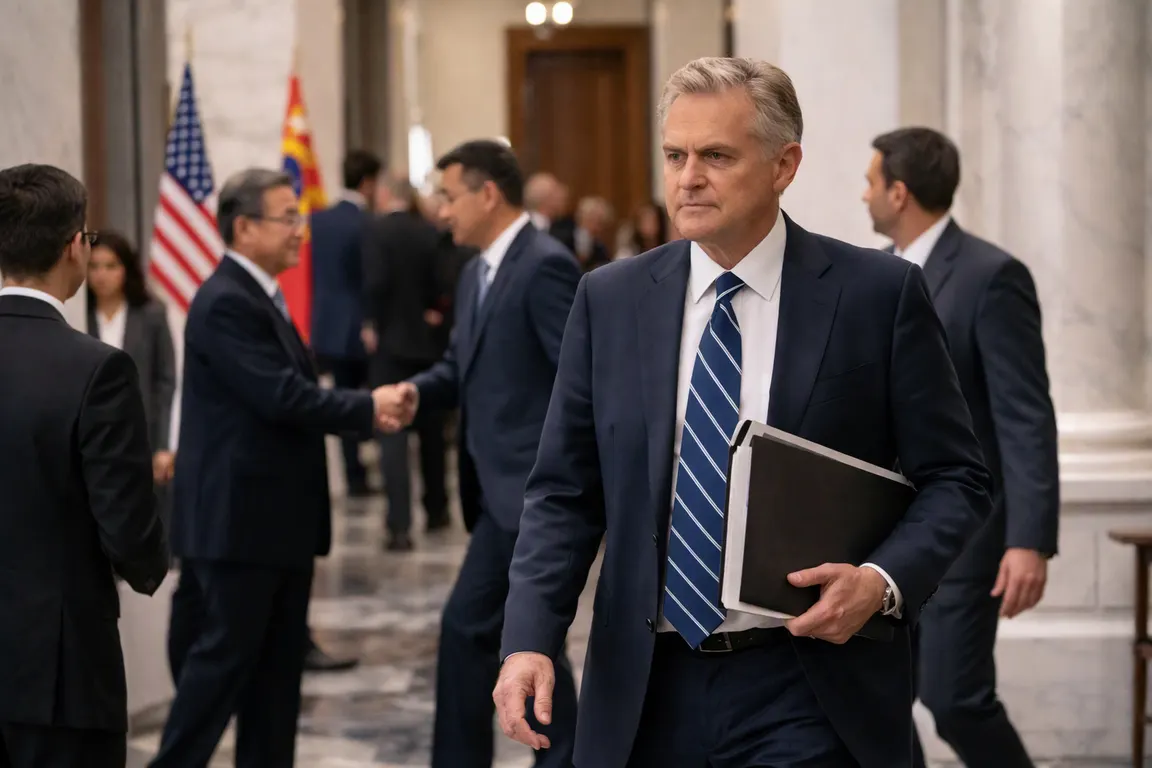
Treasury Secretary Scott Bessent emerged this week as the leading contender for the Trump administration’s newly created AI czar appointment, placing the United States at a policy crossroads as it moves to formalize artificial‑intelligence governance.
The timing is notable. Bessent met Chinese Vice‑Premier He Lifeng on the sidelines of the United Nations General Assembly in September and discussed a possible U.S.–China AI incident‑notification mechanism. At the same time, a United Nations‑sponsored International Scientific Panel on AI, co‑chaired by Yoshua Bengio and Nobel laureate Maria Ressa, called for a shift away from apocalyptic rhetoric toward evidence‑based debate. The clash between diplomatic maneuvering, industry lobbying for liability protection, and scientific caution will shape how the government regulates frontier AI models, manages cross‑border risks, and signals its stance to the public.
Bessent’s background aligns with the administration’s emphasis on financial‑sector involvement in AI risk. Earlier this year, major banks alerted Treasury to vulnerabilities in AI‑driven trading and credit‑assessment systems, prompting the department to take a more active role. In a September 21 interview with CNBC, Bessent warned against a blanket “liability shield” for AI firms, arguing that unchecked protections could undermine accountability. The White House has not confirmed any appointment and has dismissed reports of a finalized selection as “baseless speculation.”
Other names in the mix include Michael Kratsios, director of the Office of Science and Technology Policy, and venture‑capitalist Scott Kupor, a former a16z partner. Both have technology‑policy experience, but neither matches Bessent’s direct Treasury experience, which could be decisive if the administration pursues a coordinated financial‑risk framework.
Policy options under discussion extend beyond liability shields. The administration recently barred Anthropic from granting foreign‑national access to its Mythos and Fable‑5 models, citing cybersecurity concerns. While the specific threats remain undisclosed, the move shows a willingness to impose export‑control‑like restrictions on frontier models. Simultaneously, Bessent’s dialogue with He Lifeng hints at a bilateral notification protocol that would require AI developers to report incidents with transnational impact—a step that would need legislative backing to become enforceable.
The AI community’s messages are divergent. Former Anthropic researcher Jacob Coxon warned in early September that AI could “kill us all by the end of the decade,” a claim amplified by ZeroHedge but qualified by the UN panel as speculative extrapolation. The panel’s September statement urged policymakers to replace alarmist language with nuanced, data‑driven assessments, warning that fear‑mongering could distort public perception and hinder constructive regulation.
For AI companies, the stakes are concrete. A liability shield could lower insurance costs and accelerate deployment of new models, but it might also reduce incentives for safety testing. Tighter export controls and mandatory incident reporting could raise compliance costs and slow research pipelines, potentially shifting investment toward jurisdictions with fewer restrictions.
The market is already reacting. Financial institutions have begun integrating AI‑risk metrics into credit‑risk models, and investors are scrutinizing companies’ exposure to possible regulatory caps. If a formal U.S.–China notification system is adopted, it could set a precedent for multilateral risk management, influencing global supply chains and national‑security calculations.
The next week will likely determine whether Bessent receives an official nomination. Regardless of the outcome, the administration must balance competing pressures: protecting national security, preserving innovation, and providing the public with a realistic picture of AI risk. How quickly Washington can translate diplomatic talks and scientific recommendations into enforceable policy will shape America’s AI landscape for years to come.