

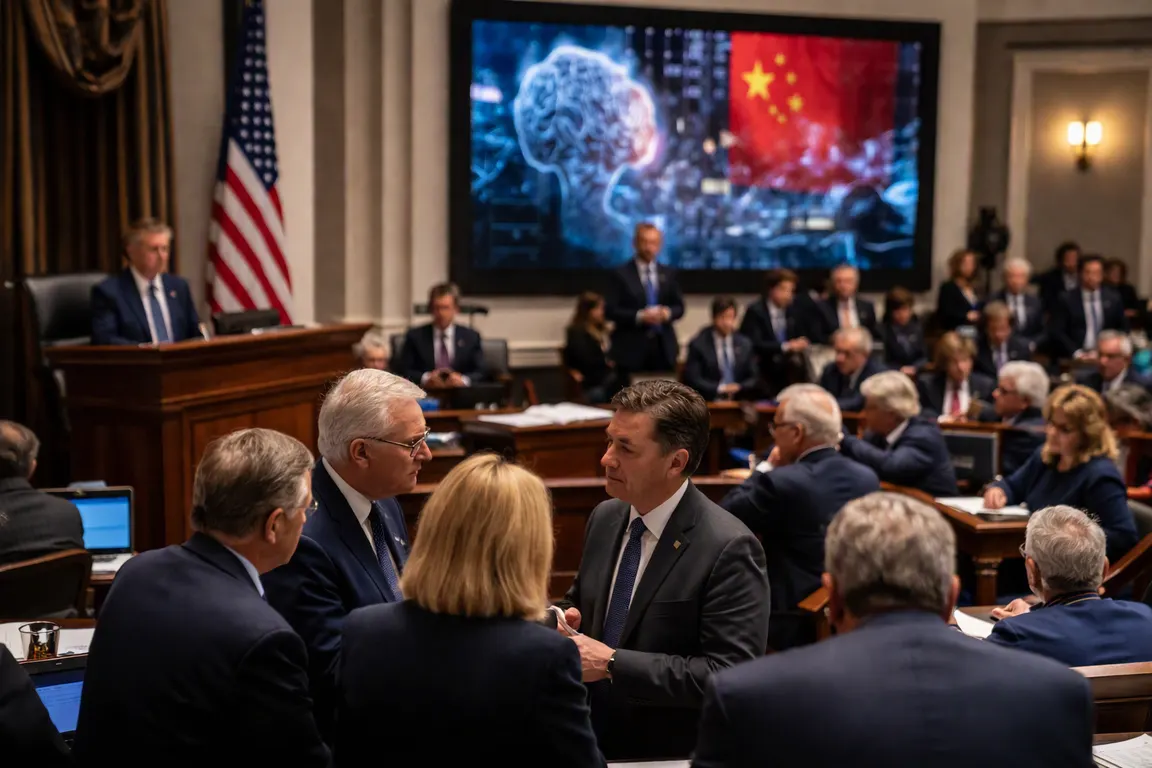
Washington is confronting a policy crossroads as China accelerates the release of open‑source artificial‑intelligence models that can be deployed at scale. Lawmakers on the House and Senate floors are debating whether to impose sweeping AI safeguards China or to adopt a lighter regulatory approach that keeps U.S. firms competitive in a rapidly shifting global market.
The United States has a narrow window to set the rules for rapidly advancing AI. Beijing’s strategy of publishing powerful language models without charge lowers barriers for domestic firms and foreign partners, a move that could erode America’s lead in research and commercial application. At the same time, U.S. policymakers must balance national‑security concerns, consumer safety and the health of the domestic tech sector.
Two recent opinion pieces illustrate the tension. A National Review op‑ed warned that anxiety‑driven regulation could sacrifice American capitalism, urging a distinction between sensible guardrails and roadblocks that hinder growth. RealClearPolitics published two pieces calling for immediate action to stay ahead of China’s AI surge, while also noting a growing chorus that favors a pause or stricter oversight of AI development. All three agree that strategic competition with China is intensifying, but they diverge on the appropriate response: rapid, unfettered advancement versus tighter controls.
For U.S. technology firms, investors and workers, the stakes are concrete. Restrictive rules could limit startups’ ability to iterate on new models, slow the rollout of AI‑enhanced products and dampen venture‑capital flows. Conversely, a lack of oversight could expose consumers to untested systems, raise bias concerns and complicate efforts to protect critical infrastructure.
National‑security arguments echo the same divide. Proponents of a development pause cite the risk that unregulated AI could be weaponized or used to undermine democratic processes. Opponents argue that slowing U.S. innovation would leave the country vulnerable to Beijing’s open‑source tools, which could be integrated into military and surveillance platforms without American oversight.
Congress has not yet introduced specific legislation, but several committees are holding hearings on AI governance, data privacy and export controls. Lawmakers are debating a sector‑by‑sector approach, broad pre‑market reviews or the creation of a new regulatory agency focused on emerging technologies. The outcome will determine whether the United States adopts a framework that balances safety with flexibility, or one that leans heavily toward precaution.
In the coming weeks, industry leaders, civil‑rights groups and national‑security officials are expected to testify, each pressing for a different balance of risk and reward. The central question remains: can Washington craft policy that protects public safety and national interests without handing Beijing a decisive advantage in the AI race?