

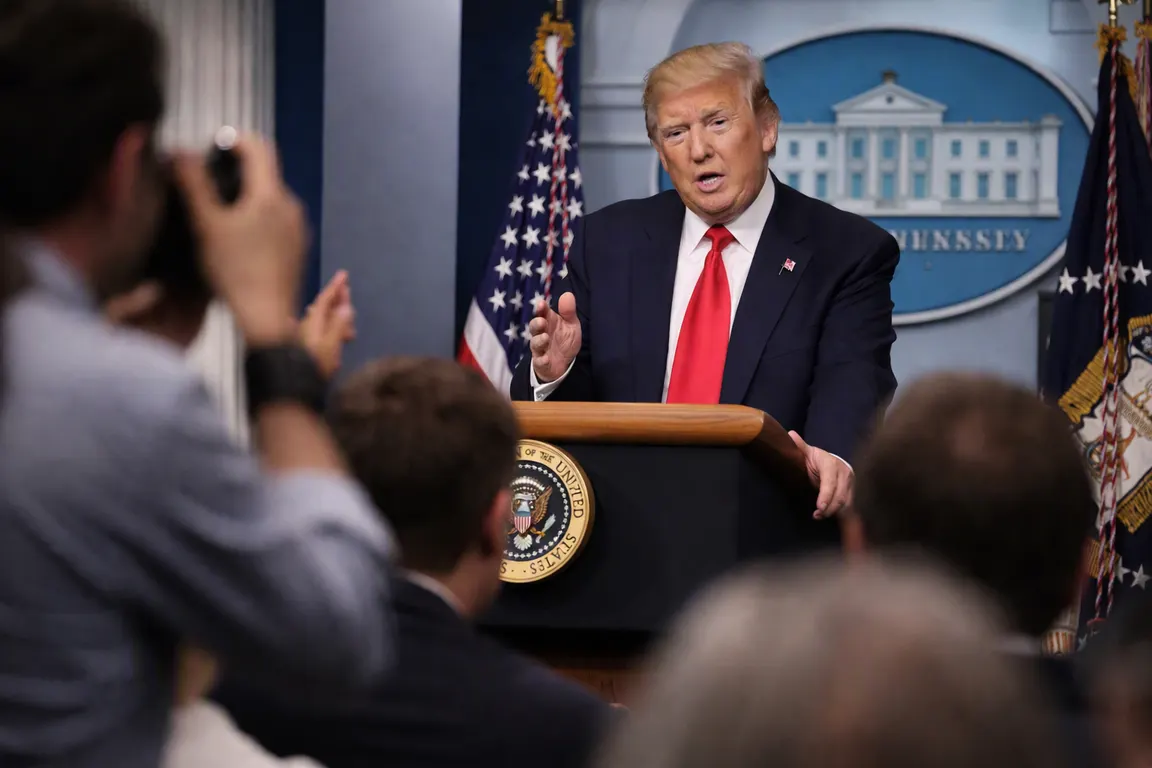
President Donald Trump dismissed recent calls for an AI development pause as a "hoax," saying existing safeguards are sufficient and that slowing progress would give Beijing a strategic advantage, officials said Thursday. The remarks, made at a press briefing, marked the administration’s latest public rejection of any regulatory slowdown.
The issue is urgent because AI systems are being deployed in critical infrastructure, finance and public services faster than safety frameworks can keep pace. Experts warn that without coordinated rules, unchecked advances could create hazards that affect citizens, markets and national security.
Trump’s comments reflected a broader economic narrative that frames AI as a growth engine. In an interview cited by RealClearPolitics, he said the United States must "keep the AI boom going" and warned that a pause would let China "take the lead." No legislative proposal or formal policy to pause or heavily regulate AI has been announced, leaving the debate in the realm of political rhetoric.
Both Washington and Beijing are reporting heightened safety concerns. NBC News noted that regulators in the United States and China alike are uneasy about the speed of AI development, citing risks such as biased decision‑making, cyber‑physical attacks and the opacity of advanced models. Mutual distrust between the two powers is stalling joint efforts to mitigate those risks.
Academic and industry experts have repeatedly called for international cooperation to address what they describe as "strategically vital" dangers. A consortium of AI researchers warned that fragmented national approaches could leave gaps that adversaries might exploit, and that a coordinated safety framework is essential for global stability. Their appeal contrasts sharply with the administration’s focus on competition.
Private investment in AI continues to surge despite regulatory uncertainty. Venture‑capital flows and corporate R&D budgets remain robust, reflecting confidence that market demand will outpace any future constraints. This investment climate reinforces the administration’s argument that a pause would harm U.S. economic momentum while offering no clear safety benefit.
The policy vacuum also creates uncertainty for developers and downstream users. Tech firms must decide whether to self‑impose safety checks or risk deploying systems that could malfunction in high‑stakes environments such as power grids or medical diagnostics. Consumers and operators of critical infrastructure may encounter untested technologies without clear accountability mechanisms.
Lawmakers have signaled interest in the issue, but no concrete bill has emerged. Sources familiar with congressional staff said hearings on AI safety are likely to be scheduled later this year, though the agenda remains contested between those who prioritize rapid innovation and those urging precautionary measures.
As the United States pushes ahead in the AI race, the lack of a coordinated safety strategy raises a fundamental question: can competitive ambition coexist with robust, cross‑border safeguards, or will distrust between Washington and Beijing deepen a regulatory gap that endangers both economies and public safety?