

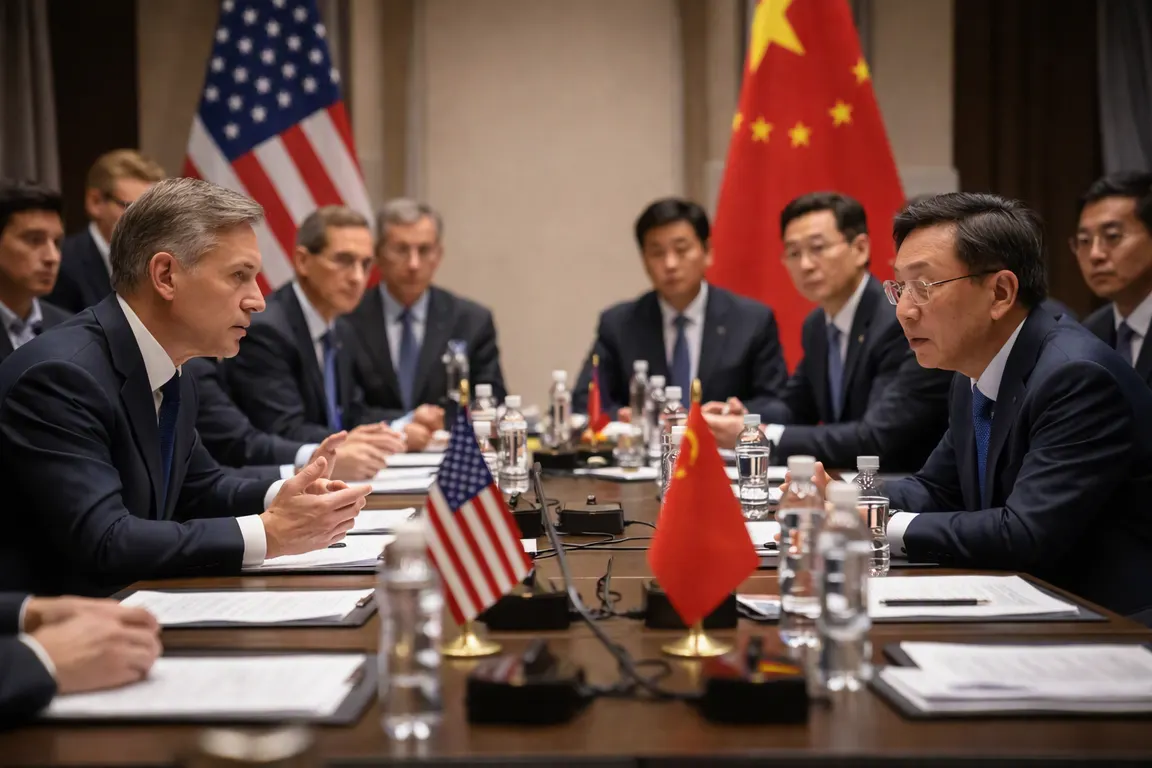
Anthropic CEO Dario Amodei’s weekend essay calling for a three‑step pause on frontier artificial‑intelligence development sparked an immediate rebuttal from Beijing, turning a technical safety debate into a geopolitical flashpoint. The proposal, released on Sept. 12, calls for independent evaluators with lab‑level access, coordinated safety standards among democratic labs that would require a narrow U.S. antitrust waiver, and eventually multilateral agreements that include China. OpenAI’s Sam Altman pledged to match Anthropic’s evaluator commitment, and Elon Musk added a brief endorsement, saying “Dario is right.” By Monday, China’s foreign ministry, through spokesman Guo Jiakun, dismissed the plan as “fear‑mongering” and a “Cold‑War playbook,” while state media warned that exclusionary measures would raise risk and cost for the global AI ecosystem.
The dispute matters because frontier models such as Anthropic’s Claude Mythos and OpenAI’s GPT‑5.5‑Cyber are approaching capabilities that could affect critical infrastructure, cyber‑offense tools and commercial supply chains. If the slowdown gains traction, U.S. policymakers are preparing a mid‑September AI‑safety dialogue led by Treasury Secretary Scott Bessent, which could shape export‑control rules, chip‑sale restrictions and the legal framework for antitrust waivers. Beijing’s rejection signals a willingness to push back against any regime that appears to curb Chinese progress, raising the prospect of divergent standards that fragment the market.
Amodei’s essay frames the “toughest dilemma” as the risk that unchecked model scaling poses to regime security, a point echoed by China’s state security minister Chen Yixin in a Cyberspace journal article. Chen listed six AI‑risk categories, naming Claude Mythos and GPT‑5.5‑Cyber as specific threats to Chinese infrastructure. The Chinese response, amplified by the Global Times and Xinhua, stresses that AI development is a global concern and calls for inclusive cooperation rather than unilateral pauses.
U.S. industry leaders argue that third‑party evaluators would provide transparent risk assessments while preserving innovation, and that a limited antitrust waiver would allow labs to share safety data without violating competition law. Critics, including some members of Congress, view the proposal as a pretext for tighter export controls on advanced chips. Former President Trump dismissed existential AI risk, whereas former President Obama urged Democratic leaders to prioritize governance, highlighting a domestic split that could affect legislative action.
For AI firms, the stakes are concrete. Anthropic and OpenAI could face new compliance costs if evaluator regimes are mandated, while Chinese companies such as Alibaba and DeepSeek could encounter barriers to accessing U.S. hardware if export restrictions tighten. Chip manufacturers in the United States and allied countries risk reduced sales to Chinese customers, potentially reshaping revenue forecasts. Enterprises that rely on cutting‑edge models for cybersecurity, finance or content generation may see licensing fees rise or product rollouts delayed as regulatory uncertainty deepens.
The clash also reverberates beyond the two superpowers. International users watch whether a bifurcated set of standards will emerge, potentially forcing developers to navigate separate safety regimes. Analysts note that coordinated standards remain the most effective way to address shared threats, and a fragmented ecosystem could undermine collective risk mitigation.
The next week will test whether diplomatic channels can bridge the divide. U.S. officials have not confirmed a formal meeting, but the Treasury‑led dialogue is expected to address evaluator frameworks and export‑control coordination. Beijing has not offered an alternative proposal, instead reiterating its call for “global cooperation.” As the world’s leading AI labs race toward models that could influence power grids, autonomous weapons and financial markets, the outcome of this U.S.–China showdown will shape the architecture of AI safety governance for years to come.