

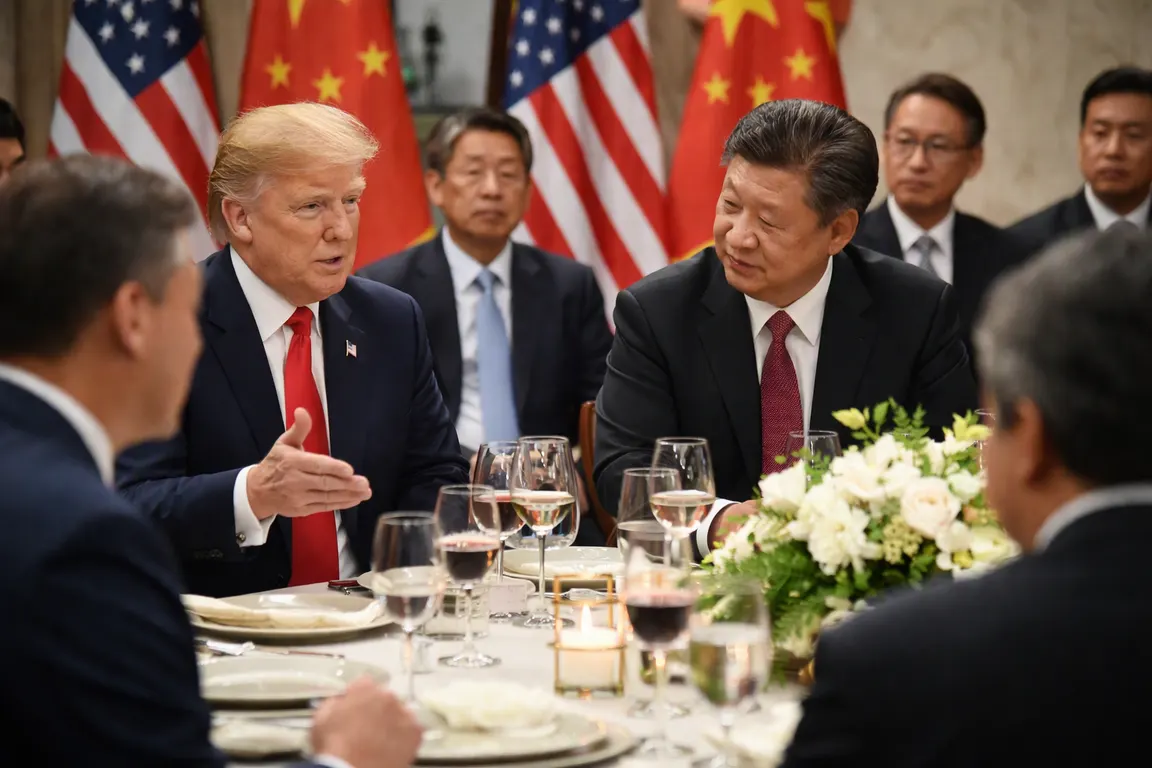
U.S. President Donald Trump and Chinese President Xi Jinping met Thursday for a state visit that included a joint dinner with senior AI industry leaders. The leaders used the occasion to raise concrete policy questions about artificial intelligence, focusing on AI safety licensing, safety standards, a framework for licensing technology transfers, and a proposal to rename the technology to improve public perception.
Both governments said AI safety is a top agenda item, reflecting concerns that unchecked deployment could affect critical sectors such as finance, energy and transportation. By putting safety first, the bilateral dialogue signals that any future cooperation will be conditioned on measurable risk‑mitigation measures, not just commercial interests.
During the dinner, officials from leading U.S. and Chinese firms were briefed on potential licensing mechanisms that could govern cross‑border AI research and product rollout. No formal agreement was announced, but both administrations indicated negotiations will continue, emphasizing clear criteria for technology‑transfer approvals, monitoring compliance and enforcing penalties for violations. Details on timelines or enforcement structures were not provided, leaving analysts to question how quickly a workable framework could emerge.
Trump also advanced a proposal to rebrand artificial intelligence, arguing that a new name would help the public view the technology more favorably. Critics warned that a cosmetic change could mask existing risks and complicate regulatory oversight. Experts noted that terms such as “super intelligence” already circulate in technical circles, and that renaming does not address the underlying safety challenges.
The licensing talks were highlighted as the substantive outcome by some outlets, while the branding effort was framed as a flashpoint by others. Neither source offered a concrete licensing blueprint, and none mentioned opposition from domestic stakeholders, leaving the scale of pushback unclear.
For AI developers and technology firms in both countries, new licensing requirements could reshape collaborative projects, supply‑chain arrangements and market entry strategies. Companies may need to secure bilateral approvals before sharing algorithms or deploying models that process sensitive data, potentially slowing innovation cycles. At the same time, a shift in terminology could influence consumer trust, as public perception often hinges on how the technology is described in media and product labeling.
Regulators will also have to integrate any agreed safety standards into existing frameworks, affecting sectors ranging from autonomous vehicles to financial fraud detection. The outcome of these talks may set a precedent for how the world’s two largest AI producers coordinate on risk management, with implications for global governance structures that are still in early development.
The next step is a series of technical working groups slated to convene later this year, though no specific dates were disclosed. Observers will watch for concrete proposals on licensing criteria, enforcement mechanisms and any official language on rebranding, all of which will shape the future of AI policy beyond Washington and Beijing.