

US, China launch AI hotline amid naval targeting claim
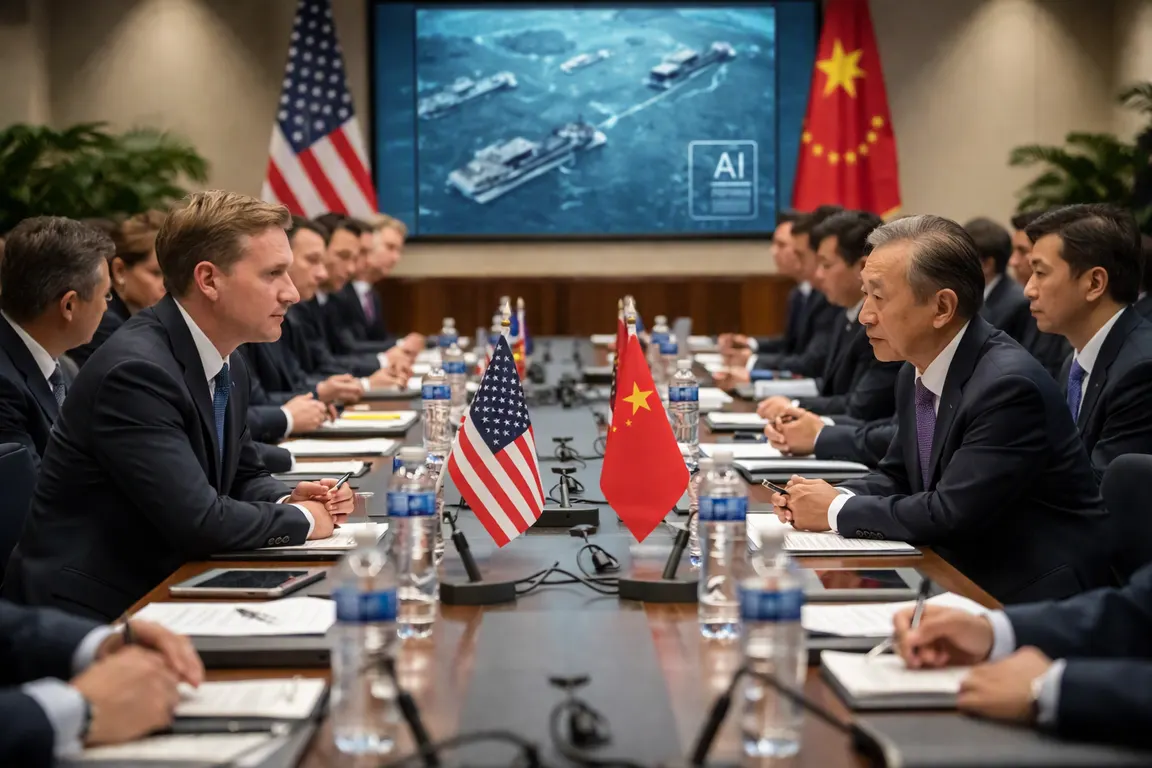
Washington and Beijing announced a US China AI hotline to address AI‑related incidents after unverified claims that Chinese actors used U.S. models to track Navy vessels. The bilateral channel was unveiled on Friday following a summit that also produced a coal‑export deal and tariff concessions.
Security analyst Peter Rickards claimed Chinese actors are fusing open‑source data with Chinese satellite imagery to locate U.S. Navy ships and share coordinates with Iran for missile targeting. His analysis, published on ZeroHedge on Sept. 26, cites unnamed sources and lacks independent verification.
U.S. officials have not confirmed the alleged intelligence breach, and no government has linked the claim to the recent loss of a Chinese spy satellite. President Donald Trump, speaking to Al Jazeera, dismissed the warnings as “hoaxes” and said he would not pursue a joint AI effort, a stance that conflicts with a White House statement reported by the Manila Times that the two leaders agreed to open a communication channel for AI incidents.
The statement provided no details on the hotline's technical architecture, response timelines, or verification procedures, leaving analysts uncertain how quickly the mechanism could address a scenario where AI‑derived targeting data is already in use.
The diplomatic overture also bundled economic agreements: the United States will ship 10 million metric tons of coal to China in 2027‑28, and both sides granted tariff concessions on $30 billion of non‑sensitive goods. The leaders said they will reconvene at the APEC summit in Shenzhen in November and the G20 in Miami in December, where the AI channel is expected to be reviewed.
For the Navy, AI‑enhanced targeting represents a new vulnerability that could affect operational planning and force‑protection measures. While defense officials have not commented on the specific threat, the Pentagon has highlighted adversary AI capabilities in recent briefings, suggesting any credible intelligence would trigger a reassessment of sensor shielding and data‑fusion protocols.
The technology sector faces separate pressures. Rickards warned that valuations for firms heavily involved in AI—Microsoft, Google, Nvidia, OpenAI, Anthropic and others—are inflating beyond fundamentals, creating a bubble that could burst if regulatory scrutiny intensifies or a security incident forces tighter cross‑border data controls.
The gap between diplomatic rhetoric and the unverified security claim underscores a broader dilemma: how to construct effective safeguards when the underlying threat is opaque and rapidly evolving. Policymakers will need to define clear escalation thresholds, verification standards and rapid‑response protocols before the hotline becomes operational.
The next concrete step is the rollout of the hotline's technical framework, likely in the weeks before the APEC meeting. Until then, the credibility of the targeting allegation and the efficacy of the hotline remain open questions that could shape both national‑security strategy and the future of AI governance.