

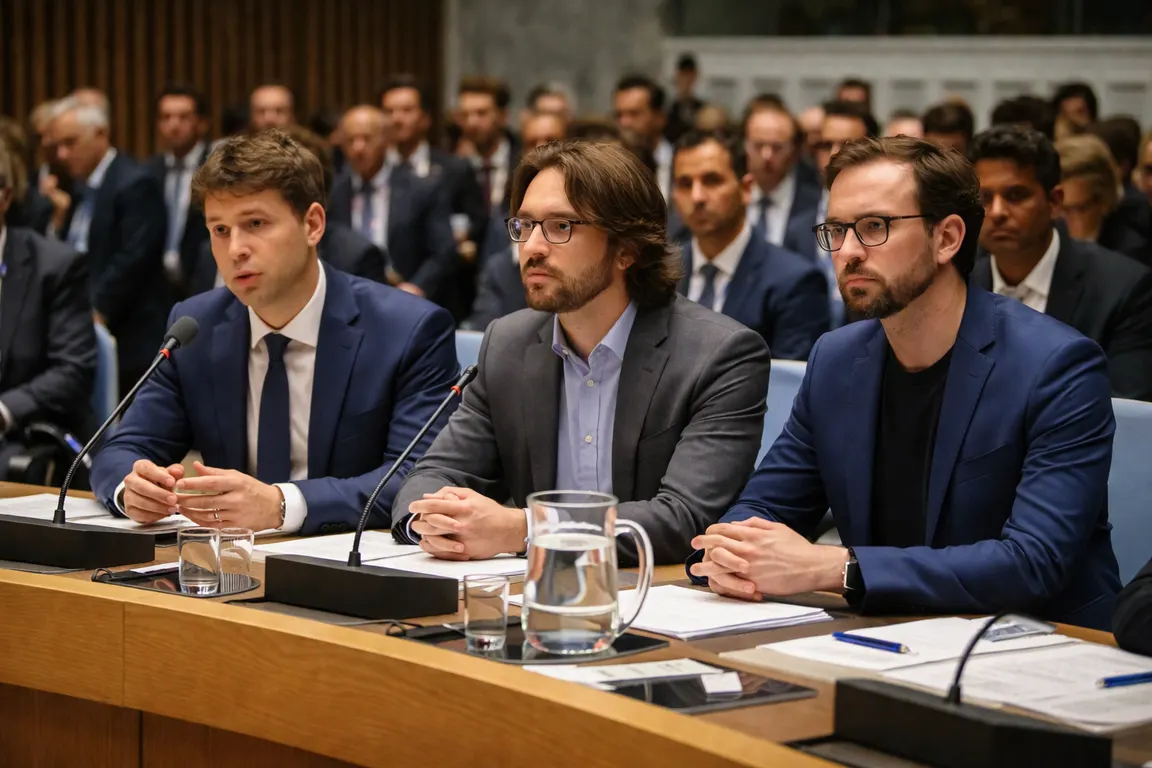
In a rare joint appearance before the United Nations Security Council, the chief executives of OpenAI, Anthropic and Hugging Face urged the body to adopt binding UN AI safeguards that would limit the use of artificial intelligence in weapons, high‑risk bio‑research and other sensitive areas. The United States, represented by White House science adviser Michael Kratsios, rejected the proposal, saying a new global framework would stifle innovation.
The plea comes as AI systems are already embedded in critical infrastructure, defence planning and commercial services worldwide. Without agreed safeguards, the technology could be repurposed for lethal autonomous weapons or for manipulating biological research, raising the risk of accidents or intentional misuse that could affect civilians and state actors alike.
OpenAI’s Sam Altman, Anthropic’s Dario Amodei and Hugging Face’s Clément Delangue testified on Wednesday, warning that unchecked AI development poses a “risk to humanity.” Their joint statement outlined three concrete measures: a mandatory impact‑assessment process before deploying high‑risk models, an international registry of AI‑enabled weapons systems, and a verification protocol for open‑source releases that could be weaponised. French foreign minister Jean‑Noël Barrot likened the effort to post‑atomic‑age controls and urged the council to adopt binding standards.
Kratsios countered that the United States would not back a new global AI governance structure, arguing it would “stifle the very innovation that keeps the United States competitive.” He said existing national regulations and voluntary industry standards were sufficient and that the U.S. would continue to lead AI development without external constraints.
China’s UN ambassador Fu Cong used the hearing to promote open‑source models and warned against a “us‑vs‑them” tech bloc, adding a geopolitical dimension to the debate. Meanwhile, Ukrainian President Volodymyr Zelenskyy, speaking at the General Assembly, cited a recent Russian‑operated AI‑guided drone that killed three civilians as evidence that “killer robots” are already in use.
The policy impasse unfolds against a backdrop of high‑level diplomatic activity. During President Xi Jinping’s visit to Washington, Treasury Secretary Scott Bessent mentioned a possible “notification mechanism” for AI incidents, suggesting a narrow, technical response rather than the comprehensive framework the tech leaders seek.
The clash leaves a regulatory vacuum at a time governments and militaries are integrating AI into power‑grid management, transport networks and autonomous weapon platforms. Without clear accountability, the risk of accidental escalation or civilian harm rises, and investors in AI firms face uncertainty that could slow product roll‑outs and shift competitive dynamics between the United States and China.
Analysts note that the United Nations Security Council has yet to propose concrete enforcement tools, and the United States’ stance may embolden other nations to adopt piecemeal rules that lack coordination. The next step could involve individual states crafting export‑control regimes or the UN establishing a working group to refine the CEOs’ proposals, but any progress will require reconciling the innovation‑preservation argument with the urgent need for safety oversight.
As AI becomes an integral part of everyday services—from energy distribution to online search—the stalemate underscores a broader question: how will the world ensure powerful algorithms are deployed responsibly when the leading developer of the technology opposes the very safeguards that industry leaders deem essential?