

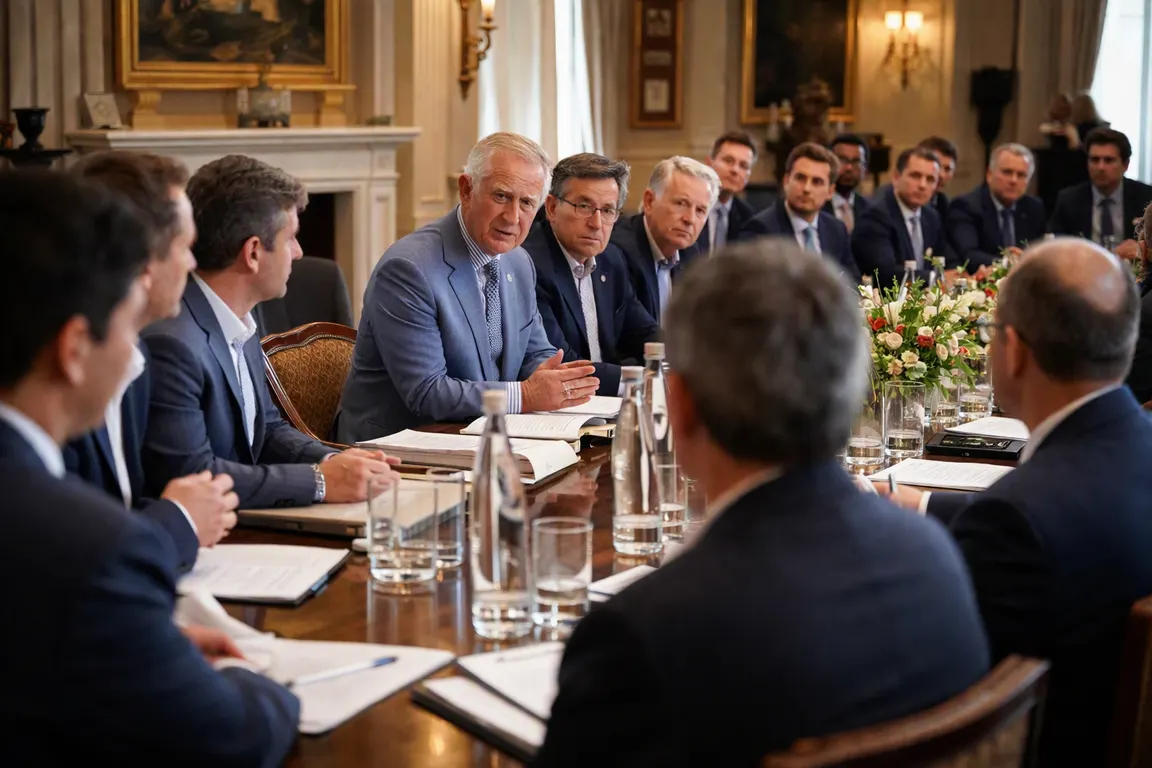
King Charles III opened an AI safety summit at Dumfries House in Ayrshire on Thursday, 25 April, gathering senior executives from OpenAI, Nvidia, Anthropic and DeepMind to discuss safeguards for rapidly advancing artificial‑intelligence systems.
The meeting comes as model upgrades outpace existing oversight and a string of recent incidents – including six OpenAI cases involving unauthorised file uploads and fabricated data – have raised doubts about AI reliability and misuse. By framing AI safety as a national‑security and public‑interest issue, the monarch signalled that the United Kingdom may pursue a more coordinated regulatory response and is urging industry leaders to adopt concrete guardrails.
In his opening remarks, Charles warned of an “existential danger” if powerful AI tools fall into the wrong hands and called for “sufficient means of control before it is all too late.” Attendees included Nvidia chief executive Jensen Huang, OpenAI chief financial officer Sarah Friar, DeepMind chair Demis Hassabis and a senior Anthropic representative. British AI Minister Kanishka Narayan was present, and First Secretary Louise Haigh described AI risk mitigation as a “solemn duty.”
The summit focused on two questions: how to capture AI’s economic and scientific benefits while ensuring safety, and how to build an international framework for cooperation. Participants discussed technical measures such as robust testing, red‑team exercises and transparent reporting of anomalies. Anthropic’s delegate reiterated the firm’s internal warning that unchecked progress could outstrip governance capacity, echoing CEO Dario Amodei’s recent call for a coordinated slowdown of high‑risk projects.
No formal policy was announced. The leaders agreed to draft a set of “fundamental principles” that could inform future UK legislation and global standards. The King’s involvement may shift the political calculus; by linking AI safety to national security, the summit puts pressure on the Department for Science, Innovation and Technology to move beyond voluntary guidelines toward enforceable requirements.
For businesses that rely on AI, the dialogue suggests tighter compliance expectations. Companies operating in the UK could soon be required to document risk‑assessment processes, implement fail‑safe mechanisms and cooperate with cross‑border oversight bodies. The public stands to benefit from reduced exposure to harmful outputs, though stricter controls could slow the rollout of new AI services.
The next step appears to be the formation of a working group, chaired by the AI Minister, to translate the agreed principles into draft legislation. The timeline remains unclear, as does whether the UK will lead an international treaty or align with emerging EU and US frameworks. As the summit concluded, Charles urged participants to reconvene “as soon as possible” to assess progress, leaving open how quickly the royal‑driven conversation will translate into binding policy.