

Pope AI warning France during historic visit
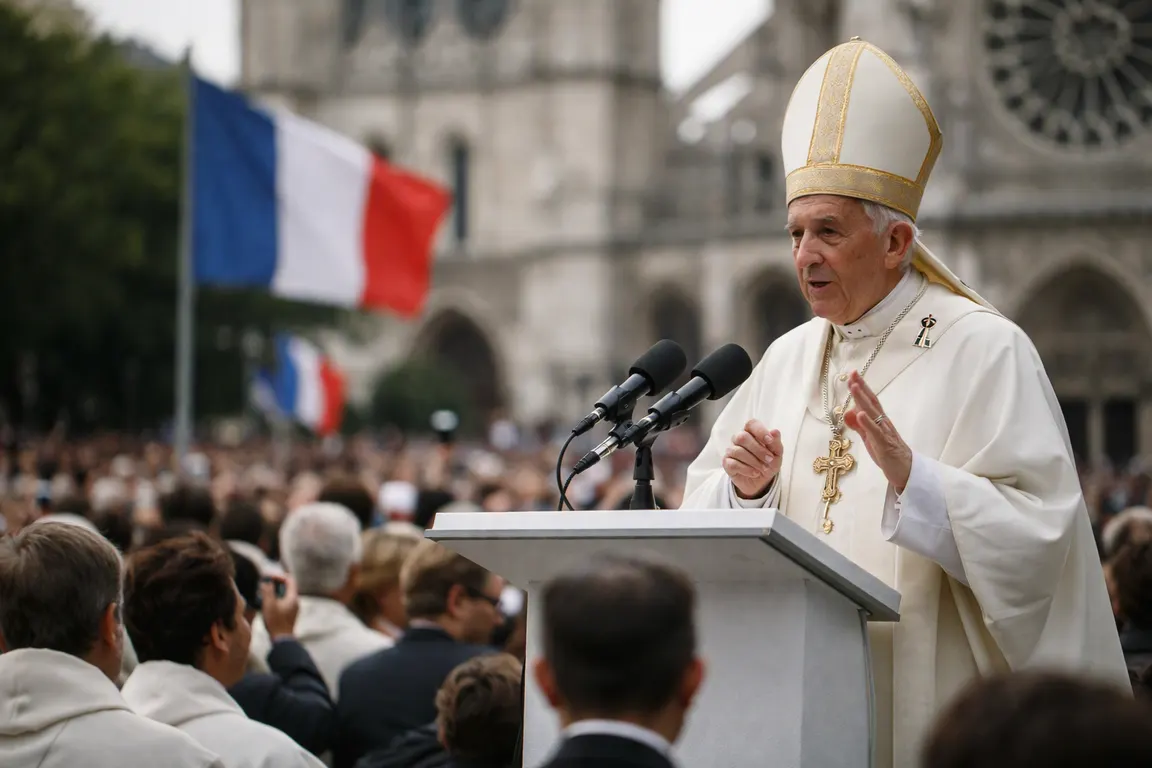
Pope Leo XIV used his first televised address in France to issue a Pope AI warning France, cautioning that unchecked artificial intelligence could turn society into a “paradise of machines.” The warning came during a two‑day visit that marked the first papal trip to France in 18 years and coincided with heated debates in Paris over new bio‑ethics laws and the European Union’s push for tighter AI safeguards.
The pope addressed President Emmanuel Macron at the Élysée Palace, urging the government and citizens to teach discernment in the face of rapid technological change. He said societies must not surrender moral judgment to algorithms, framing the issue as both a moral and educational challenge.
Around 300,000 people gathered at the Stade de France for a mass, according to Vatican estimates, while French officials expect up to one million participants across the capital’s events over the first two days. In his homily, Pope Leo XIV called the crowd “the saints of France” and repeated his call for ethical education during the private meeting with Macron.
The itinerary blended symbolic and pastoral moments. After the palace meeting, the pope rode in a popemobile through central Paris, celebrated mass at the newly reopened Notre‑Dame Cathedral, and returned to the Stade de France for an outdoor service that ended with fireworks in papal colours. A second mass was held at Place de la Concorde, and the visit concluded with a peace‑focused speech in Metz near the German border and a private audience with victims of clergy sexual abuse in Lourdes.
French Catholics, who make up roughly five percent of the nation’s 69 million people, turned out in unprecedented numbers, suggesting renewed public curiosity about religious expression in a country where laïcité is a constitutional principle. The pope’s reference to “authentic secularity,” reported by the Manila Times, sparked debate among lawmakers about how secular policy can accommodate moral arguments without compromising state neutrality.
Tech firms operating in the European Union are likely to feel added pressure. The pope’s appeal for “ethical discernment” echoes calls from EU officials for transparent AI systems and accountability mechanisms. While the Vatican has no legislative power, its moral authority could influence public opinion and, indirectly, parliamentary deliberations on AI oversight, data privacy and the commercialization of genetic technologies.
Crowd figures differ between sources: Al Jazeera cites the Vatican’s 300,000 estimate for the Stade de France, while the Manila Times highlights the French government’s projection of up to one million participants across Paris. Both outlets agree the AI warning was a central theme, though they frame it differently—Al Jazeera as a headline alert, the Manila Times as part of broader policy debates on assisted dying and secularism.
The visit underscores the rarity of a high‑profile religious figure engaging directly with contemporary tech policy in a secular nation. As France finalizes its AI strategy and European bodies refine bio‑tech regulations, the pope’s call for education and moral reflection may shape public discourse.
Policymakers now face the question of whether to integrate the Vatican’s ethical concerns into France’s AI legislative roadmap or let secular arguments dominate. The outcome will influence how the country balances religious moral guidance with its commitment to laïcité in the digital age.