

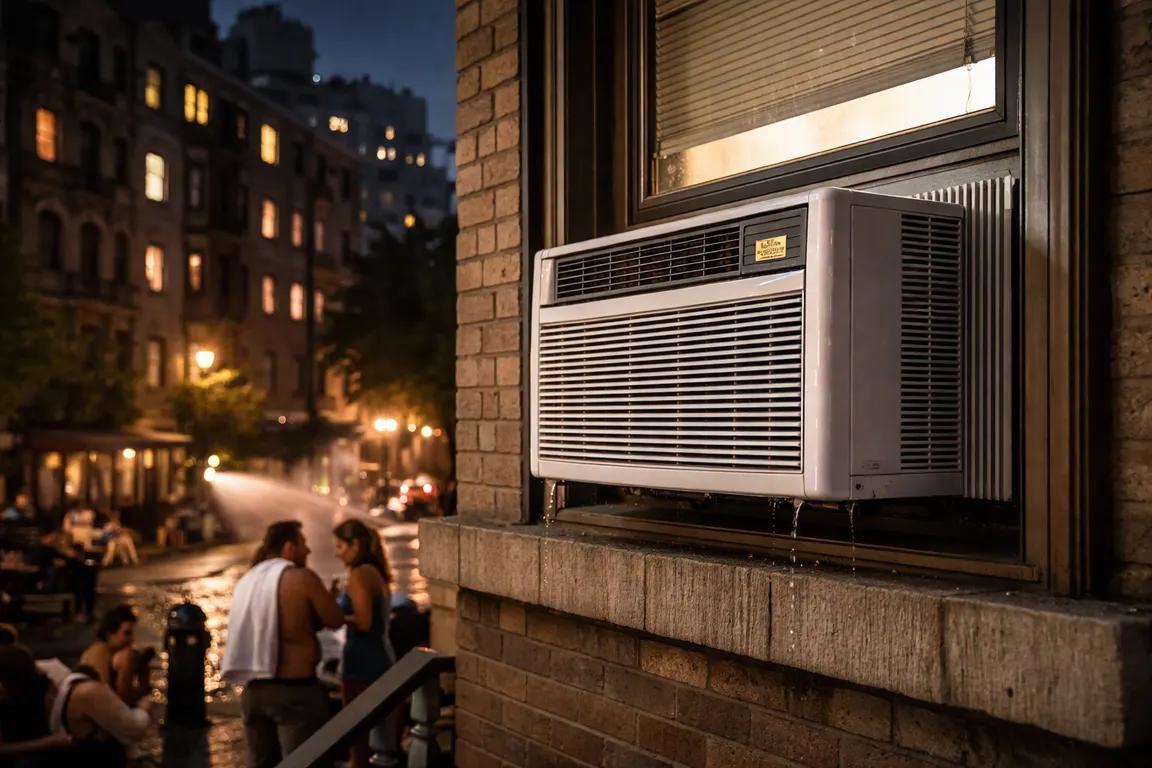
A sweltering July night sent New Yorkers scrambling for relief, and a single NYC window air conditioner now carries the city’s unofficial seal of approval. The New York Post’s Made It Here Awards 2026 named the unit the best performer for the city’s dense, apartment‑heavy environment after a staff tester ran nine models through real‑world conditions.
The Post’s testing team installed each unit in typical Manhattan apartments, replicating the humidity, limited floor space and electrical constraints residents face daily. Testers measured cooling output, runtime reliability, noise level and energy consumption, focusing on how each model performed in cramped, window‑type enclosures. While the exact scoring rubric was not disclosed, the evaluation emphasized a balance of cooling power, reliability and energy use.
Only one model consistently achieved the target temperature drop without frequent cycling or excessive noise, and it did so while drawing less electricity than its rivals. The tester’s “stamp of approval” reflects a hands‑on assessment rather than a laboratory simulation, giving landlords and renters confidence that the unit can handle New York’s unique challenges.
Energy efficiency matters in a city where electricity rates rank among the nation’s highest. The Post did not publish the unit’s SEER rating or exact kilowatt‑hour savings, but noted that its lower power draw translates into modest bill reductions for households that run the unit several hours a day. Widespread adoption of a more efficient model could ease peak‑load spikes that have previously forced utilities to implement emergency load‑shedding during heat waves.
The award series also highlighted a “Best Vacuums” roundup, underscoring the Post’s broader effort to guide city dwellers toward appliances that perform well in tight, high‑traffic spaces. However, the air‑conditioner testing did not involve independent third‑party labs or utility input, leaving some uncertainty about how the unit’s performance compares to industry‑wide standards.
Consumers looking to replace aging window units should note that the Post’s coverage omits pricing information. Without cost data, renters and property managers must weigh potential energy savings against upfront expense, which can vary widely among brands. Installers familiar with the city’s electrical constraints should verify that existing circuits can support the unit’s power draw, even though the winning model is described as less demanding than its competitors.
The lack of a disclosed make and model limits the immediacy of the recommendation, but the article sends a clear signal: a unit that can reliably cool a typical NYC apartment while consuming less electricity exists, and it has earned the Post’s endorsement. Readers are encouraged to consult local HVAC professionals, compare specifications, and ask retailers for models that match the performance profile highlighted in the testing.
As summer temperatures climb and the grid faces renewed pressure, the next step for consumers is to verify that any new air‑conditioner meets both the practical demands of their living space and the energy‑efficiency criteria the Made It Here Awards suggest are achievable. The Post’s findings also invite utilities and regulators to consider incorporating real‑world testing into future appliance guidance for the city.