

FBI Takes Down China-Backed Botnet Targeting U.S. Agencies
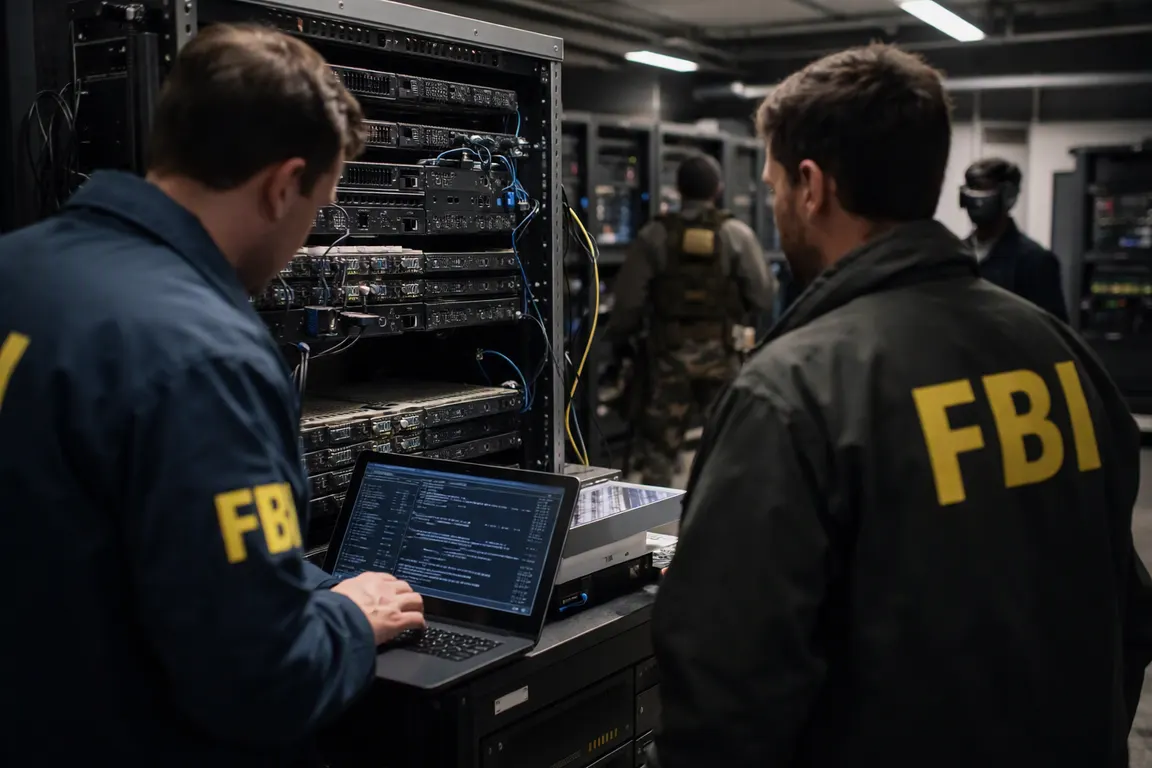
The FBI announced on Aug. 26 that it had seized the command‑and‑control servers of a China-backed botnet FBI takedown operation targeting multiple U.S. government networks. The effort, attributed to the cyber‑espionage group QTFY, disrupted the botnet’s two components—QScan and QTRouter—and cut off access to agencies that include NASA, the Federal Reserve, the Senate, the Department of Justice, the Energy Department, the Health and Human Services Department and the National Institutes of Health, as well as four unnamed private firms in the United States and South Korea.
According to a Department of Justice affidavit, the botnet has been active since at least 2018. QScan acted as a credential‑stealing loader, while QTRouter used hijacked Internet‑of‑Things devices, commercial proxy services and leased virtual private servers to create an “obfuscation network” that masked traffic originating from China. FBI Director Kash Patel and senior cyber official Brett Leatherman said the operation was run by Xinjiuwei Network Technology Company, based in Nanjing. Neither China’s foreign ministry nor its embassy in Washington has responded.
The breach raises immediate concerns for agencies that handle sensitive scientific, financial and health data. NASA is reviewing access logs to determine whether research data or mission‑critical communications were exfiltrated. The Federal Reserve is conducting a security audit of its internal systems that process monetary‑policy data and interbank settlement information. The Health and Human Services Department and the National Institutes of Health are checking for unauthorized access to patient records and vaccine‑research data. In each case, officials have ordered network isolation, credential rotation and expanded monitoring.
The incident underscores a broader trend identified by Google in 2024‑2025, which warned that Chinese and Russian actors increasingly exploit everyday smart devices—cameras, routers and other IoT hardware—to build distributed, hard‑to‑track infrastructures. By embedding malicious code in these devices, attackers can evade traditional network‑traffic analysis that focuses on known malicious IP ranges, allowing them to remain undetected for years.
Private‑sector victims, though not named, are likely to face regulatory scrutiny and potential supply‑chain disruptions. Companies in defense, aerospace and high‑technology sectors may have to disclose the breach to customers and investors, prompting remediation costs and possible litigation. A perception that critical U.S. institutions remain vulnerable could erode confidence in the broader economy.
While officials have not announced specific sanctions, the FBI’s takedown signals a willingness to pursue aggressive legal action against entities that facilitate such botnets. Lawmakers are expected to brief Congress on the incident, and the Department of Homeland Security is drafting guidance on securing IoT devices used in government‑contracted environments. The lack of a Chinese diplomatic response leaves open how the episode will affect bilateral relations and whether Beijing will curb the activities of companies like Xinjiuwei.
As the investigation continues, agencies are urged to complete forensic analyses, share indicators of compromise with industry partners and accelerate deployment of zero‑trust architectures. The case serves as a stark reminder that state‑backed cyber operations can exploit the most mundane technology to reach the highest levels of government.