

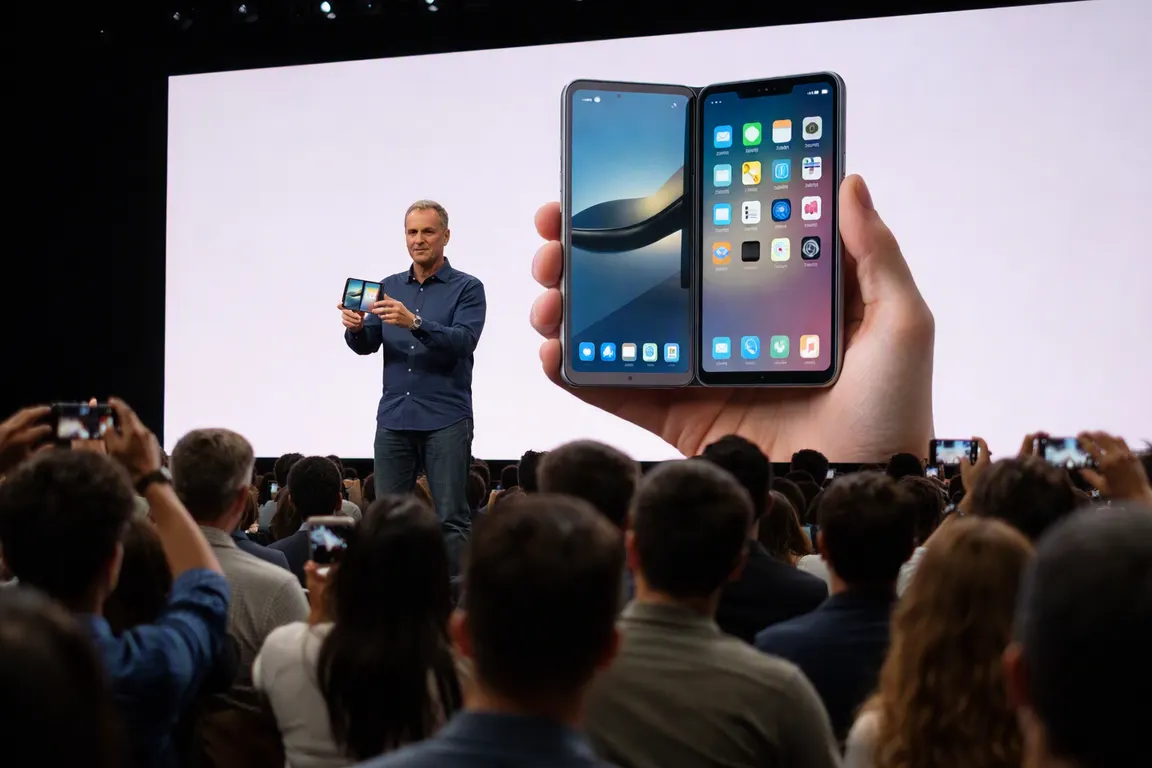
Apple unveiled its first foldable iPhone, the iPhone Duo foldable, at its annual product event, pricing the entry model at $1,999. The device folds inward like a passport and marks the most significant redesign of the iPhone line since the original 2007 model.
CEO John Ternus introduced the Duo as a premium addition to Apple’s portfolio, signaling the company’s move into a foldable market long dominated by Samsung and a few other manufacturers. By attaching a high price to a new form factor, Apple is testing how much consumers will pay for a foldable premium phone and probing its supply chain’s ability to produce flexible OLED panels and hinge mechanisms at scale.
All four news outlets covering the launch—NBC News, Al Jazeera, BBC News and The Guardian—reported the $1,999 starting price but gave no details on storage options, color choices or potential discounts. The uniform price suggests Apple is targeting affluent early adopters rather than the mass market, a strategy that could preserve the brand’s ultra‑premium image while limiting initial sales volume.
Industry analysts note that Apple’s entry could pressure Samsung, which currently leads the foldable segment with its Galaxy Z Fold series. Apple’s brand cachet may attract buyers who have previously dismissed foldables as niche, potentially expanding the segment among high‑income consumers.
The launch also raises supply‑chain questions. Flexible OLED panels and hinge assemblies are more costly and complex than traditional glass displays. If Apple orders large volumes, suppliers could face capacity constraints that might affect pricing for other Apple products that use similar components. Apple has not disclosed production volumes, leaving the scale of any impact uncertain.
Investors are watching closely. With a market valuation of roughly $4.5 trillion, Apple can afford to experiment with expensive hardware, but analysts caution that a misstep in pricing or availability could hurt sentiment if demand falls short of expectations.
Consumer response will hinge on two factors: the perceived value of a foldable iPhone versus existing premium models, and the willingness to pay nearly $2,000 for a device whose durability and long‑term performance have yet to be proven. Early adopters may view the Duo as a status symbol, while the broader market may wait for price reductions or more detailed specifications.
Apple has not announced a release date or the regions where the iPhone Duo will be sold, leaving retailers and potential buyers in a holding pattern. The next steps—whether Apple confirms production volumes, releases technical details or adjusts pricing—will determine if the Duo remains a niche luxury item or becomes a catalyst for broader foldable adoption in the premium smartphone market.