

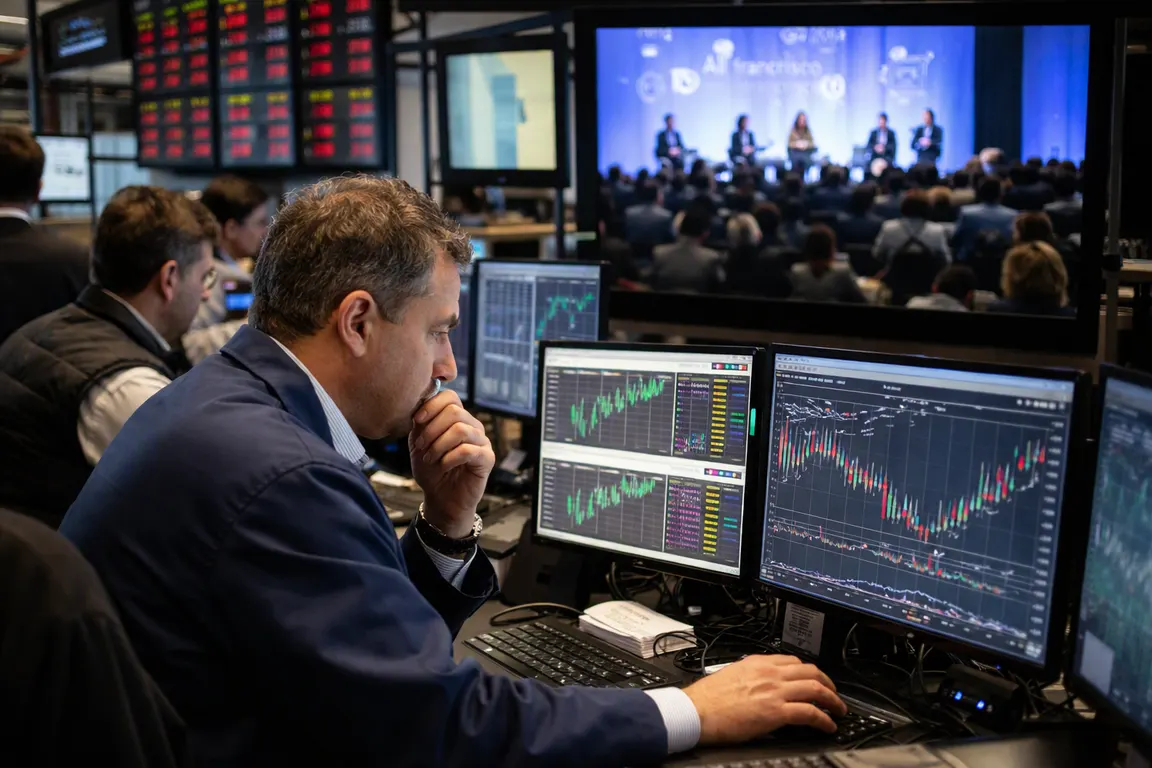
Traders are awaiting Thursday’s September consumer‑price index (CPI) report, which could push the Federal Reserve toward another rate hike, while Anthropic investor day in San Francisco will reveal the lab’s latest annualized revenue run‑rate. The overlap of a potentially hotter‑than‑expected inflation print, rising Treasury yields and a mixed earnings backdrop creates a rare moment when macro pressure meets AI‑sector fundamentals.
The CPI is forecast to rise 0.6% month‑over‑month, or 3.7% year‑over‑year, above August’s 3.4% gain. At the same time, the 10‑year Treasury yield hovers near 5.20% and short‑term yields are edging higher. Those levels have revived market estimates that the Fed could raise rates again in October, with odds now around 50%. A higher‑for‑longer rate environment squeezes growth‑oriented stocks, and AI‑related equities have already felt the strain as the Philadelphia semiconductor index logged its fifth straight decline and ASML’s earnings beat failed to lift the broader chip market.
Anthropic investor day, set for Oct. 14, will be the first public glimpse of the lab’s updated annualized recurring revenue (ARR) since it disclosed an $87 million figure in January 2024 and a $30 billion run‑rate in April 2026. The company projects $100 billion ARR by year‑end, but the exact number will be disclosed at the event. Analysts will likely compare Anthropic’s figure with OpenAI’s recent accounting change that lowered its ARR from $70 billion to $50 billion. The difference stems from OpenAI reporting net revenue, while Anthropic uses a gross‑revenue model that includes the full value of compute contracts, a gap that could confuse head‑to‑head comparisons.
The stakes extend beyond the labs. Google, Amazon and Microsoft have collectively signed more than $400 billion in non‑cancelable compute commitments with Anthropic and OpenAI. Those contracts lock in a sizable portion of future capital expenditures and could affect the tech giants’ balance sheets if AI revenue growth stalls. Semiconductor makers that supply custom chips for AI workloads are also watching the ARR numbers for clues about demand durability; a muted or declining figure could prompt a re‑rating of valuation multiples for companies ranging from Nvidia to Taiwan’s TSMC.
Bank of America’s third‑quarter results, released the same day as Anthropic’s event, added another layer of uncertainty. The bank posted adjusted earnings of $1.08 per share, shy of the $1.10 consensus, and disclosed a $1.2 billion regulatory settlement. More notably, its trading division missed revenue expectations, underscoring how higher rates are eroding market‑making profitability and raising concerns about the broader financial sector’s earnings resilience.
Investors are likely to recalibrate exposure to AI labs and related semiconductor stocks after the dual shock of inflation data and Anthropic’s ARR reveal. If the lab reports a run‑rate that validates its rapid‑growth narrative, AI‑related equities could regain some momentum lost after OpenAI’s accounting revision. Conversely, a lower‑than‑expected figure would reinforce doubts about the sustainability of the sector’s lofty valuations and could accelerate a rotation toward more defensive holdings.
The market’s next move hinges on two unknowns: the exact CPI number and Anthropic’s ARR disclosure. Both will be parsed by traders looking for clues about the Fed’s policy path and the health of the AI boom. Until the data arrive, volatility in the “Magnificent 7,” semiconductor indices and Treasury futures is likely to remain elevated.