

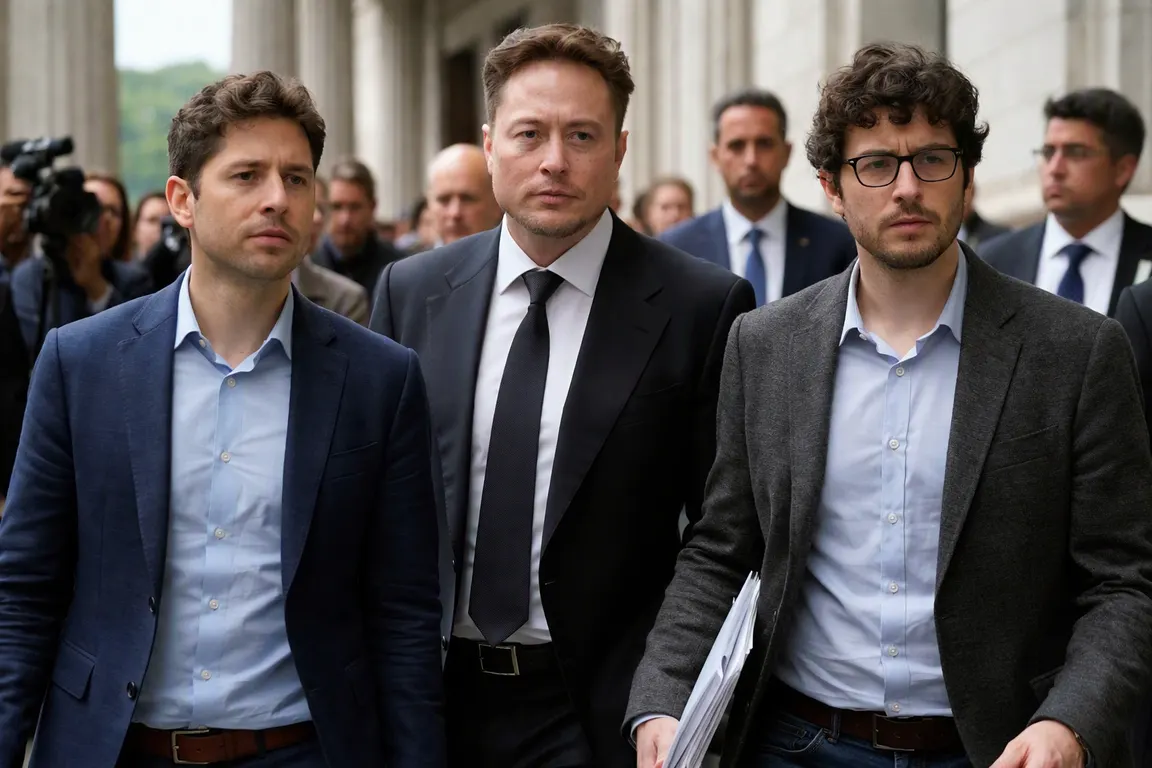
OpenAI chief Sam Altman, Tesla founder Elon Musk and Anthropic CEO Dario Amodei have jointly called for an AI safety pause, urging a coordinated slowdown of training for frontier AI models. Their statement, reported by RealClearPolitics, comes as congressional committees gear up for hearings on AI safety, months before any formal regulatory framework is in place.
The call arrives at a pivotal moment. Advanced models are moving from research labs into critical infrastructure, finance and consumer products. Economists estimate the AI sector could add billions of dollars to the U.S. economy by 2030, but the same growth fuels concerns about labor displacement and security risks. Without oversight, unchecked systems could create systemic hazards before safeguards are codified.
Altman, Musk and Amodei argue that existing safety standards lag behind the compute power and data scale of today’s models. They cite vulnerabilities such as adversarial manipulation, unintentional bias and rapid, automated decision‑making in high‑stakes environments. In a recent interview, Altman said the industry must “step back and let policy catch up,” a sentiment Musk echoed in an op‑ed warning of “unintended consequences” if development proceeds unchecked.
Industry‑led lobbying for regulation is drawing mixed reactions. While the pause request reflects genuine safety concerns, critics note it also gives established players a chance to shape future rules to their advantage. National Review argues the technology can’t be stopped and that policy must enforce “grown‑up behavior” regardless of motive. The tension between self‑interest and public‑interest framing underscores the uncertainty surrounding any upcoming legislation.
Investors and developers now face heightened uncertainty. Venture firms may delay funding rounds for next‑generation models as they weigh potential compliance costs. Companies that have already integrated AI into power‑grid management, algorithmic trading or diagnostic tools could see deployments postponed or be subject to mandatory audits, inflating operational budgets. Workers in sectors vulnerable to automation watch for accelerated displacement if safety measures are not enacted promptly.
Policymakers are pressed to balance these competing pressures. Congressional hearings slated for later this year will hear from industry leaders, consumer‑advocacy groups and security experts. No specific limits on model size or compute have been proposed, and lawmakers have not agreed on a timeline for formal rules. The absence of concrete legislation keeps the debate advisory, but the growing chorus of executive voices may push Congress toward more immediate action.
The next decisive step will be whether Congress moves from hearings to enforceable standards. The outcome will shape how quickly the United States can capture AI’s economic benefits while mitigating the public‑safety risks its own architects have flagged. Internationally, Europe and Asia are drafting their own AI governance frameworks, adding pressure on U.S. legislators to act sooner.