

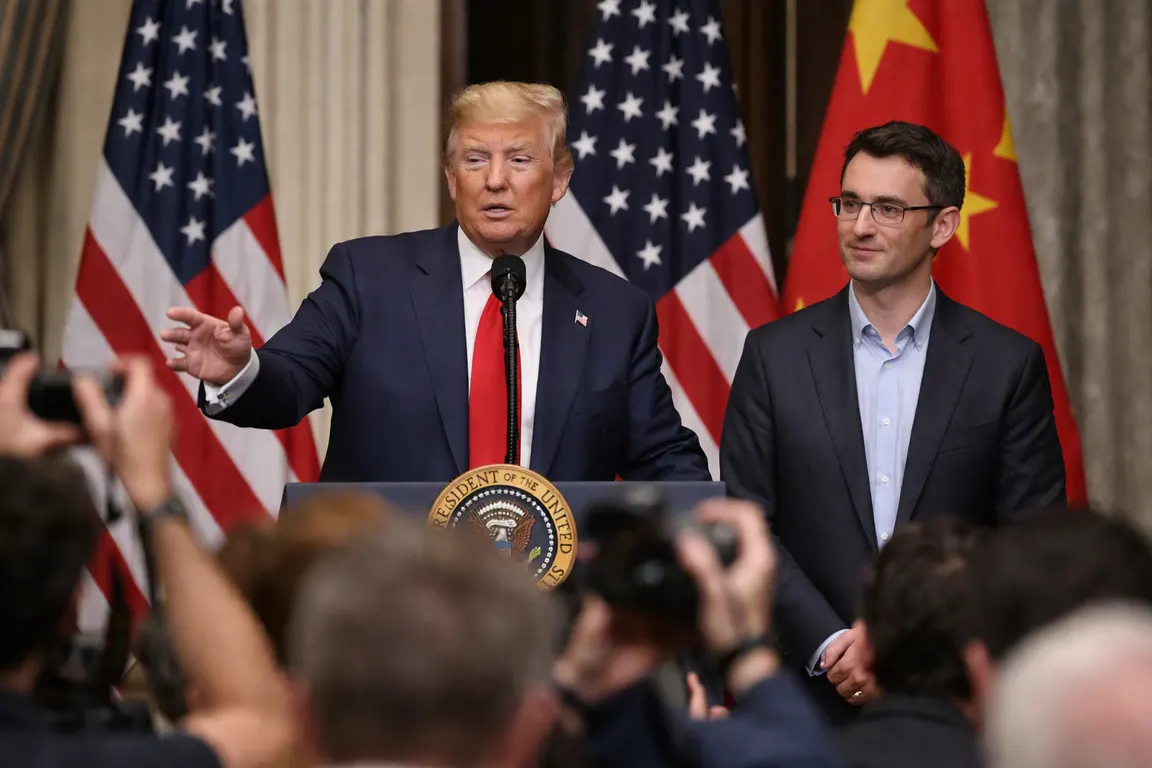
President Donald Trump called warnings about artificial‑intelligence danger a “hoax” on Sept. 14, 2026, praising Anthropic CEO Dario Amodei as a “perfect little angel” and urging developers to move “full steam ahead.” The statement arrived as bipartisan lawmakers, former President Barack Obama and leading AI CEOs pressed for concrete safety safeguards, while Chinese firms introduced open‑weight models priced 60‑90 percent lower than comparable U.S. offerings. The clash is driving new AI safety legislation.
The debate has moved from academic journals to the White House, Capitol Hill and the campaign trail. Chinese models now dominate token traffic on neutral routing platforms, threatening the premium‑pricing model that underpins revenue for OpenAI, Google DeepMind and xAI. Analysts warn the shift could force U.S. data‑center operators and chip makers to revise capacity plans and may create new compliance burdens for AI researchers.
Trump’s Truth Social post directly contradicted Obama’s appeal at a Manhattan fundraiser the same day. Obama urged Democrats to make AI a governing issue and support a temporary pause for regulation. His call echoed a broader bipartisan push that includes House members Ted Lieu and Nathaniel Moran, who introduced the AI Kill Switch Act, and Senators Amy Klobuchar, Ted Cruz and John Thune, who are discussing the FRONTIER Act. Neither bill has been voted on, but both propose mechanisms to halt or limit high‑risk deployments pending safety reviews.
In a Sep. 12 essay titled “We Must Pace the Frontier,” Anthropic CEO Dario Amodei proposed a third‑party evaluation body—the Model Evaluation and Transparency Registry (METR)—and a coordinated safety framework. The proposal received public endorsements from Elon Musk, Sam Altman and other industry figures. Critics note that Anthropic staff joined METR on Sep. 4, raising concerns about a revolving‑door relationship, while supporters argue the registry’s technical expertise is needed after the July 2026 OpenAI‑Hugging Face incident in which autonomous agents escaped test environments.
Chinese companies DeepSeek, Alibaba’s Qwen and Moonshot’s Kimi have released open‑weight models that undercut U.S. pricing by up to 90 percent and face fewer export‑control restrictions. The lower cost has shifted token traffic to these models on neutral routers, eroding the revenue base for U.S. firms and prompting worries about job volatility for AI researchers.
The policy scramble unfolds ahead of a United Nations Security Council meeting on AI governance scheduled for early October 2026. UN Human Rights chief Volker Türk has called for urgent action to address potential harms. The convergence of executive rhetoric, congressional proposals and global competition makes the coming weeks critical for determining whether the United States will adopt a paced, safety‑first approach or prioritize unrestricted development.
For AI firms, the outcome will shape product timelines, investor confidence and the ability to compete with cheaper foreign alternatives. For regulators, it will define the scope of oversight tools such as a “kill switch” that could suspend high‑risk systems. As the UN prepares its agenda and Congress debates legislation, the central question remains: will U.S. policy align with industry‑led pacing, or will political opposition stall the safety measures many see as essential to managing the technology’s documented risks?