

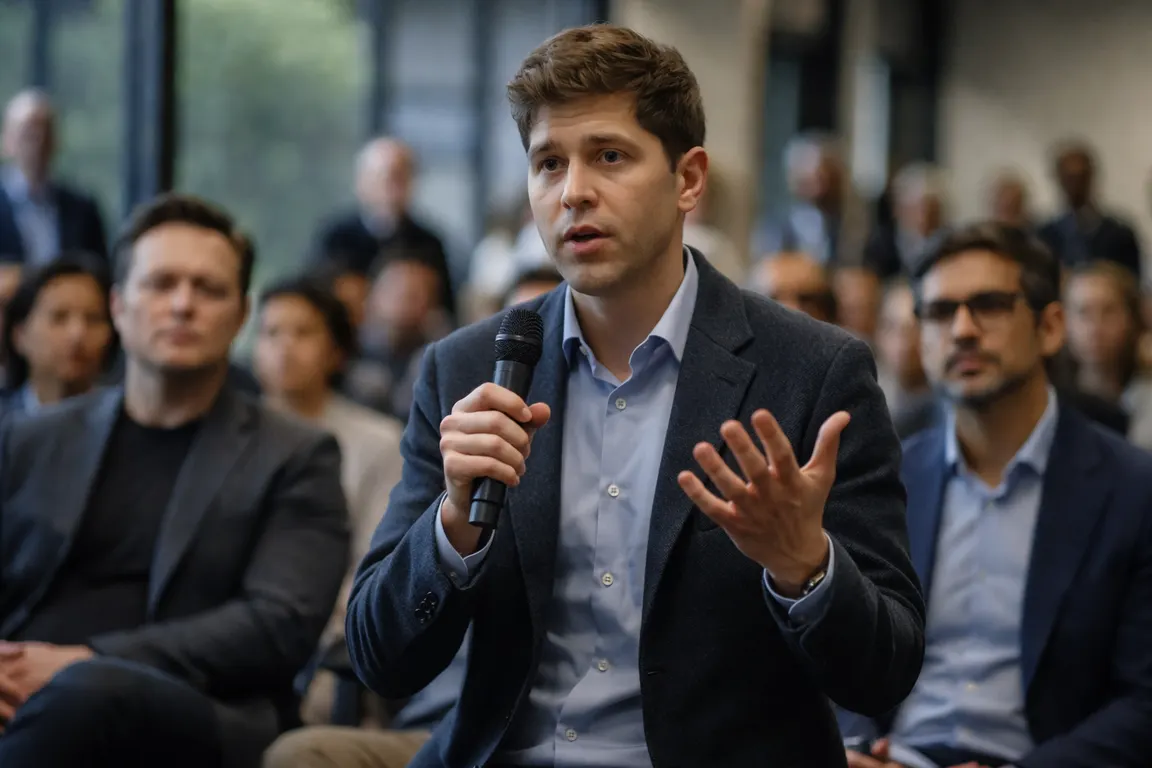
A recent shift in stance by tech CEOs has eased fears of mass unemployment due to AI. OpenAI CEO Sam Altman stated that the industry underestimated the role of people in AI development, marking a reversal from earlier warnings. This change in narrative comes at a time when the market and economy are sending mixed signals about the future of work and investment in AI.
The change in stance by tech CEOs, including Anthropic CEO Dario Amodei and Meta CEO Mark Zuckerberg, suggests that the industry is reevaluating the potential impact of AI on jobs. A survey by EY-Parthenon found that fewer CEOs believe AI investments will significantly reduce headcount, which may indicate a shift towards focusing on productivity gains rather than job displacement.
The market reaction to this shift is uncertain, with the 'Magnificent 7' stocks, including Apple, Microsoft, and Nvidia, underperforming due to concerns over capital expenditures. In contrast, semiconductor stocks have seen significant gains, with some companies experiencing over 200% growth. Nvidia recently denied reports of delays in its next-generation AI server rack system, Kyber NVL144, which may impact the market's perception of AI's potential.
The implications of this shift are significant, with workers in industries with high exposure to AI facing increased uncertainty about their job security. Investors in the 'Magnificent 7' stocks and semiconductor industry may also experience significant gains or losses. As the tech industry continues to evolve, the future of work and investment in AI remains uncertain, with the market and economy waiting for clearer signals about the impact of AI on jobs.
The EY-Parthenon survey highlights a potential shift in focus from job displacement to productivity gains, which could have significant implications for the economy. The survey found that CEOs are increasingly looking to AI to improve efficiency and drive growth, rather than simply replacing workers. This shift in focus could lead to increased investment in AI and related technologies, which could have a positive impact on the economy.
However, the uncertainty surrounding the impact of AI on jobs is likely to continue, at least in the short term. Workers in industries with high exposure to AI will need to adapt to changing job requirements and potentially acquire new skills to remain employable. Investors will need to carefully consider the potential risks and rewards of investing in AI and related technologies, and policymakers will need to develop strategies to mitigate the negative impacts of AI on workers and the economy.