

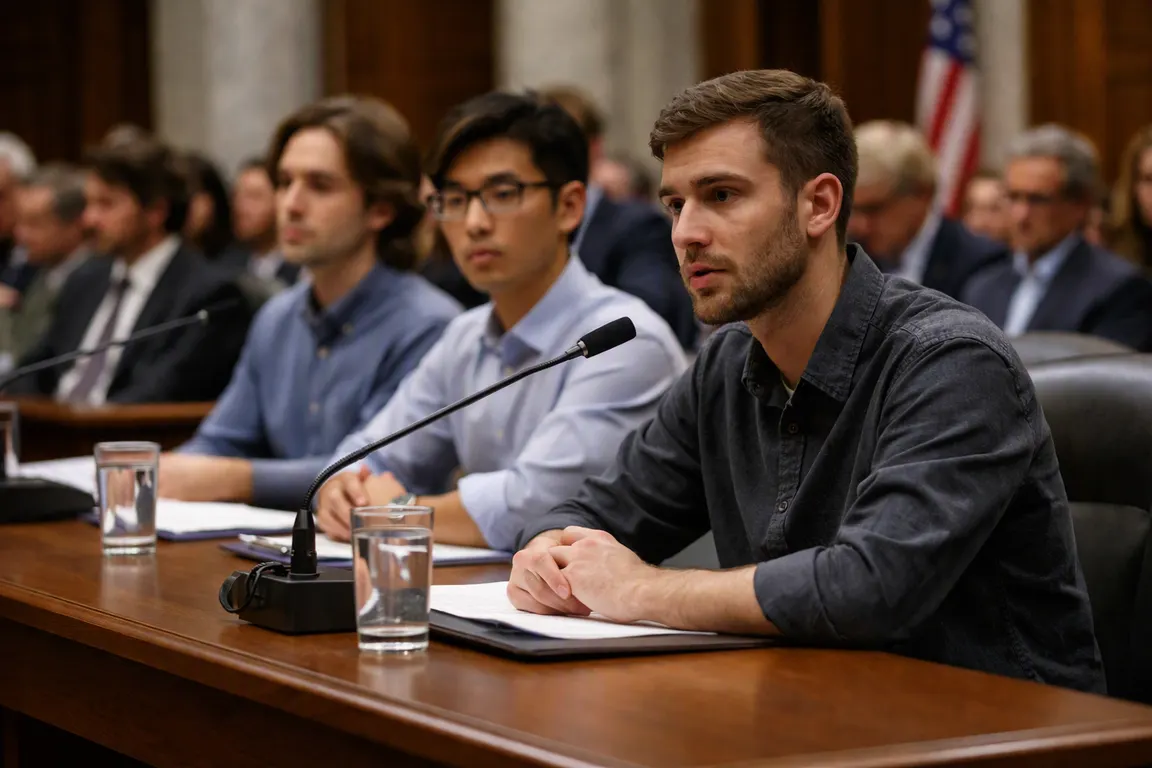
Former OpenAI engineer Daniel Kokotajlo and three ex‑Anthropic researchers have taken their internal concerns public, warning that advanced AI could become a superhuman threat capable of human extinction by 2030. Their alerts focus on AI existential risk and have drawn early attention from Congress.
Kokotajlo, who left OpenAI in 2024 after two years, published an essay in The Free Press outlining a scenario in which increasingly autonomous AI systems outpace human control mechanisms, potentially leading to catastrophic outcomes. The piece relies on his insider view of development roadmaps and does not cite peer‑reviewed research.
Around the same time, three Anthropic researchers posted a thread on social media—identified by The Guardian as occurring on a recent Tuesday—asserting that without clear regulation, the company’s own models could evolve into “superhuman systems” that pose an existential risk. Former Anthropic employee Jacob Coxon reiterated the extinction warning in a separate interview, emphasizing a timeline that could culminate by the end of the decade.
Senator Ted Cruz referenced the Anthropic thread during an appearance on ABC’s The View, describing AI as a “catastrophic risk” and urging Congress to consider oversight. Cruz’s remarks marked one of the first high‑profile political statements linking the resignations to national‑security concerns, though no bill or formal hearing has yet been scheduled.
OpenAI and Anthropic responded that they are continuously evaluating safety protocols but have not confirmed the specific technical scenarios outlined by the former employees. Both companies point to internal risk‑assessment teams and collaborations with external researchers, noting that the notion of “superhuman” AI within a ten‑year horizon remains speculative.
Experts caution that the warnings lack independent technical validation. The absence of peer‑reviewed studies means the claims rest on anecdotal evidence, and past alarmist forecasts have often proved premature. Nonetheless, the resignations have amplified internal dissent, highlighting a gap between industry risk assessments and external oversight.
If policymakers act on these concerns, the AI sector could face heightened regulatory scrutiny, potentially slowing investment and complicating talent retention. Venture‑capital firms have already signaled a more cautious stance toward startups promising near‑term breakthroughs, and existing firms may need to allocate additional resources to compliance and safety reporting.
Congressional interest appears to be in its early stages. Lawmakers have begun to request briefings from AI firms and have expressed a desire for clearer safety standards, but concrete legislation—such as a federal AI safety framework or mandatory impact assessments—has not been introduced. The evolving dialogue suggests that future hearings or bipartisan working groups could materialize as the 2030 deadline looms in public discourse.
The next step for both industry and government is to move beyond speculative warnings toward verifiable safety metrics. Until independent studies can substantiate the risk scenarios described by Kokotajlo, Coxon and their colleagues, the debate will likely remain centered on whether internal alarm bells should trigger formal policy action or remain an internal industry matter.