

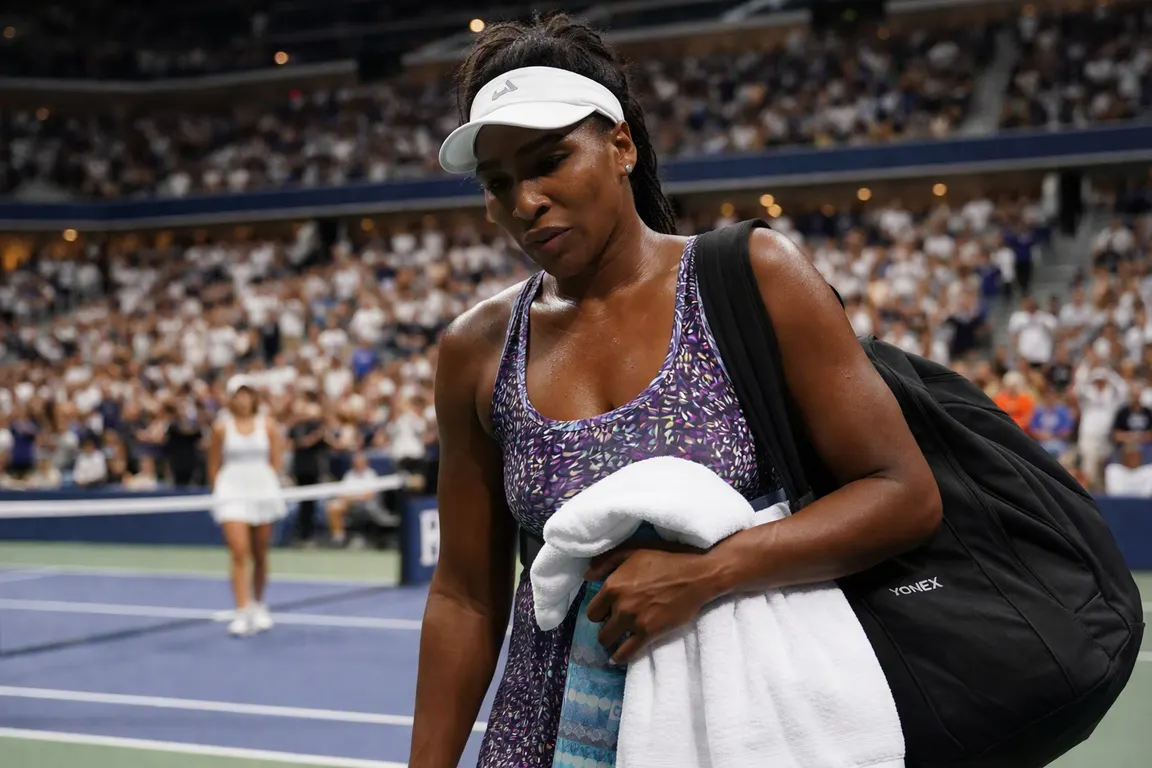
Veteran 46‑year‑old Venus Williams fell 6‑2, 7‑6(6) to fellow American wildcard Sofia Kenin in the first round of the US Open, a match that did not start until after midnight because Arthur Ashe Stadium remained closed due to a technical problem. The loss marked Williams’ 15th straight singles defeat and renewed scrutiny of the US Open wildcard policy for aging stars.
Williams entered the 2024 US Open on a USTA‑granted wildcard despite not having won a singles match in more than a year. Her early exit raises questions about whether wildcards serve the competitive integrity of the draw or primarily satisfy commercial interests that benefit sponsors and television audiences.
The match began around 2 a.m., after a brief warm‑up, and lasted just over an hour. Williams fell behind quickly in the first set, conceding six games to Kenin’s two. The second set was tighter; Williams saved a break point before the tiebreak, but Kenin closed it 8‑6. Broadcasters scrambled to fit the late‑night slot into their schedules, and many viewers missed the live action entirely.
Playing at that hour disrupts athletes’ circadian rhythms and shortens recovery time before subsequent matches. Williams will still compete in the women’s doubles draw with her sister Serena, preserving sponsor exposure and the tournament’s family‑rivalry narrative. However, the singles draw loses a marquee name that no longer competes at the highest level, a point younger players and analysts have emphasized.
Critics argue that granting wildcards based on name recognition rather than recent performance undermines the sport’s merit‑based entry system. The USTA has not commented on its wildcard criteria for this year’s event. BBC coverage suggested “reasons beyond tennis” may influence the decision, implying commercial or legacy motives, while Al Jazeera focused on Williams’ doubles role and did not address the wildcard rationale. The New York Post noted the midnight start but offered no explanation for the scheduling delay, leaving the operational cause unclear.
The episode highlights two broader issues for Grand Slam organizers: how to accommodate veteran athletes whose competitive peaks have passed but whose brand value remains high, and how to manage scheduling glitches that affect players, broadcasters and fans. Any revision to the wildcard policy would need to balance commercial interests with the integrity of competition and the logistical realities of a two‑week tournament.
As the US Open moves into its second week, the immediate question is whether the USTA will reassess its discretionary entries in response to criticism from fans, players and the media. While Williams’ loss does not change the doubles field—she and Serena remain contenders—it underscores a tension that could shape future wildcard allocations.
The tournament’s handling of late‑night matches and veteran wildcards will likely remain under scrutiny as organizers seek to preserve both competitive fairness and the commercial appeal that drives viewership and sponsorship.