

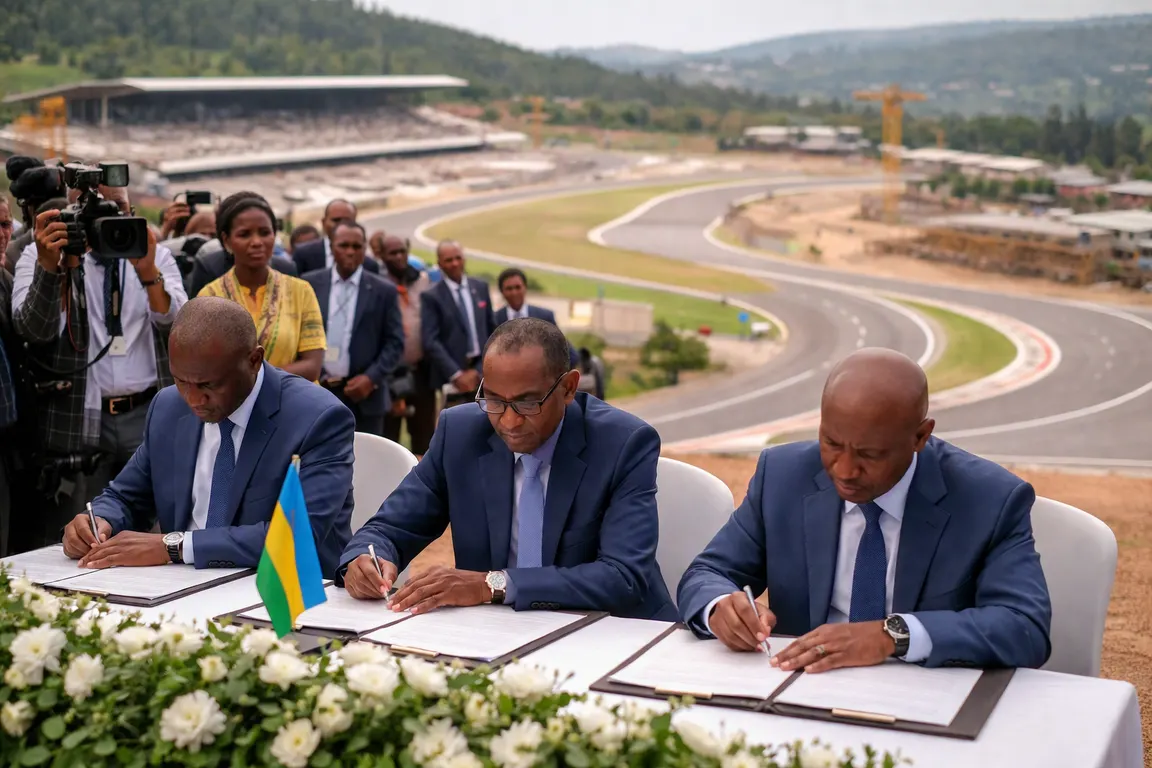
Rwanda has signed a ten‑year agreement to host a Formula 1 Grand Prix on a purpose‑built circuit outside Kigali, marking the sport’s first return to Africa since 1993. The deal, reported by the BBC and Al Jazeera, calls for the inaugural race in the early 2030s.
The government says the event will boost tourism, create jobs and raise the country’s international profile. Officials have not disclosed the financial terms of the contract, nor the projected cost of the track or expected attendance, leaving analysts uncertain about public‑sector exposure and the likely return on investment.
The circuit will be built on the outskirts of Kigali, a site chosen for its proximity to the capital and existing transport links. Rwanda plans to use a mix of public‑private partnerships, with local firms supplying materials and services. Construction is expected to generate employment in engineering, logistics and ancillary sectors.
Community groups near the proposed site have raised concerns about possible displacement, noise and environmental impact. The government has not released any mitigation plans or monitoring framework for the project’s social and ecological footprint.
Rwanda’s agreement follows earlier bids from Morocco and South Africa that fell short. Both the BBC and Al Jazeera noted that securing the race reflects a broader Rwandan strategy to attract foreign investment and position the nation as a modern, technology‑focused hub.
The timing aligns with Formula 1’s push into new markets. By establishing a foothold in East Africa, the sport diversifies its geographic presence and taps a growing fan base. For Rwanda, the Grand Prix could serve as a showcase for parallel development initiatives, including technology parks, renewable‑energy projects and hospitality infrastructure.
Critics warn that without transparent financing and impact assessments, the venture could become a costly vanity project. The lack of disclosed budget figures makes it difficult to gauge whether the anticipated economic benefits will outweigh the public spending required. Moreover, the long lead time—races not expected until the 2030s—means any tourism boost may not materialize for several years, while construction costs will be felt immediately.
The next steps include commissioning a detailed feasibility study and selecting a construction partner, both slated for the coming months. Officials have pledged to release a timeline for groundbreaking and to outline any public‑funding mechanisms. Until those details emerge, the scale and viability of Rwanda’s gamble on Formula 1 remain uncertain.