

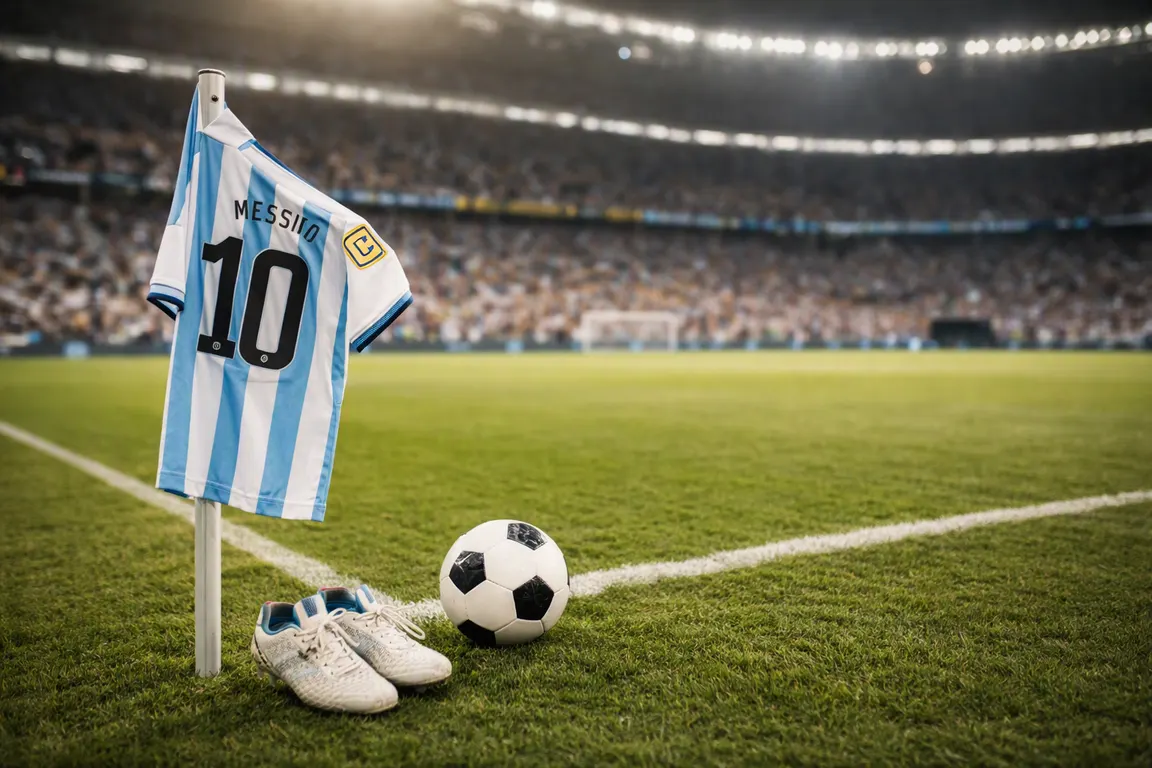
Lionel Messi announced his retirement from the Argentina national team on Instagram Tuesday, ending a 20‑year international career that included six World Cups and a 2022 title.
In a short video message, the 36‑year‑old forward said, “There isn’t much time left, and different chapters are coming to an end. This is one that hurts me a lot.” The post quickly garnered millions of likes and comments, marking the first public confirmation of his retirement from international duty.
Messi’s decision closes a chapter that began in 2005, when he earned his first senior cap at age 18. Over the next two decades he became Argentina’s all‑time leading scorer, lifted the Copa América in 2021, and captained the side to a World Cup victory in Qatar in 2022. He also helped the team reach the 2014 final in Brazil, where they fell to Germany.
The Argentine Football Association (AFA) has not yet issued an official statement, but a spokesperson confirmed that Messi’s announcement will be respected and that the federation will begin planning for the next World Cup cycle without him.
Messi’s retirement comes as he prepares for his first full season with Inter Miami in Major League Soccer. The 2024 MLS campaign will be his first complete year with the club after joining on a free transfer in 2023 and playing a limited number of games due to injury.
While Messi’s focus shifts to club football, his departure raises questions about the future of the Argentine squad. Coach Lionel Scaloni, who led the team to the 2022 World Cup triumph, will now have to rebuild a side that has relied heavily on Messi’s creativity and leadership for more than a decade.
Scaloni has previously spoken about the need to develop younger talent and diversify the attack. With Messi out, players such as Julian Alvarez, Lautaro Martinez and the emerging midfielder Enzo Fernandez are expected to take on larger roles.
In the broader context, Messi’s retirement underscores a generational shift in world football. Several other marquee players, including Cristiano Ronaldo and Luka Modrić, have already stepped away from international competition, prompting national teams to accelerate the transition to younger squads.
Fans and analysts alike will watch closely how Argentina adapts in upcoming friendlies and the 2026 World Cup qualifiers. The nation’s footballing identity, long defined by Messi’s brilliance, will now be tested by a new core of players.
Messi’s Instagram post concluded with a thank‑you to fans and a promise to continue giving his best on the field for Inter Miami. "I will always be grateful for the honor of wearing the Albiceleste jersey," he wrote. "Now I look forward to a new chapter in my career."
The football world will see how the Argentine team reshapes itself without its most iconic figure, while Messi embarks on the next phase of his storied career in the United States.