

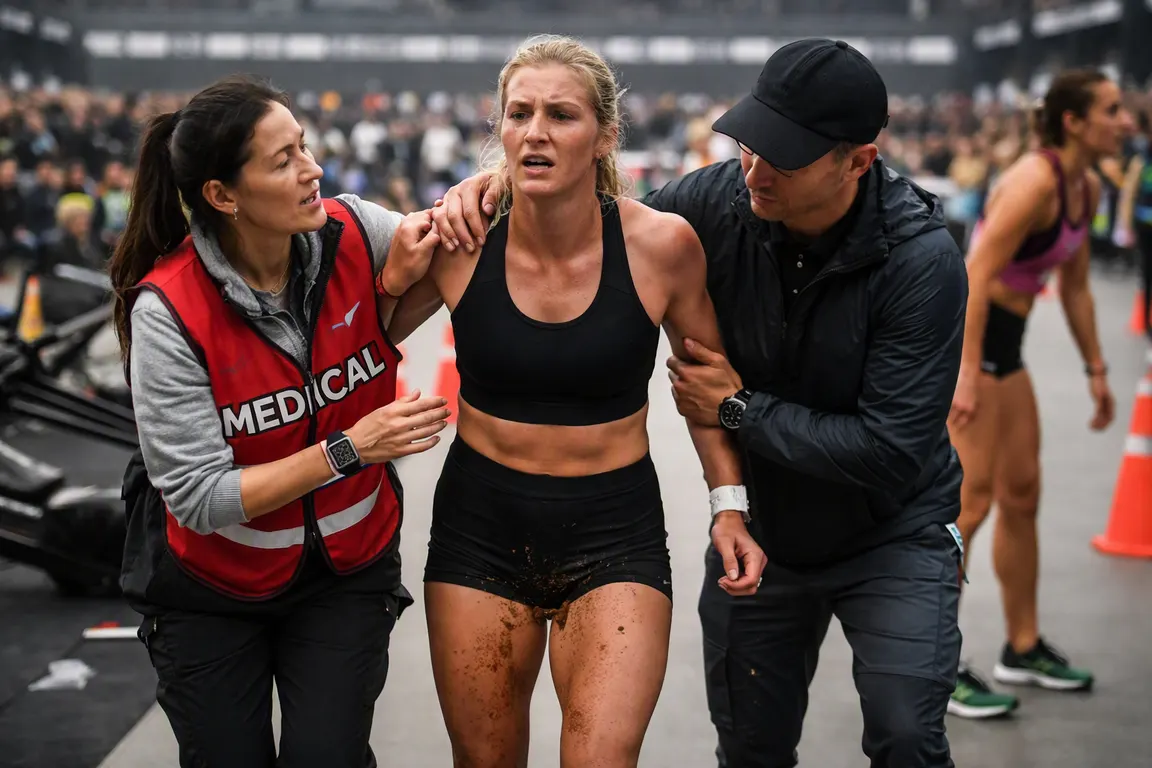
Australian competitor Joanna Wietrzyk crossed the finish line first at a Hyrox event in Beijing on Saturday, despite an involuntary bowel movement that forced her to race in a compromised state. The incident has sparked calls for clearer Hyrox safety rules, as the sport currently lacks documented guidance for medical or bodily emergencies that occur mid‑race.
Wietrzyk, a seasoned Australian participant, said she experienced the unexpected bowel movement early in the course. She chose to keep racing, completed the remaining stations and was declared the winner. Within days, she uploaded a statement to Instagram apologising to “the people of China, fellow competitors, spectators and Hyrox organizers” for the “discomfort and disruption” her condition caused. Media outlets including The Independent, The Guardian and NBC News reproduced the apology and noted her decision to forfeit the points associated with the win.
Hyrox’s corporate office did not comment at the time of reporting, and the company has not announced any immediate policy revisions. The silence underscores a broader challenge for the sport as it expands into new markets: reconciling the desire for intense competition with the practicalities of athlete health and event logistics. Without clear, enforceable rules, similar incidents could recur, placing athletes in ambiguous situations and exposing organizers to criticism.
In other endurance disciplines—marathons, obstacle‑course races—event medical teams are typically instructed to intervene, and participants may be withdrawn without penalty. Hyrox’s hybrid format, which demands rapid transitions between cardio and strength stations, complicates the deployment of medical staff, but the need for a predefined response remains.
Spectators at the Beijing venue reported a brief disruption as the race continued, but there were no injuries or broader health concerns. Nonetheless, the visual of a competitor racing after a bodily accident can affect audience perception and may influence future attendance or broadcast viewership. Sponsors also monitor how emerging sports manage risk; a perceived lapse in safety standards could affect commercial partnerships.
Industry observers note that emerging sports often evolve their rulebooks reactively. The Beijing incident may serve as a catalyst for Hyrox to draft explicit guidelines covering medical emergencies, including criteria for withdrawal, point forfeiture and communication protocols. Such measures would bring the series in line with established standards in other high‑intensity events and give athletes clear expectations.
Hyrox’s leadership has not confirmed whether it will convene a safety review panel or issue a public statement outlining forthcoming changes. Until formal guidance is released, athletes, coaches and event staff will continue to navigate ambiguous terrain when faced with similar situations. The Beijing race thus underscores a broader tension in the rapid commercialization of fitness competitions: the need to balance spectacular performance with robust, athlete‑centred safety frameworks.