

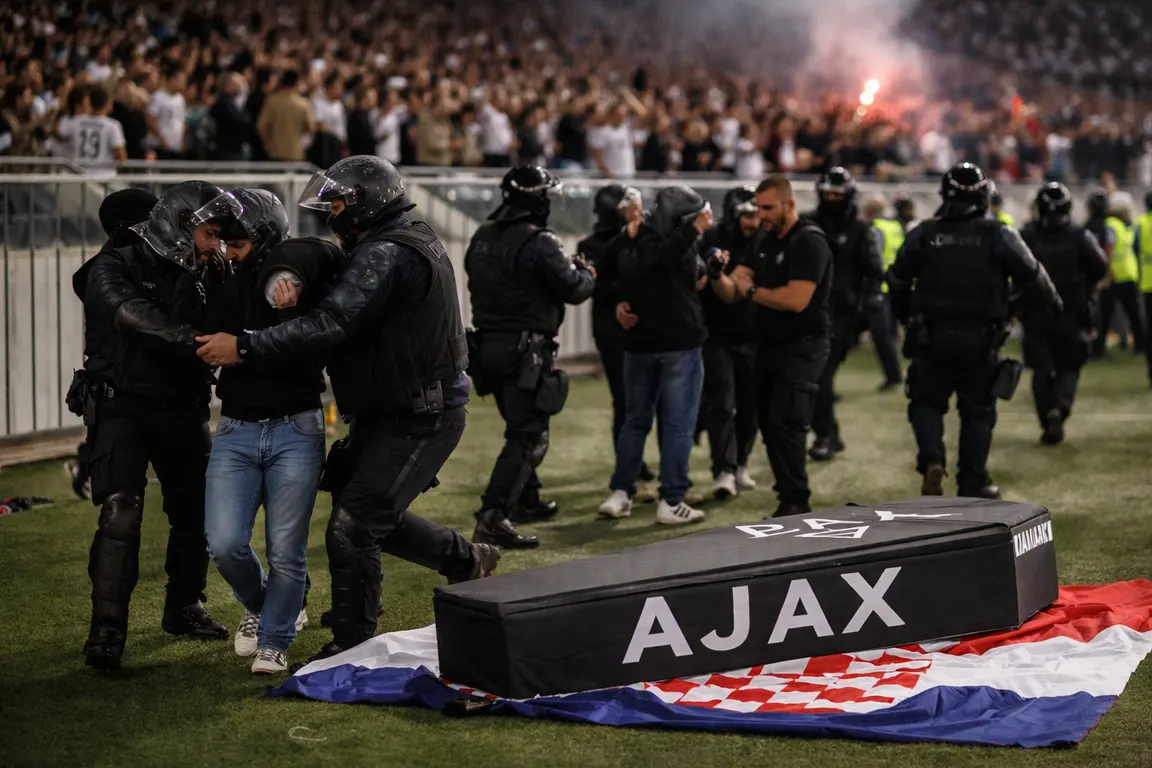
Police detained at least twelve Hajduk Split supporters on Friday, Oct. 13, after they shouted anti‑Jewish chants linked to Nazi slogans and displayed a mock coffin bearing the name of Dutch club Ajax during a UEFA Conference League match in Split. The disturbance halted play for twelve minutes as flares and objects were thrown onto the pitch.
The incident drew condemnation from President Zoran Milanović, the Croatian Football Federation and the Israeli embassy in Zagreb, and raised the prospect of disciplinary action from UEFA.
A pre‑match rally outside Poljud Stadium on Thursday, Oct. 12, saw a vocal minority of Hajduk fans chant anti‑Jewish slogans and hoist a coffin emblazoned with “Ajax.” When the game began, the chants continued, prompting stadium security to intervene. Despite the interruption, Hajduk Split secured a 2‑1 victory, its first European win in 16 years.
Croatian police opened an investigation immediately after the match and arrested the supporters the following day on charges of inciting violence and hatred. President Milanović said there is “no place for glorification of Nazism in Croatia” and called for appropriate sanctions. The Croatian Football Federation said the episode “damaged the country’s soccer image” and violated basic sports values, while the Israeli embassy expressed “deep shock” and urged a governmental response.
The legal outcomes for the arrested fans remain pending, but Croatia’s anti‑hate‑crime laws carry potential prison sentences. UEFA has not yet announced formal proceedings, but its disciplinary bodies typically consider fines, stadium bans or exclusion from future tournaments for clubs whose supporters breach anti‑racism regulations. The uncertainty adds pressure on Hajduk’s management to tighten security and distance the club from extremist elements.
The chants echo a broader resurgence of nationalist extremism in parts of Croatian society. The slogans reference World‑War‑II‑era movements that glorified the Ustaše regime, a legacy that remains sensitive across the Balkans. While most Hajduk supporters condemn the behavior, the visibility of the chants during a high‑profile match amplified concerns among Jewish, Roma, Serbian and anti‑fascist communities about safety and social cohesion.
The episode underscores how sport can become a conduit for political expression, forcing governments and governing bodies to balance freedom of speech with the need to curb hate speech. Croatia’s swift arrests and public denunciations signal an intent to address the problem, but the effectiveness of those measures will be judged by any subsequent UEFA ruling and by whether clubs can prevent similar episodes.
As UEFA reviews the case, the next steps will determine whether Hajduk Split faces financial penalties, stadium restrictions or a competition ban. The outcome will affect the club’s European ambitions and serve as a barometer for how European football authorities confront extremist fan conduct in an era of heightened scrutiny.