

Ukraine seeks new satellite links as Starshield bandwidth
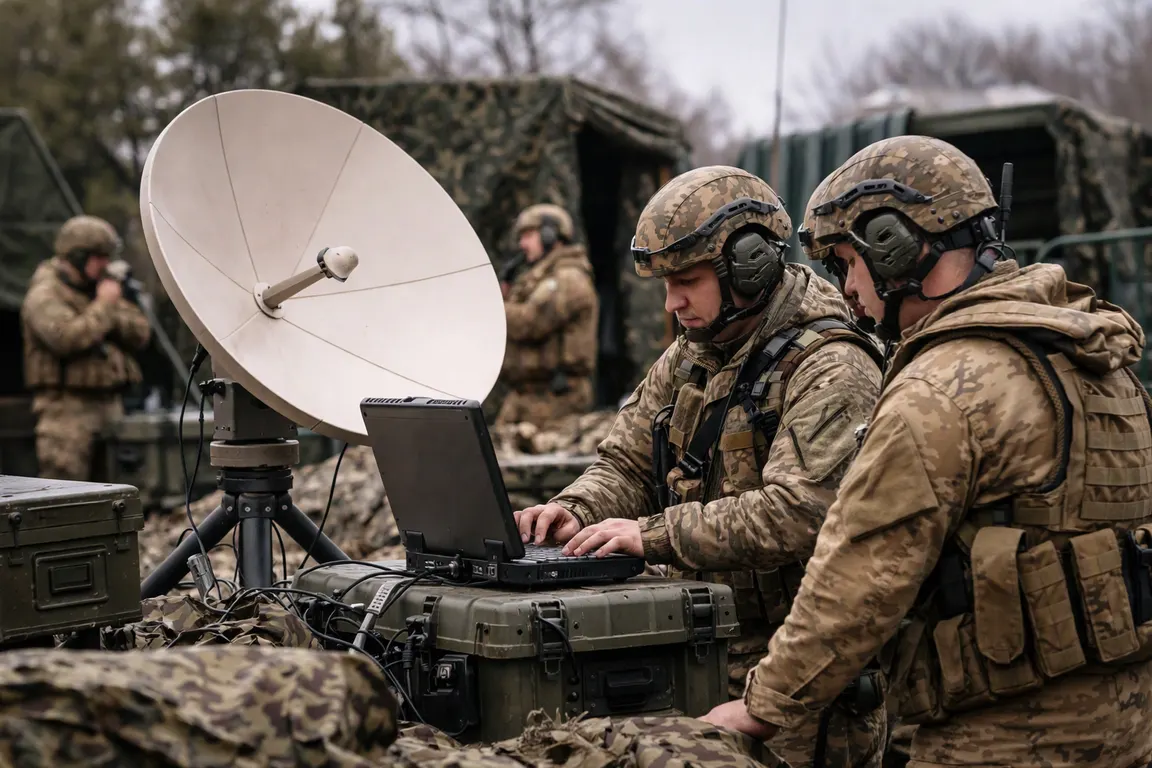
Ukraine’s military and civilian communications have been hit by new speed caps on SpaceX’s Starshield service, prompting Kyiv to open talks with Nokia and ICEYE for alternative satellite connectivity. The restrictions, imposed last week, cut the bandwidth available to Ukrainian forces on the southeastern front, slowing the transmission of drone‑derived reconnaissance and reducing real‑time coordination speed.
Officials say the throttling already affects operations that rely on high‑resolution imagery and low‑latency data links, and it also limits civilians who use the network for emergency calls and news updates. Since the Russian invasion began in early 2022, Starlink has served as the backbone of Ukraine’s communications, linking battlefield command centers, hospitals and schools.
The recent caps expose the risk of depending on a single commercial provider for critical national‑security functions. Kyiv’s response is to explore non‑U.S. satellite options that could provide sovereign‑controlled connectivity and reduce reliance on a service that can be altered unilaterally.
In preliminary talks with the Ukrainian Ministry of Defence, Finnish telecom equipment maker Nokia is assessing how its satellite‑communication portfolio could be adapted for the country’s needs. Nokia offers ground terminals and network‑management software that can work with a range of low‑Earth‑orbit constellations. No contract has been signed, but the discussions signal a willingness to diversify the supply chain for battlefield connectivity.
At the same time, Ukraine is engaging ICEYE, a Finnish‑based provider of synthetic‑aperture radar (SAR) imaging satellites. ICEYE’s low‑orbit constellation can deliver high‑frequency, all‑weather imagery useful for targeting and situational awareness. Officials hope that pairing ICEYE’s data streams with a dedicated communications link could offset the reduced Starshield capacity, though the partnership remains exploratory and deployment timelines are undefined.
SpaceX has offered no official explanation for the speed caps. Company spokespeople have not commented on the technical or policy reasons, and analysts differ on whether the limits stem from network congestion, regulatory pressure or a strategic decision to prioritize other customers. Without clarity, Ukrainian commanders must plan operations around an unpredictable bandwidth ceiling, a factor that could influence the timing of counter‑offensives in the south.
The episode highlights the strategic risk of concentrating critical communications in a single private constellation. Competitors in Europe and elsewhere are watching Kyiv’s outreach as a potential gateway to high‑profile contracts, which could accelerate the development of alternative LEO services. Nokia and ICEYE stand to gain visibility, but they also face the challenge of scaling up quickly enough to meet military‑grade reliability standards.
In the short term, Ukrainian forces are prioritising essential data flows and reverting to legacy radio networks where possible. Civilians in contested areas continue to experience intermittent internet access, complicating evacuation efforts and the spread of humanitarian information. Kyiv has not set a deadline for finalising any new satellite agreement, leaving the timeline for a replacement link open.
The coming weeks will show whether the exploratory talks translate into concrete procurement and whether alternative satellites can restore the level of connectivity Ukrainian defenders have relied on since 2022.