

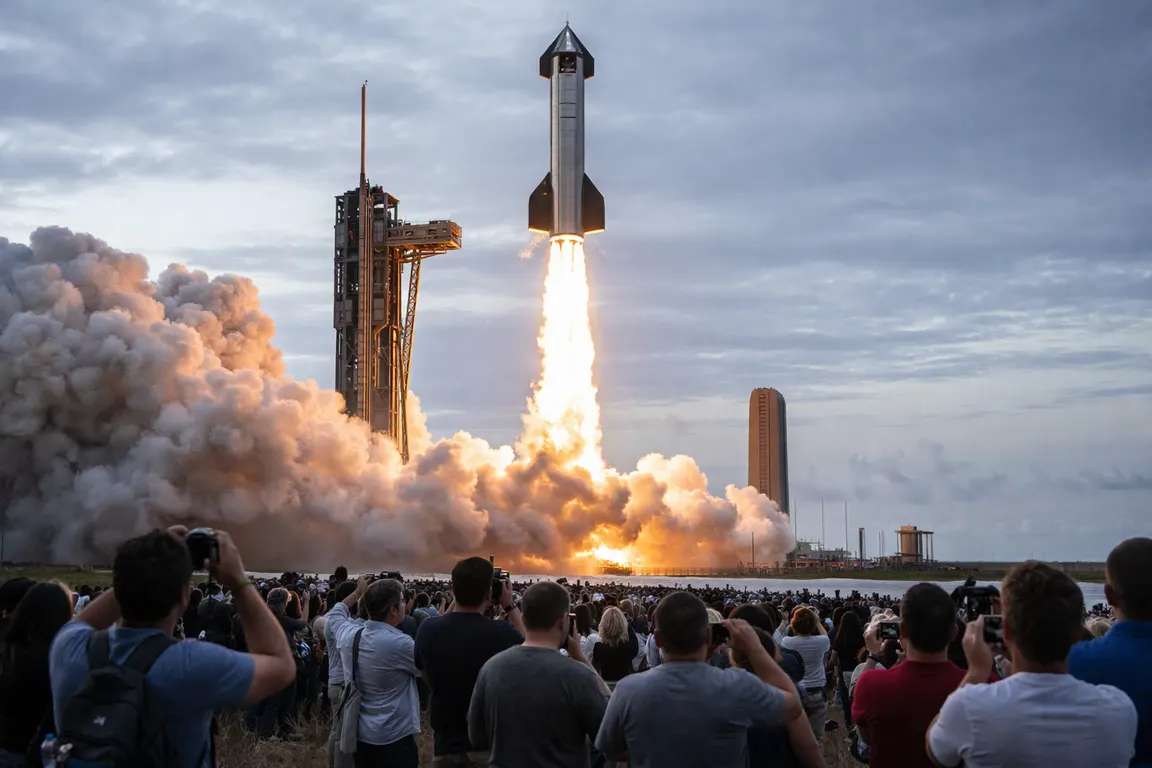
SpaceX’s Starship Starlink V3 launch lifted off from the Boca Chica launch complex in Texas on Sept. 28, 2026, entered orbit and released a batch of 26 next‑generation Starlink V3 satellites, marking the rocket’s first verified commercial payload delivery.
The launch began at 7:48 a.m. Central Time. Early social‑media reports suggested an engine anomaly that could have prevented orbital insertion, but SpaceX posted telemetry within minutes confirming a successful near‑circular orbit. After a 30‑minute deployment window, the satellites were released and their radio beacons were tracked by independent observers, corroborating the sequence reported by The Guardian and Al Jazeera.
Each V3 satellite is rated for roughly 1 Tbps downlink capacity—about ten times the bandwidth of the current V2 fleet. The higher data rate could enable gigabit‑class internet service in remote and underserved areas, moving the Starlink constellation closer to a commercial rollout projected for 2028.
The successful payload delivery also demonstrates Starship’s ability to lift a high‑value, heavy payload, a key factor for future contracts. NASA’s Artemis program, which requires a heavy‑lift vehicle for lunar‑orbit cargo, has long eyed Starship as a potential launch system. While the engine‑issue report underscores that reliability remains a concern, SpaceX has not disclosed the anomaly’s specifics and engineers are reviewing the telemetry before certifying the vehicle for crewed missions.
Investors and policymakers took note. SpaceX stock dipped about 2 % in the minutes after liftoff before rebounding once orbital insertion was confirmed. Analysts say the combination of Starship’s projected low per‑kilogram launch cost and the V3 satellites’ bandwidth could set a new industry benchmark, pressuring competitors such as Arianespace and United Launch Alliance to revisit pricing.
The launch also sparked activity in the local community around Starbase. Hotels, catering firms and media outlets saw a short‑term boost, while residents reiterated safety concerns about high‑energy launches near populated areas. Local officials have called for continued transparency on risk assessments and emergency‑response plans.
Looking ahead, SpaceX has scheduled a series of payload flights for 2027 aimed at refining Starship’s re‑entry and rapid‑turnaround capabilities. The unresolved question is whether the engine anomaly observed on this flight was an isolated incident or a systemic issue that could affect future missions. How SpaceX addresses that risk will shape both the timeline for expanding broadband access and NASA’s lunar ambitions.