

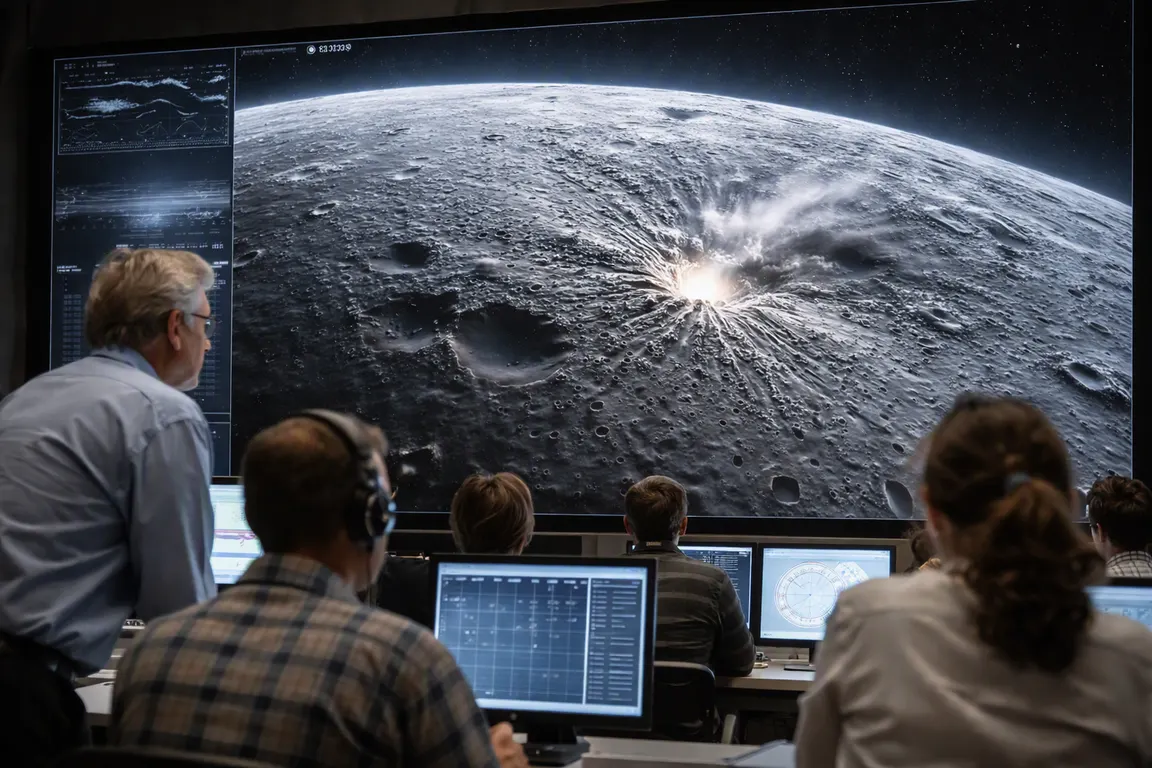
A four-tonne piece of a SpaceX rocket is believed to have crashed into the Moon, providing scientists with a unique opportunity to study the impact and its effects on the lunar surface. The rocket stage, which was expected to slam into the Moon's northern hemisphere near the Einstein Crater at approximately 5,400 miles per hour, offers a chance to gather valuable data on space debris and its potential impact on future space missions.
This event raises concerns about the growing amount of 'space junk' in Earth's orbit, with over 46,000 pieces of debris weighing a total of 17,000 tonnes currently in orbit, according to the European Space Agency. The impact is not expected to pose any danger to Earth, according to NASA. Scientists plan to study the impact site using NASA's Lunar Reconnaissance Orbiter probe and South Korea's Pathfinder Lunar Orbiter.
The Falcon 9 rocket made by SpaceX took off in January 2025, carrying two lunar landers. The growing amount of 'space junk' in Earth's orbit poses a potential risk to future space missions and the safety of astronauts. NASA hopes to soon establish a sustained human presence on the Moon, making it critical to better understand space debris in lunar orbit.
As scientists await confirmation of the impact, they are eager to study the effects of the crash and gather data on the lunar surface. The impact of space debris on the lunar surface could have implications for NASA's plans to establish a sustained human presence on the Moon. While there is no official confirmation that the Falcon 9 upper stage struck the lunar surface, scientists are preparing to analyze the data from the impact site.
The brightness of the plume of ejecta created by the impact is uncertain, making it difficult for scientists to predict its visibility. Scientists will study the impact site and gather data on the effects of the crash, which will help inform future space missions and the establishment of a human presence on the Moon. The data gathered from this event will provide valuable insights into the effects of space debris on the lunar surface and help scientists better understand the risks associated with space exploration.