

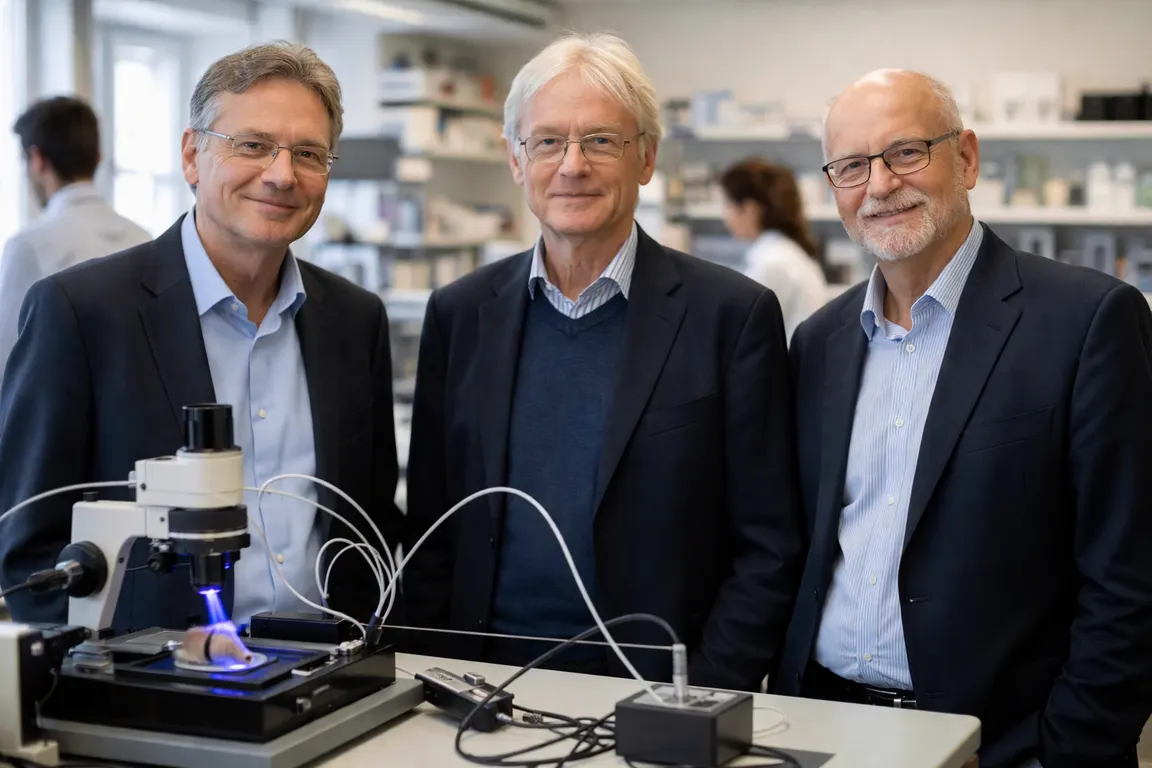
The 2023 optogenetics Nobel Prize in Physiology or Medicine was awarded to Stanford’s Karl Deisseroff, Humboldt University’s Peter Hegemann and the University of Würzburg’s Georg Nagel for developing optogenetics, a light‑controlled method for activating or silencing neurons.
The Swedish Academy’s decision spotlights a technology that has become a staple in neuroscience labs and is now moving toward therapeutic use for conditions ranging from Alzheimer’s disease to inherited blindness. The award arrives as biotech firms and public funders increase support for optogenetic research, reshaping investment priorities in the field.
Optogenetics relies on light‑gated ion channels such as channelrhodopsin, first isolated from the green alga *Chlamydomonas* by Hegemann and Nagel in the early 2000s. Deisseroff later adapted the proteins for expression in mammalian neurons and paired them with fiber‑optic implants that deliver millisecond‑precise light pulses to targeted brain regions in living animals. The approach provides temporal control that drugs cannot match.
Since its introduction in the mid‑2000s, optogenetics has been used to map circuits that govern learning, fear, addiction, movement and memory, and to model Alzheimer‑related pathology in mice. More recently, pre‑clinical trials have tested the technique for restoring vision in patients with retinitis pigmentosa by converting retinal cells into light‑sensitive units. Although no optogenetic therapy has yet received regulatory approval, dozens of academic groups and several startups are exploring applications for neurodegenerative diseases, epilepsy, Parkinson’s disease and certain psychiatric disorders.
The Nobel Assembly described the work as opening “a new era in neuroscience,” underscoring both its scientific impact and translational promise. Yet significant hurdles remain. Clinical‑grade light‑delivery devices must meet safety standards, and gene‑therapy vectors that introduce channelrhodopsin into human neurons are still under investigation. Experts estimate that early‑phase human trials could begin within five years, but broader therapeutic use is likely a decade away.
The prize is already influencing funding decisions. National research agencies in the United States, Europe and Asia have announced expanded grants for optogenetic projects, and venture‑capital investment in companies specializing in light‑based neural modulation has risen sharply since the announcement. For patients, the recognition offers a tangible sign that a technology once confined to animal studies may eventually yield new treatment options.
The next milestone will be the outcome of ongoing early‑stage human trials, particularly those targeting retinal degeneration. Those results will determine whether precise, light‑controlled neural activation can be safely and effectively harnessed in patients and will shape the regulatory and commercial landscape for optogenetic medicines in the years ahead.