

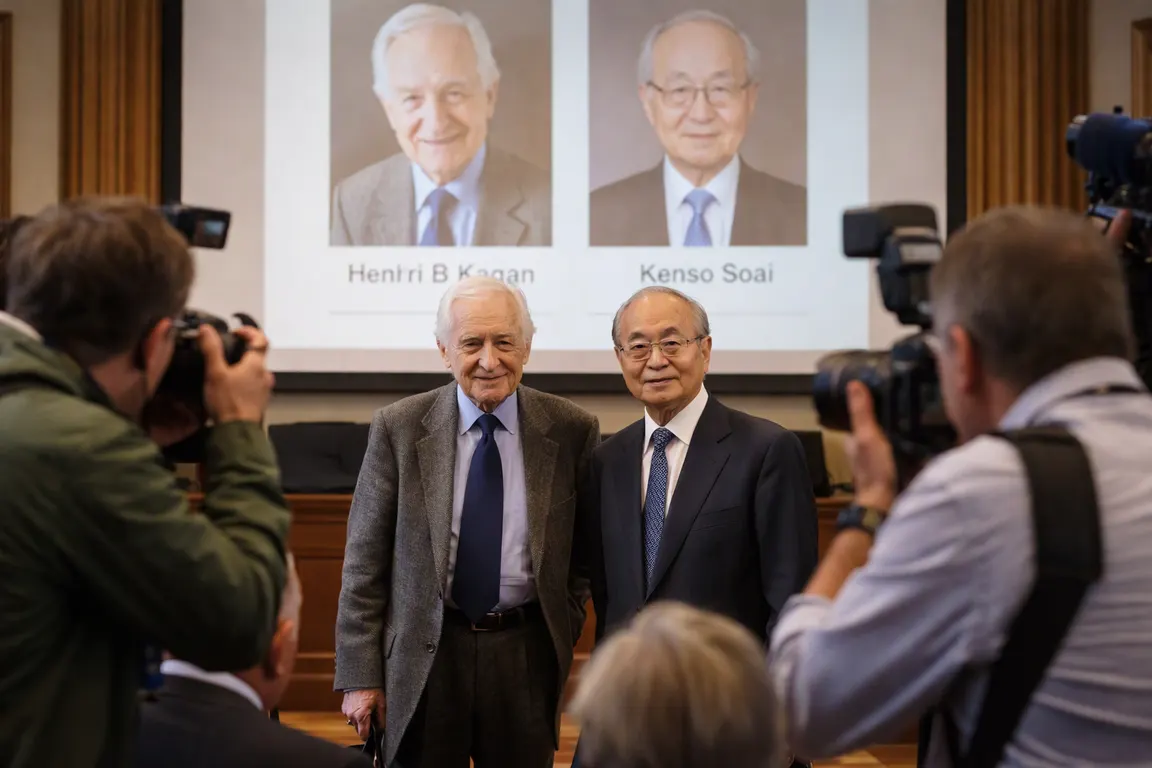
The Royal Swedish Academy of Sciences announced on Oct. 4 that French chemist Henri B. Kagan, 95, and Japanese researcher Kenso Soai have won the 2023 Nobel Prize in Chemistry for developing chiral catalysts that could lower drug costs and waste. Each laureate will receive 12 million Swedish kronor (about $1.2 million). The award spotlights a chemistry advance already reshaping pharmaceutical manufacturing.
Asymmetric synthesis now underpins more than half of modern medicines. By forming enantiomerically pure compounds directly, Kagan’s and Soai’s catalysts cut the need for costly separation steps, reduce solvent waste and improve batch‑to‑batch consistency. Those efficiencies can translate into lower drug prices and safer therapies for patients.
Kagan’s work began in the 1970s with chiral diphosphine ligands that showed metal‑centered catalysts could steer reactions toward a single enantiomer. Soai later discovered an autocatalytic reaction in the 1990s that amplifies a tiny initial imbalance into a dominant chiral outcome, offering a laboratory model for how biological homochirality might arise. Both approaches differ from older resolution techniques that required separating a racemic mixture after synthesis, a process that generated large volumes of solvent waste and added expense.
Pharmaceutical firms are already using the methods to make blockbuster drugs such as statins, antihistamines and antiviral agents. Industry analysts note that the greener chemistry reduces the carbon footprint of drug plants and shortens development timelines because fewer purification stages are needed to meet regulatory purity standards. Regulators benefit from clearer impurity profiles, which can streamline approval processes.
The impact reaches beyond medicines. Chiral chemicals are essential in agro‑chemicals, flavors, fragrances and specialty polymers. Applying the same catalytic principles can produce enantiomerically pure ingredients for those markets, potentially reshaping supply chains and pricing.
While the laureates’ achievements are widely praised, some observers caution that scaling laboratory catalysts to industrial volumes can present technical hurdles. Nobel Committee chair Heiner Linke called the reactions “spectacular,” but the path from academic discovery to full‑scale deployment often requires additional engineering breakthroughs. Ongoing collaborations between university labs and pharmaceutical companies aim to address these challenges, though universal adoption may take years.
The next step for the chemistry community will be watching how quickly major drug manufacturers integrate the catalytic processes and whether regulatory agencies adjust guidelines to reflect the cleaner production methods. The speed of that transition will determine how soon the promise of safer, cheaper medicines moves from the lab bench to the pharmacy shelf.