

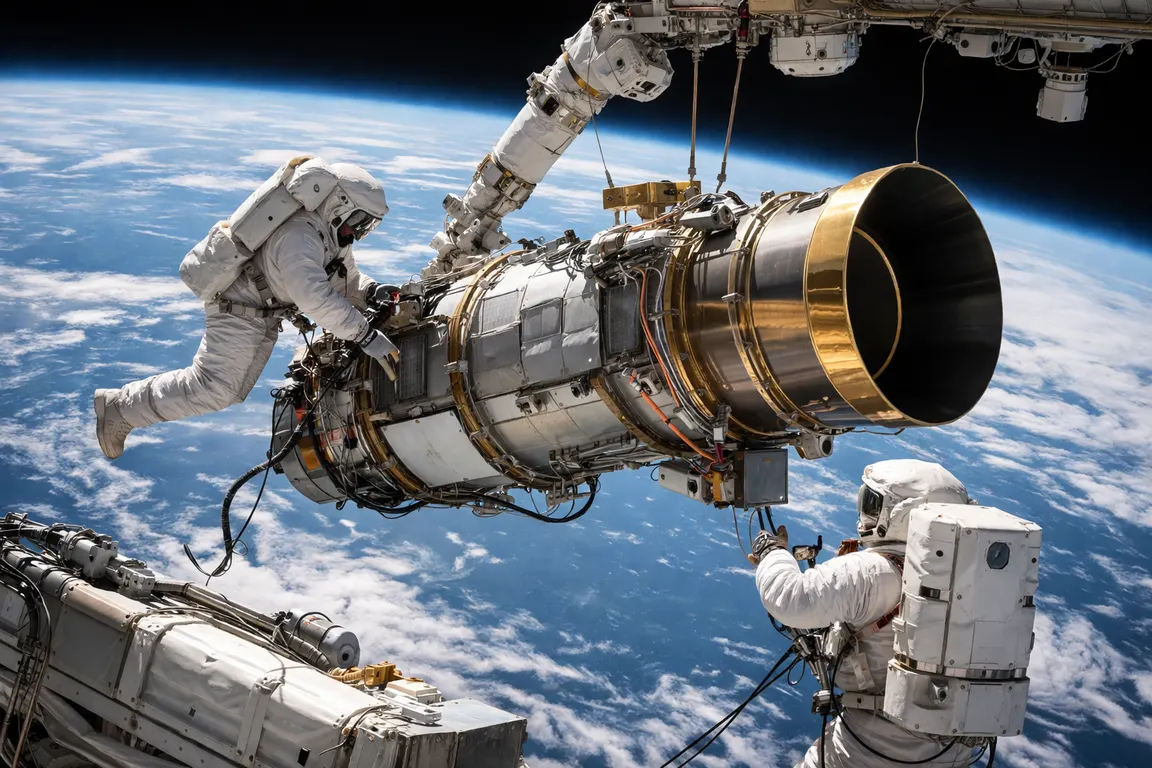
NASA has launched a robotic mission to rescue the Swift Telescope, which is falling back to Earth due to increased atmospheric drag caused by solar storms. The mission aims to raise the telescope's altitude by 150 miles, extending its lifespan and allowing it to continue studying gamma-ray bursts and other cosmic phenomena.
The Swift Telescope, launched in 2004, was a crucial tool for astronomers, providing valuable data on gamma-ray bursts. However, the increased atmospheric drag has caused the telescope to fall towards Earth, prompting NASA to launch the rescue mission. The mission, valued at $30 million, is a significant investment for NASA, considering the Swift Telescope itself cost $250 million.
The robotic spacecraft, named Link, was launched from the Marshall Islands in the Pacific. If successful, the mission will not only extend the lifespan of the Swift Telescope but also have implications for the space industry as a whole. The success of this mission could pave the way for giving other satellites a second life and prevent the loss of valuable space assets.
By September, the Swift Telescope could be back scanning the cosmos if the mission is successful, providing astronomers with valuable data on gamma-ray bursts and other cosmic events. The outcome of this mission will be closely watched by the space industry, as it could pave the way for similar salvage operations in the future.
The success of this mission will impact NASA's ability to continue studying gamma-ray bursts and other cosmic phenomena. NASA's investment in the rescue mission demonstrates the agency's commitment to maximizing the lifespan of its space assets and minimizing the loss of valuable scientific data.