

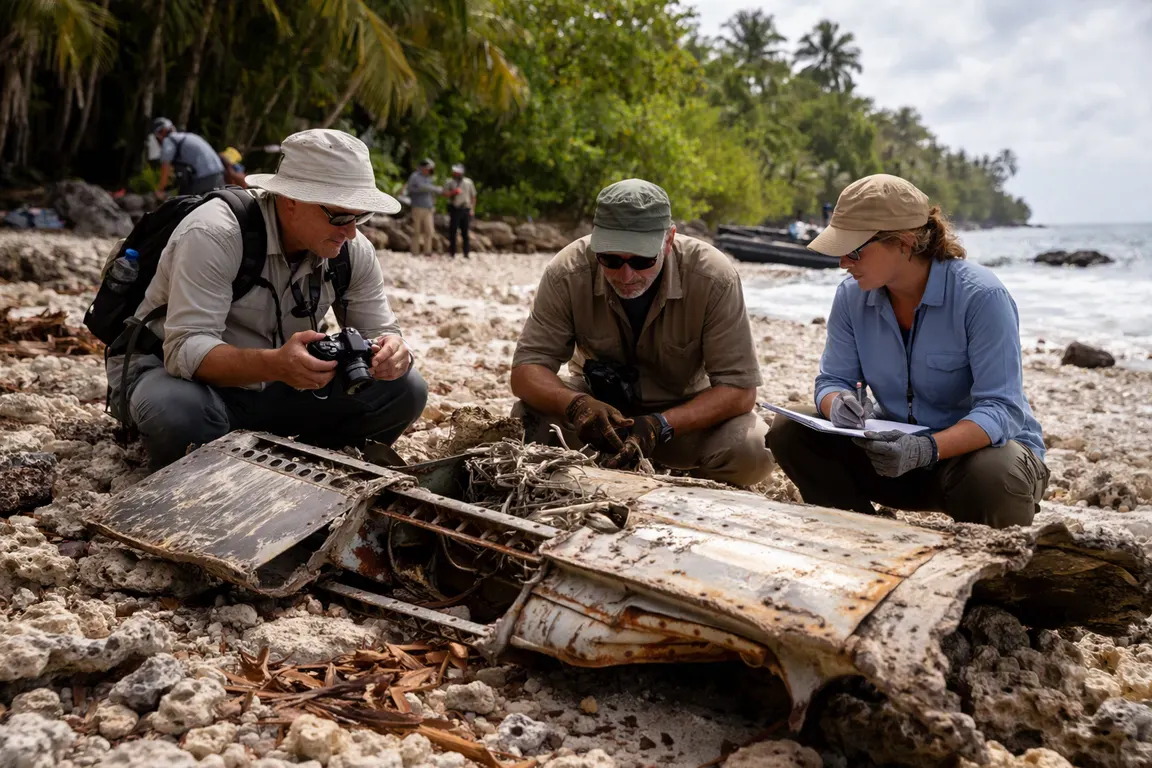
A U.S.-led scientific expedition on the remote Pacific atoll of Nikumaroro this summer confirmed that the metallic glint spotted in satellite images was a clump of Earhart plane driftwood, leaving the fate of Amelia Earhart’s missing Lockheed Electra unresolved.
The effort, funded by a mix of academic grants and private donors, combined satellite analysis, on‑site sonar scanning and field work by a team from Purdue University. Its inability to locate any aircraft debris underscores the logistical and financial challenges of remote heritage searches.
The search began in 2020 after a commercial satellite captured a faint reflective anomaly near the lagoon of Nikumaroro, a barren atoll midway between Australia and Hawaii. The image sparked speculation that the glint could be wreckage from Earhart’s plane, prompting media coverage and donor interest.
Over the next two years, Purdue professor Steve Schultz coordinated fundraising, secured permits and organized logistics for a field team that arrived on the island in early 2023. Using an inflatable boat, handheld metal detectors and visual inspection, the researchers located a tangled mass of wood floating near the surface of the lagoon. Samples taken on site proved to be a dense bundle of driftwood washed ashore from surrounding reefs.
Schultz said the team found “no definitive evidence of Earhart’s plane,” a conclusion echoed by The Independent, BBC News and The Guardian, which reported the same outcome.
The episode highlights a broader tension in heritage research: sophisticated technology can generate promising leads that later turn out to be natural phenomena. Coral debris and floating timber can mimic the appearance of metal in satellite imagery, and straightforward field observation is often needed to verify such signals.
While the mission’s exact cost has not been disclosed, the involvement of private donors suggests a significant investment of public‑interest money. Academic institutions now face pressure to justify similar expenditures when outcomes remain inconclusive. The experience may prompt tighter cost‑benefit analyses and a shift toward lower‑cost, longer‑term monitoring rather than single, high‑budget field trips.
Public fascination with Earhart’s disappearance continues to drive media coverage and philanthropy, but the lack of tangible finds on Nikumaroro serves as a cautionary note. Any future tourism tied to the mystery would depend on a breakthrough discovery that has yet to materialize.
As the research team departs the atoll empty‑handed, the heritage sector must balance the allure of solving historic enigmas with the practical demands of fiscal responsibility and scientific rigor. The outcome will shape not only future searches for Earhart’s aircraft but also the strategic planning of remote archaeological missions worldwide.