

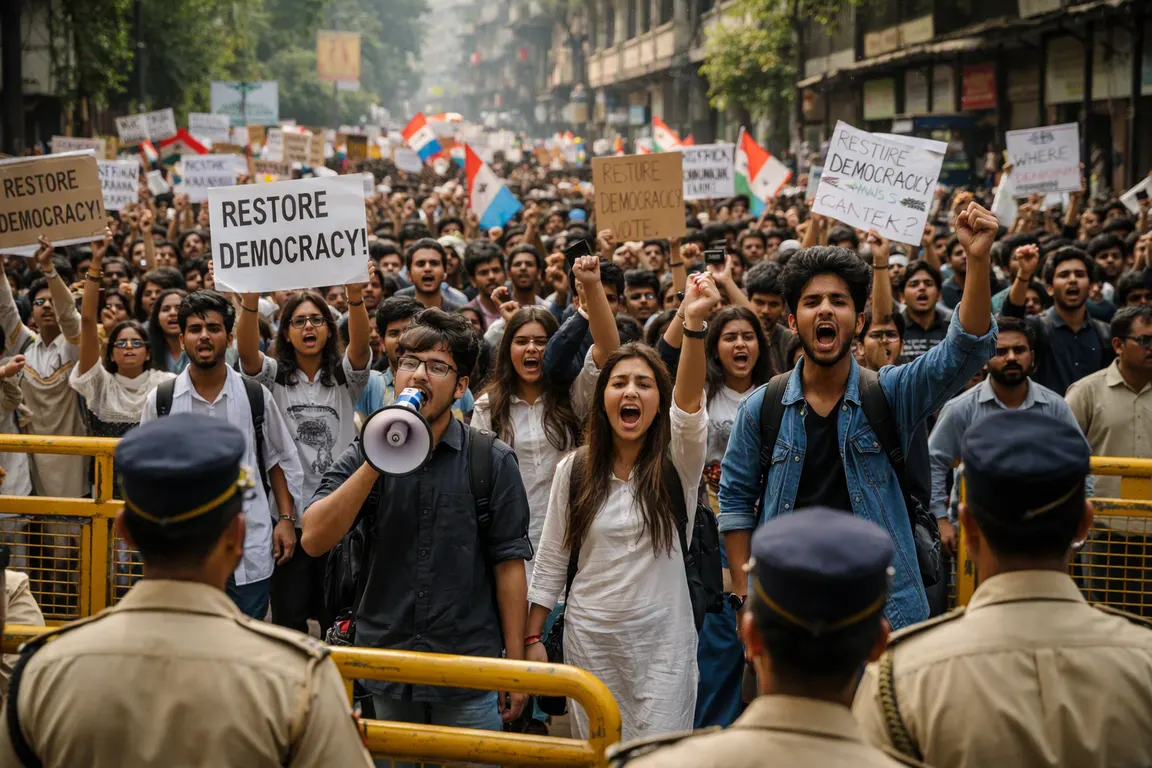
Thousands of young activists gathered in Mumbai on Friday, flanked by a heavy police presence, to demand the resignation of Chief Election Commissioner Gyanesh Kumar. The rally, part of coordinated protests that also unfolded at Delhi’s Jantar Mantar, targeted the Election commission voter roll revision – a process officials say could cut registered voters by up to 30 percent in some districts.
The movement, calling itself the Cockroach Janata Party (CJP) and founded by Abhijeet Dipke, argues that the revision threatens the right to vote for millions ahead of India’s national elections, the world’s largest democratic exercise. Critics say the criteria for deletion – such as failure to produce recent proof of residence or age – are being applied unevenly, creating uncertainty for voters who already face bureaucratic hurdles.
The Special Intensive Revision began in Bihar last year and has since spread to most states. Commission data indicate that, in certain areas, the number of registered voters could fall by as much as 30 percent after the cleanup. The CJP contends that such a reduction would disenfranchise large swaths of the electorate, particularly in regions with stricter documentation requirements.
Internal dissent has surfaced within the Election Commission. According to the Indian Express, two of the three election commissioners raised formal objections to the revisions, citing procedural flaws and insufficient stakeholder consultation. The commission described those objections as “differing views” rather than formal protests, and the chief commissioner has reportedly dismissed them.
Police detained dozens of protesters at Jantar Mantar and barred further entry, citing public‑order concerns. In Mumbai, authorities deployed barricades and water cannons to manage the crowd. While the government and the Election Commission deny any partisan motive, opposition parties and civil‑society groups allege that the revisions could benefit the ruling BJP by removing voters in opposition strongholds. No conclusive evidence of bias has emerged, and the commission maintains the exercise is routine, aimed at eliminating duplicate or invalid entries.
Analysts warn that the removal of millions of voters could depress turnout and erode confidence in the electoral process, especially among young and marginalized voters. The protests are expected to continue throughout the week, with additional sit‑ins planned in Delhi and other regional hubs. Observers are watching for an official response, such as a pause in the revision or a clarification of the criteria.
The unfolding confrontation highlights the tension between administrative reform and democratic inclusion as India approaches its next national election.